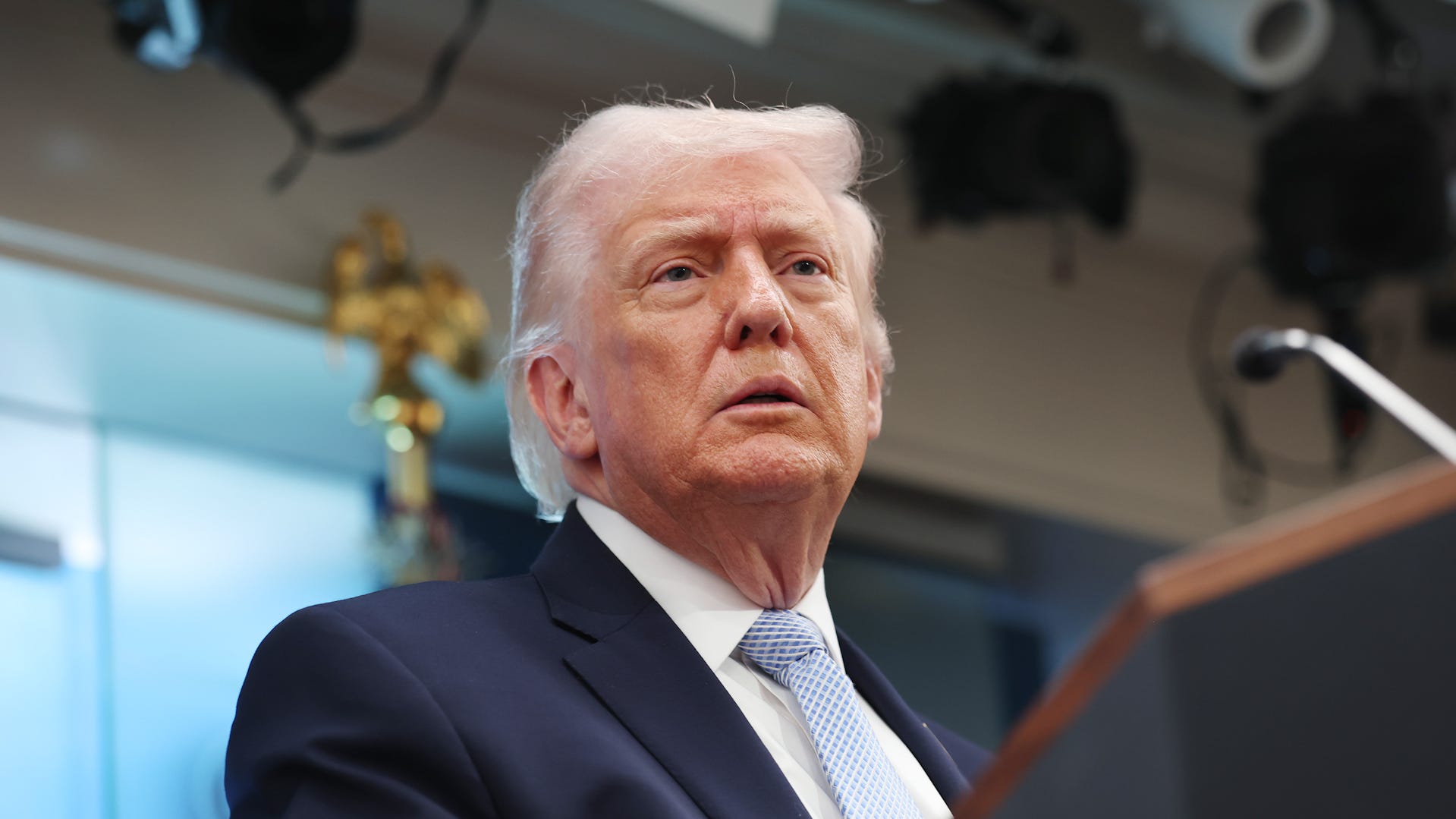

President Trump announces two-week ceasefire with Iran
President Donald Trump announced that the United States had reached a two-week ceasefire with Iran, just hours before a deadline he imposed.
American consumers are looking for cheaper gasoline after President Donald Trump announced a two-week ceasefire between the United States, Israel and Iran, conditional on the reopening of the Strait of Hormuz.
It’s unclear whether it will be found soon.
Pentagon Secretary Pete Hegseth told reporters on April 8 that the U.S. military had “so far done its job” but “remains ready” to resume fighting if Iran violates the cease-fire agreement. While negotiations were underway, Iran agreed to “safe passage” through the waterway, which normally carries about 20% of the world’s oil supplies, but which has been cut off to almost all traffic since the start of the war.
“We don’t really know if the conflict is going to end, but it’s one thing to end the conflict and it’s another thing to essentially address the supply chain,” said Mark Hamrick, senior economic analyst at Bankrate, adding that consumers shouldn’t expect gasoline prices to fall to pre-war levels anytime soon. “This is an unprecedented disruption to crude oil supply, and you can’t just turn it on and off and restart everything.”
Fuel prices could continue to rise for months even after waterways reopen, according to the U.S. Energy Information Administration.
“Just as we’ve never seen the Strait close before, we’ve never seen it reopen,” EIA Administrator Tristan Abbey said in a statement on April 7. “Exactly what that will look like remains to be seen. It will take many months for flows to fully restore.”
The price of Brent crude oil, the world oil benchmark, had hovered around $109 per barrel at the close on April 7, before the ceasefire was announced, but had fallen to about $92 per barrel by the morning of April 8. Prices remain about 26% higher than before the war began on February 28th.
The national average price for a gallon of unleaded regular gasoline was about $4.17 as of the morning of April 8, unchanged from the previous day, according to GasBuddy’s real-time tracker. Patrick de Haan, head of oil analysis at Gas Buddy, predicted the currency could drop below $4 within a week or two.
“Gasoline prices could start reversing by a few cents a day across the country within 48 hours,” De Haan said in an X post. “Diesel prices may lag slightly, but as things stand, diesel prices are no longer likely to reach record levels.”
According to LendingTree’s March survey, this scenario would provide welcome relief to consumers. Roughly one-third of consumers have already adapted their spending and savings habits due to rising gas prices. According to the survey, 62% of people who own gasoline-powered cars said their household finances would “significantly change” if prices remained high for more than a month.
Some California drivers saw gas prices hit as high as $9 a gallon as retail costs rose unevenly across the country. As of April 8, the average price of regular unleaded gasoline in the state was $5.93, according to AAA. The national average for a gallon of AAA unleaded regular gasoline is $4.16, little changed from $4.14 the day before and still up from $3.45 a month ago.
“While uncertainty remains high, we view the ceasefire as a constructive step toward ending the Iran conflict and restoring the flow of oil through the Strait of Hormuz,” Edward Jones investment strategy analyst Brock Weimer said in a note to USA Today. “However, even if traffic resumes, we expect global oil supplies to take time to normalize, and prices are likely to remain elevated relative to pre-conflict levels in the coming months.”
Contact Rachel Barber at rbarber@usatoday.com and follow her at X @rachelbarber_
(This article has been updated to add new information)


