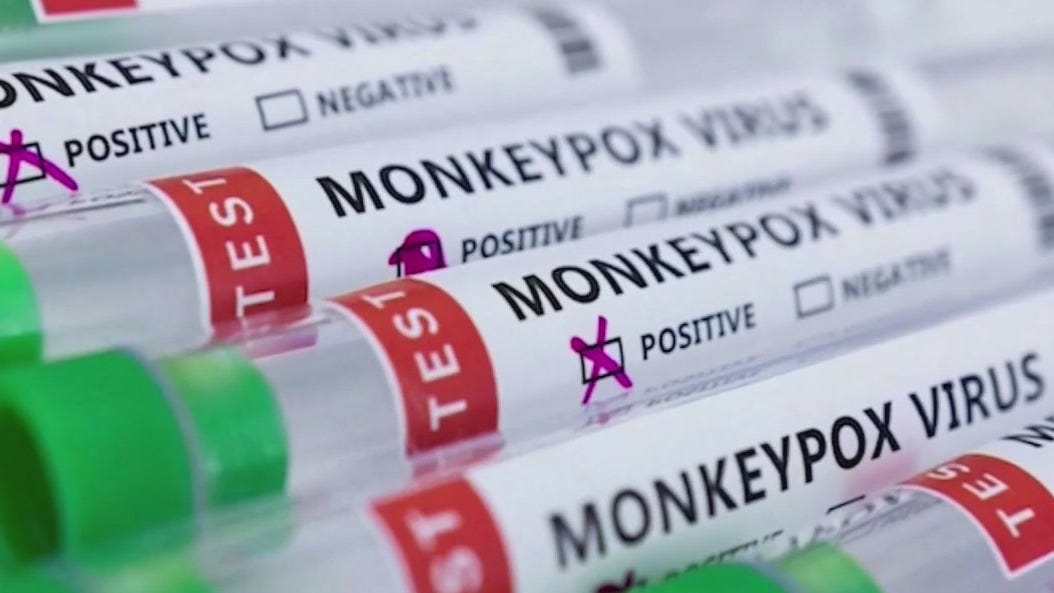

Mpox declared global health emergency by WHO
The viral disease mpox, formerly known as monkeypox, is responsible for making several people sick in Africa. Infectious cases have also been confirmed in Europe.
Fox – 4 News
California health officials are investigating cases of a more severe form of mpox after confirming a local outbreak in the United States that officials first identified.
The Los Angeles County Department of Health announced in an Oct. 17 press release that three cases of clade I mpox were confirmed in Los Angeles County this week in people who had not recently traveled to countries where the virus is common. Although a separate clade, or group, of mpox has existed in the United States for years, these new cases are the first of their kind that appear to have spread locally rather than through exposure while traveling abroad.
Public health officials say this type of mpox is associated with more severe illness. Nine clade I mpox cases have been reported in the United States this year, with the remainder associated with international travel.
The first local case was reported in Long Beach on October 14th, and two more cases were reported in other areas of Los Angeles County on the 16th and 17th. All three were hospitalized and then sent home to isolate and recover, officials said. No further details about the patients have been released, and no clear link between the cases has been identified.
The risk to the public remains low, the Los Angeles County Department of Public Health said in a statement. However, it is recommended that people at high risk be vaccinated against this disease if they have not already been vaccinated.
“The confirmation of a third case with no travel history raises concerns about the potential for localized spread within Los Angeles County,” Los Angeles County Health Officer Muntu Davis said in a press release. “We are working closely with our partners to identify potential sources of infection and understand how this potentially more serious type of mpox virus is spreading.”
What is npox?
Mpox, also known as monkeypox, is an infectious viral disease caused by a virus. According to the World Health Organization (WHO), it is most commonly accompanied by a painful rash, swollen lymph nodes, fever, headache, muscle aches, back pain, and low energy.
There are two clades, or groups, of viruses, Clade I and Clade II, each with two subclades. A clade is a biological group that all descends from one common ancestor.
Clade II usually involves mild to moderate disease, whereas clade I can be more severe. According to the Los Angeles County Department of Public Health, clade II has been present in the United States since 2022, with 118 people infected in 2025. Although there have been several clade 1 cases brought back to the United States by international travelers, the new cases are the first to be linked to domestic spread. Clade I has also been identified in recent outbreaks in Africa.
How does mpox spread?
According to the federal Centers for Disease Control and Prevention (CDC), both clades of viruses can be spread through close contact with people infected with M.P.O.X., contact with contaminated materials, and contact with live or dead infected wild animals. The risk from infected animals is highest in West and Central Africa, where cases are more common.
Infections are often associated with intimate contact, such as kissing, sex, and skin-to-skin contact. Direct contact with chickenpox rashes and scabs, and contaminated body fluids such as mucus, saliva, and blood are the most common ways people transmit the virus to each other. Mothers can pass infections to their babies during pregnancy, childbirth, and after birth.
According to the WHO, the virus can be transmitted from animals to humans through animal bites or scratches, or when humans come into contact with infected bodily fluids while hunting, cooking, preparing or eating animals. It can also be spread through contact with unsterilized objects, fabrics, and surfaces.
Accidental infection through respiratory exposure is unlikely, so sharing the same air indoors is unlikely to lead to infection.
“Anyone with an unexplained rash or lesions should seek immediate treatment. Talk openly with your intimate partner and your health care provider. Early action protects you and others,” Long Beach Public Health Physician Dr. Cliff Okada said in an Oct. 14 statement.
Symptoms of Mpox
According to the CDC and WHO, symptoms of MPOX begin within 21 days of exposure to the virus, and the typical incubation period, or asymptomatic period, is 3 to 17 days.
Infected people usually experience a noticeable rash that gradually appears on the hands, feet, chest, face, mouth, or near the genitals. The rash may appear as raised dots, similar to acne. Symptoms usually last 2 to 4 weeks.
Although most people recover without serious medical intervention, the virus can cause serious illness.
Other common symptoms include:
- heat
- cold
- swollen lymph nodes
- Exhausted
- muscle pain and back pain
- headache
- Respiratory symptoms (sore throat, stuffy nose, cough, etc.)
If you think you have been exposed to Mpox and develop any symptoms, contact your doctor. They may also recommend testing and supportive care. The CDC recommends that if you think you may be infected, avoid close contact with others and wear a mask in public.


