
My financial institution has changed, but why?
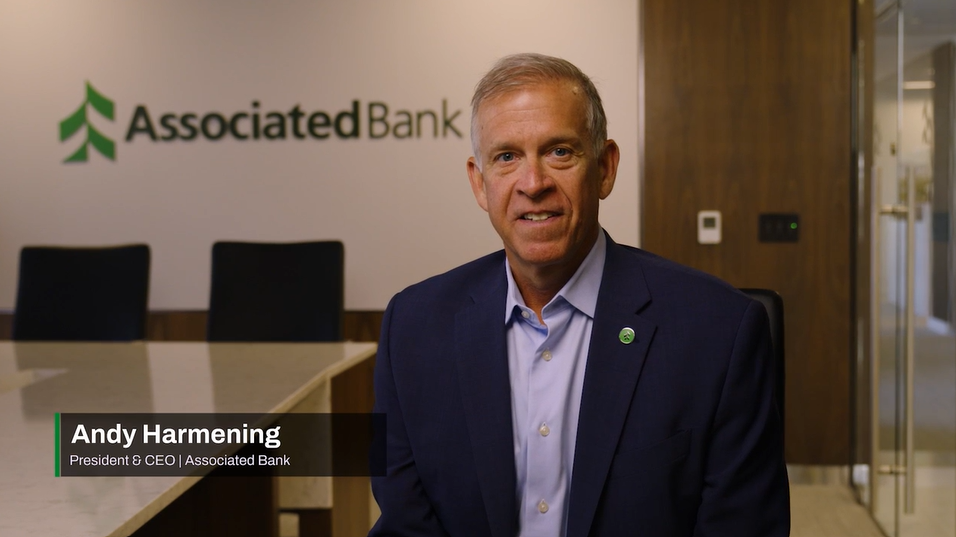
Associated Bank has earned years of loyalty and satisfaction through our ability to truly understand our customers’ needs.
Video provided by BR Studio for partner banks
Using birthday money or your first paycheck to open your first savings or checking account is a rite of passage for many Americans, but banking experts say there are millions of adults who are just getting started or learning how to use accounts to improve their finances.
According to the St. Louis Fed, 4.8 million new BankOn accounts will be opened in 2024, an increase of 27% from the previous year. Bank On is an initiative led by the nonprofit Cities for Financial Empowerment Fund, also known as CFE, that brings together a coalition of financial institutions across the country to provide affordable and secure Bank On certified accounts to unbanked and underbanked individuals. By the end of last year, there were more than 14 million active accounts, according to the St. Louis Fed.
Experts say access to basic banking services helps people achieve financial stability and build wealth for generations. Without bank accounts, households struggle to save, manage daily financial transactions, and develop banking relationships that lead to affordable credit. Financial institutions also offer protection against fraud and loss, he said.
“Cash flow is what matters,” said Seth Shafer, chief impact officer at Rivermark Community Credit Union. He said the banking industry is helping customers by offering services such as flexible loans, grants and real-time payroll without high fees or interest rates.
Unbanked and underbanked?
Being unbanked means not having a checking or savings account with a bank or credit union. A record low 4.2%, or 5.6 million households, were unbanked in 2023, according to the Federal Deposit Insurance Corporation. This is down from a peak of 8.2% in 2011.
Approximately 60% of unbanked people use cash only, exposing them to theft and loss every day. They tend to be older, more likely to be Hispanic, and distrustful of banks, according to the FDIC.
The remaining 40% of unbanked households rely on non-bank prepaid cards and payment apps like Venmo and PayPal for everyday financial services like paying bills and receiving money, the agency said.
Underbanking is when a household has an account with a bank or credit union but still uses non-bank products for most of its financial needs. According to the FDIC, 14.2%, or 19 million households, will be underbanked in 2023.
Why don’t people use banks?
The FDIC said the main reasons people don’t have access to bank accounts include high minimum balance requirements, distrust of banks, and high and unpredictable fees.
To combat this, banks and credit unions across the country have been working for years to make banking more attractive. Bank On, which includes all types of financial institutions, and a credit union-only campaign called Backbone are promoting low- or no-fee accounts and secure products to bring more people into the mainstream financial system.
“There’s a sense that this is a club and you have to qualify to get in,” Schaefer said. “But that’s not the case.”
Bank officials said people who had bank accounts but had their checks bounced and accumulated negative balances were often denied opening another account or discouraged from trying to open one again.
“But we let you in,” said Giquora Banks, chief impact strategy officer at Verity Credit Union. Community-based credit unions may have more flexibility to dig into each person’s background than larger institutions, she says.
How do banks build wealth?
About 42% of households are considered ALICE, those with limited assets, limited income, and employment, up from 32% in 2008, according to United Way. ALICE includes the poor (13%) and 29% of people who are just above the federal poverty line but cannot afford basic daily needs such as housing, child care, food, transportation, health care, and basic technology.
Rather than traditional loans and credit cards to manage their finances and purchase funds, they often rely on alternative financial services such as high-value money orders, check cashing services, and payday loans, options that often end up costing them a lot of money.
“These are people who need banking services,” Schaefer said. “You can’t protect yourself from financial hardship.”
He said many people are being denied access to their bank accounts because of overdrafts of as little as $35 from another bank. Financial institutions can work with these people to find ways to break that cycle. In some cases, real-time payments are set up so that people like Uber drivers can get paid instantly and avoid overdrafts.
Or, if someone “needs to send money back to their home country, we can help with that so they don’t have to use more costly methods like remittances,” Banks said.
Banking also makes receiving government benefits easier, faster, and more secure. The Federal Deposit Insurance Corporation (FDIC) says the urgent need to receive COVID-19 relief checks through direct deposit in 2020 forced many unbanked individuals to open accounts to quickly and securely access their funds. Since then, government agencies such as the IRS and Social Security have stopped issuing benefits through paper checks, forcing millions more Americans to learn their banking.
How can banks help build community?
Research shows that banks, especially community banks, not only support individuals in their communities, but also small businesses that foster growth.
Banks said credit unions are local and very community-based.
When the government was recently shut down for a record 43 days due to a budget impasse, we “conducted financial check-ins and financial guidance on the ground to assess how our people were affected,” she said. Her credit union launched a community care initiative and provided $53,000 in financial assistance to more than 212 people affected.
“We understand the gaps that exist in our communities” and can act quickly, she said. Unlike the largest banks, credit unions cater to their members and communities rather than shareholders.
Medora Lee is USA TODAY’s money, markets and personal finance reporter. Please contact us at mjlee@usatoday.com. Subscribe to our free Daily Money newsletter for personal finance tips and business news every Monday to Friday morning.


