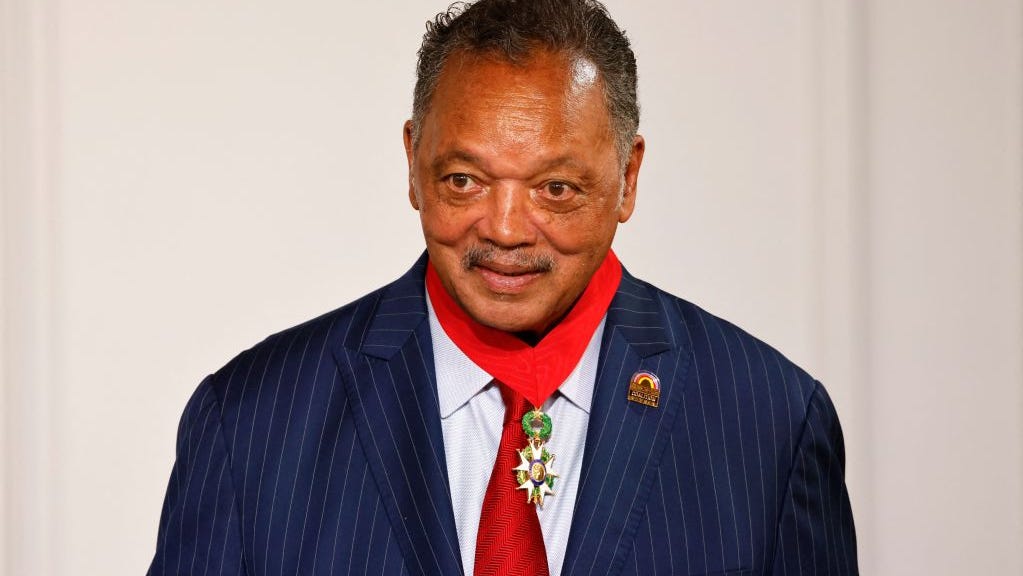

Civil rights icon Jesse Jackson dies at age 84
Civil rights icon Reverend Jesse Jackson has died at the age of 84 after being hospitalized.
Jesse Jackson, one of the most influential figures in the American civil rights movement, has died at the age of 84 after years of neuromuscular disease. For more than 60 years, he has accompanied protests, the ballot box, and global negotiations, leaving a mark that transcends generations and borders.
His death comes amid national tensions over voting access and the rise of extremism, making a reassessment of his legacy urgent. Jackson didn’t just march. He organized businesses, lobbied, negotiated international emancipation, and turned his faith into a political tool. He died surrounded by his family, the Rainbow Push Coalition reported.
The voice disappeared, but the echo remained.
Who was Jesse Jackson and why did he leave his mark on American history?
Born in Greenville, South Carolina, Jackson made history at the age of 18 when he was arrested for protesting racial discrimination at a public library. He soon joined Martin Luther King, Jr., and remained by his side until King’s assassination in 1968, a turning point that propelled him from the front lines to leadership.
Based in Chicago, he helped build the movement’s organizational strength. He marched from Selma to Montgomery to register African Americans to vote, turning protests into public policy. For millions of people, it was a bridge between the days of kings and the modern struggle for equality.
How did the fight for civil rights and voting rights expand?
Jackson, who served as president of the Southern Christian Leadership Conference, led Operation Breadbasket, a strategy that used boycotts and public pressure to force big companies to hire more diverse workers. This tactic had a back-and-forth impact on the relationship between activists and corporate power.
She later founded the Rainbow PUSH Coalition to advance issues such as economic justice, voting rights, and worker rights. Despite his declining health, he was arrested in 2021 while protesting Senate filibuster rules, confident that democracy would be protected on the streets and in the Capitol.
What impact did it have on domestic politics beyond the United States?
Jackson also brought diplomacy into areas few people ventured into. He negotiated the release of American hostages in Syria, Cuba, and Iraq, and mediated conflicts during the Kosovo war. These efforts strengthened his international standing and credibility as a negotiator.
Domestically, his 1984 and 1988 presidential campaigns failed to win the Democratic nomination but changed the electoral map. They mobilized and registered millions of black and Latino voters, paving the way for later leaders such as Barack Obama. In 2000, he received the Presidential Medal of Freedom.
Jackson’s final message still stands. “I am someone.” It wasn’t a song, it was a plan of action.
Contributed by: USA TODAY
Boris Q’va is a national Spanish language trends news reporter for Connect/USA TODAY Network. You can follow him on X as @ByBorisQva or write to him at BBalsindesUrquiola@gannett.com.


