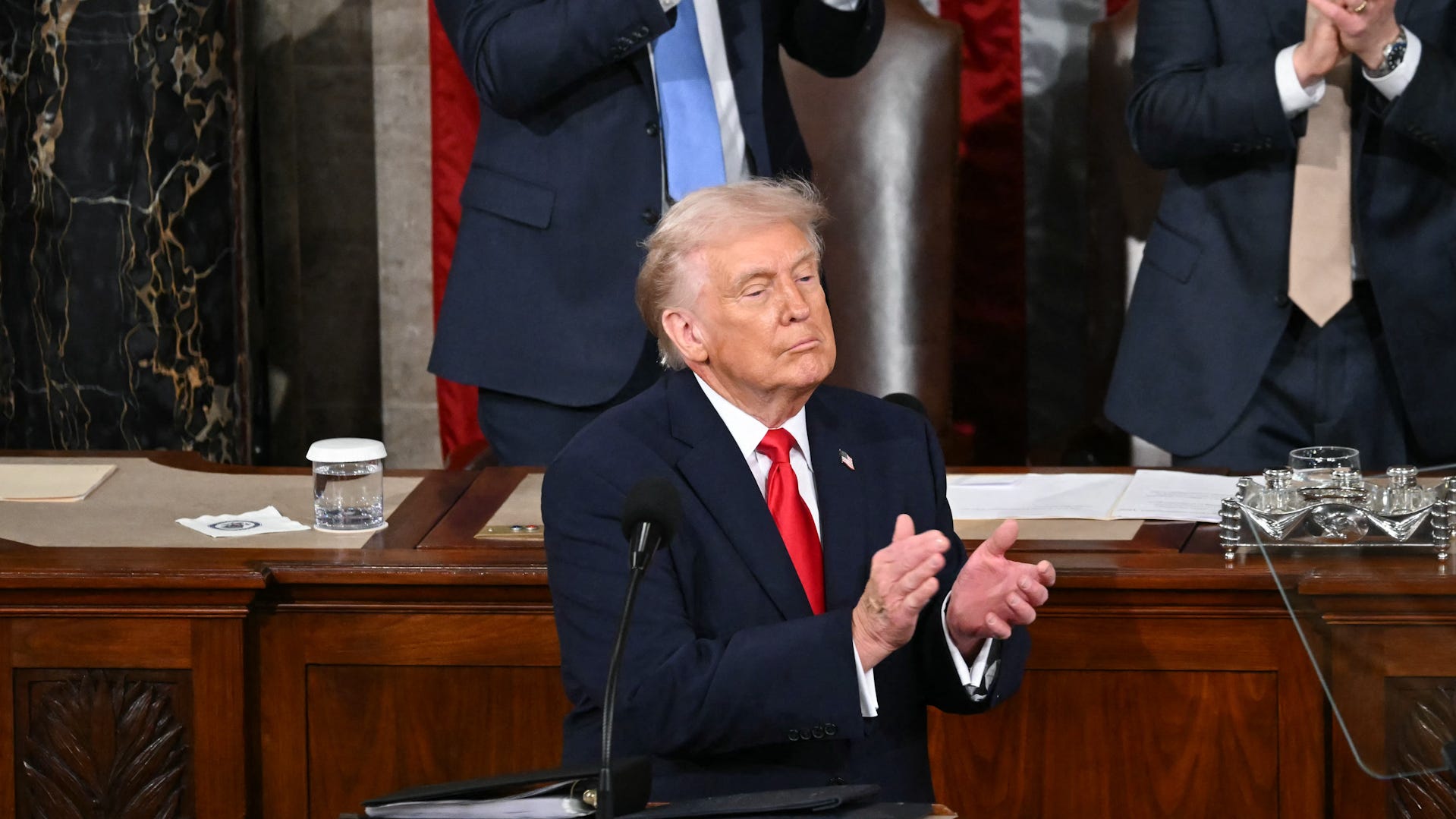

President Trump brags about Republican tax cuts
President Donald Trump touted the gains from Republican tax cuts in his 2026 State of the Union address.
For most Americans, your tax refund is the biggest payday of the year, but if you live in certain states or Washington, D.C., you may have to wait a little longer for that day.
President Donald Trump’s signature tax and spending bill introduced a series of new tax cuts for middle-class Americans in 2025, but some states are struggling to implement them or opt out of them. Software and tax forms must be updated to take into account new provisions such as the super-senior deduction, tax exemption for tips and overtime pay, and the new auto loan interest deduction that states have decided to follow. Meanwhile, the District of Columbia is locked in a battle with the federal government over whether to comply with new federal tax laws.
All of this means, taxpayers, that your state tax refund may be delayed.
“State tax compatibility will be the biggest hurdle because some states will be compliant, some states will not be compliant, and some states will only be partially compliant” with President Trump’s new tax law, said Richard Pong, a certified public accountant in San Francisco.
Which states are warning about tax refund delays?
Taxpayers in four states and the District of Columbia may see their tax refunds slower than usual. Here’s why:
- Idaho: Lori Wolf, administrator of the state Office of Fiscal Management, warned in a memo that the budget cuts would result in fewer temporary employees during tax season, delaying tax processing by 12 to 24 weeks and delaying refunds to taxpayers by up to six weeks. The delay will cost taxpayers up to $7 million in increased refund interest payments, he said.
Additionally, Idaho Governor Brad Little did not sign the state’s bill into compliance with federal tax law until February 11, after the IRS’ January 26 start of tax season, and more than 158,000 Idahoans had already filed their taxes.
“Typically, it takes the Tax Commission nine months to complete documentation and changes to the system, but it is our priority to update and provide taxpayers with a plan to follow as quickly as possible,” Tax Committee Chairman Jeff McCray said in a Feb. 17 release.
- new york: An issue with the Intuit TurboTax software that was supposed to be fixed on Feb. 4 may have prevented filings and delayed some tax refunds, according to customer complaints on various bulletin boards and local news reports.
- Oregon: The state Department of Revenue says even if taxpayers file paper returns, processing won’t begin until at least the end of this month. It said the first refunds would not be issued until early April. The department said the IRS had been slow to provide tax forms and information needed to program the state’s computer system.
The Oregon Department of Revenue also said a “small number of taxpayers” claimed incorrect amounts for the Oregon Kids Credit due to form errors. The agency said the discovery was made early enough that refunds should not be delayed, but warned that if necessary, it would adjust refunds for those who claimed the Oregon Kids Credit and one or more of the new federal deductions for overtime, tips and new car loan interest.
- South Carolina: In a warning posted on the Department of Revenue’s website, the Palmetto State says it is not complying with President Trump’s new federal tax law and is taking longer than usual to process its taxes. Taxpayers should be especially careful and adjust their state tax returns to include any income that may have been deducted at the federal level. These could include tips, overtime pay, additional senior citizen deductions, car loan interest, and more. Failure to do so may result in taxpayers having to file an amended return and potentially delaying their refund.
- Washington DC: D.C. is embroiled in a battle with the federal government that has thrown its tax filings into chaos. The district voted late last year not to comply with the new tax law, but the Legislature voted to reverse that decision during tax season. President Trump signed the law on February 18th. “The filing of electronic and paper versions of the 2025 local income tax return will be delayed,” the Internal Revenue Service said on its website.
The D.C. Attorney General filed an opinion arguing, among other things, that Congress’ repeal is invalid because the deadline for taking such action has passed. If the dispute is not resolved soon, D.C. Chief Financial Officer Glenn Lee said the tax filing deadline could be pushed back to September, disrupting the D.C. government’s cash flow by $400 million.
How the dispute is resolved could have major implications for Washington, D.C., taxpayers. The National Taxpayers Union Foundation said about 60,000 people who have already filed their DC taxes may have to re-file.
Additionally, nearly 90% of taxpayers take the standard deduction, which would be $15,750 if Congress is right and $15,000 if D.C. wins. According to a nonpartisan research and education organization, the local child tax credit would go from $0 if Congress gets its way to $420 per child if Washington, D.C., gets its way.
Medora Lee is USA TODAY’s money, markets and personal finance reporter. Please contact us at mjlee@usatoday.com. Subscribe to our free Daily Money newsletter for personal finance tips and business news every Monday through Friday.


