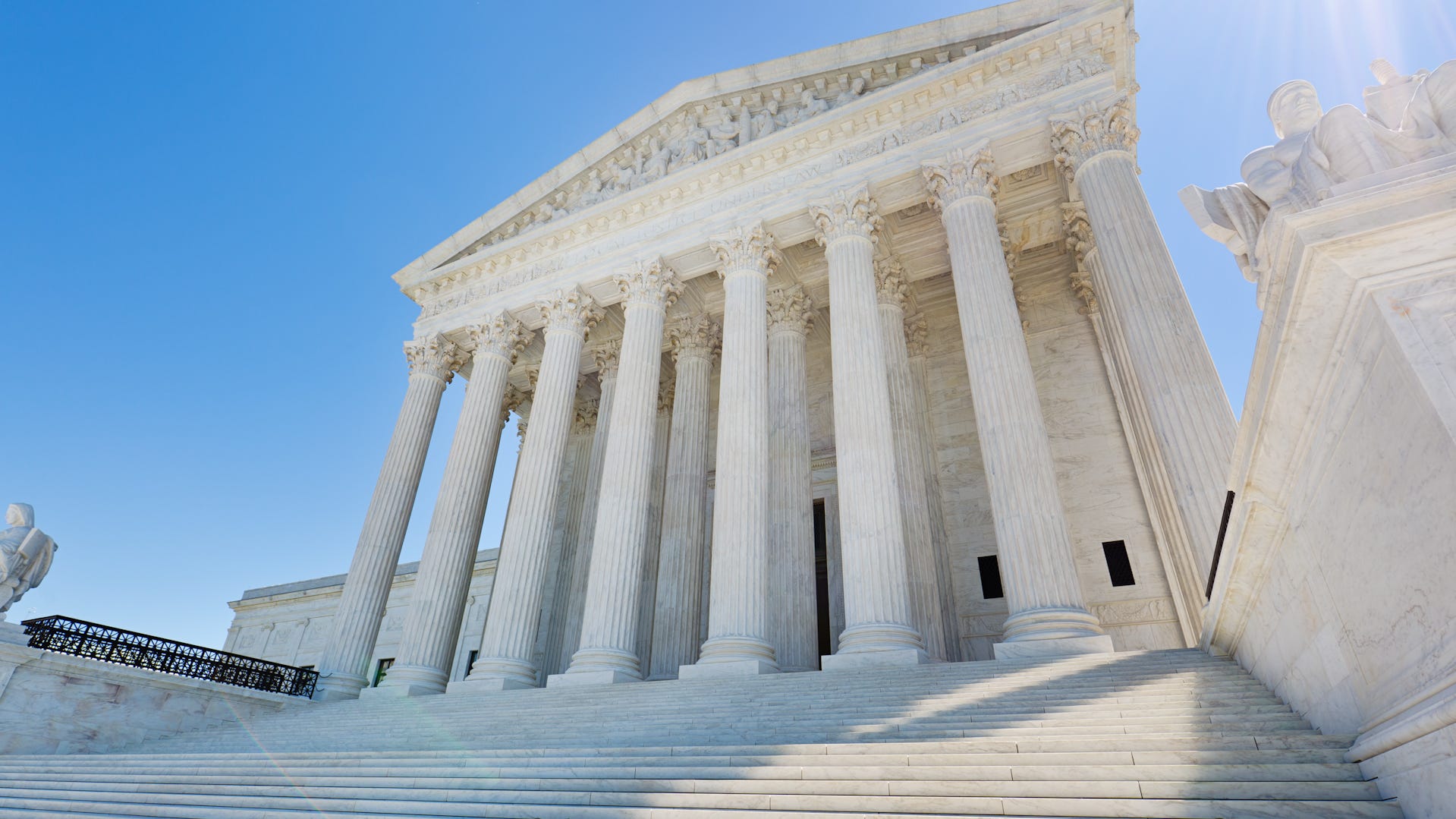

Could the SCOTUS ruling on conversion therapy impact free speech?
The Supreme Court ruled 8-1 in favor of talk therapists who argued that the ban on conversion therapy violated their right to free speech.
- The U.S. Supreme Court’s March 31 ruling on Colorado’s conversation-based conversion therapy ban said the First Amendment prohibits “any effort to enforce orthodoxy in thought or speech in this country.”
- The ruling sent the case back to lower courts to apply stricter standards when determining whether state laws violate the First Amendment.
- Experts had mixed reactions to the ruling, with some saying the issue ultimately comes down to how laws are created to regulate speech based on viewpoints.
How big of an impact will the U.S. Supreme Court’s March 31 decision on speech-based conversion therapy have on the First Amendment? Legal experts say it will depend on how states across the country draft laws regulating the practice.
In an 8-1 decision, the Supreme Court handed a victory to therapists who challenged Colorado’s ban, agreeing that the Denver-based 10th Circuit Court of Appeals should have applied a stricter constitutional review to evaluate the law.
The court sent the case back to the Court of Appeals to be reconsidered under a more stringent First Amendment test, which is unlikely to pass. According to the Freedom Forum, governments must demonstrate, under strict scrutiny, that restrictions on speech are narrowly tailored to protect a compelling interest in preventing harm to individuals or the general public.
Colorado’s Minor Conversion Therapy Act, which went into effect in 2019, defines conversion therapy as “any attempt to change an individual’s sexual orientation or gender identity, including efforts to change behavior or gender expression, or to eliminate or reduce sexual or romantic attraction to or feelings for individuals of the same sex.”
“Colorado may consider its policies essential to public health and safety, and certainly censorship-minded governments throughout history have believed the same,” Justice Neil Gorsuch wrote in the majority opinion. “But the First Amendment is a shield against any effort to enforce orthodoxy in thought and speech in this country.”
Justice Ketanji Brown Jackson wrote the only dissent, writing that the First Amendment does not prohibit states from “preventing licensed talk therapists from using speech to harm minors in their care.”
Alliance Defending Freedom, which represented therapist Kaylee Childs in the case, welcomed the ruling in a virtual press conference on March 31.
Jim Campbell, the group’s chief legal adviser, called the ruling “a decisive victory for free speech,” and Chiles said he hoped the ruling would “further encourage the pursuit of truth in professional circles and in counseling rooms.”
“Children deserve real help that affirms that their bodies are not wrong and are wonderfully made,” she said. “While I am grateful that my speech is protected, I am even more excited that families and children seeking access to counseling that respects their biological realities will now be able to get the help they need.”
SCOTUS lifts Colorado’s ban on conversion therapy
The Supreme Court ruled 8-1 that Colorado’s ban on conversion therapy violates the free speech rights of licensed Christian counselors.
The impact depends on the wording of state laws, experts say.
The extent to which speech and conduct can and should enjoy different constitutional protections is an ongoing debate under the First Amendment, said Brett Nolan, a senior attorney at the Free Speech Institute, which filed a friend-of-the-court brief in the case.
According to Axios, nearly half of U.S. states and Washington, D.C., have laws against conversion therapy on minors. Nolan called the Chile case “very important,” but said the true impact of the March 31 ruling will depend on the language of other states’ laws related to language-based conversion therapy.
While the court’s opinion mentions restrictions on free speech, such as defamation and “battle language,” Nolan said such categories are “very, very narrow” and that few cases meet the criteria needed to warrant government censorship under the law.
Ronnie London, general counsel for the Individual Rights and Expression Foundation, told USA TODAY that the ruling was “a real meat-and-potatoes ruling that goes back to the fundamentals of the First Amendment.” He said laws that regulate speech based on viewpoints strengthen “the building blocks of the First Amendment,” including principles that are “abhorrent” to the Constitution.
He said he did not question the ban on non-sound-based conversion therapies, such as the use of electric shocks or chemicals that cause nausea.
London hopes the ruling “puts the final nail in the coffin” for the idea that professional speech has little constitutional protection.
Richard Katsky, a law professor at Duke University, took a different view.
If talk therapy is designed as a treatment plan, it must face government regulation like any other medical or professional practice, he said.
Although he was “disappointed” by the decision, he was “not surprised” because of the “hostility” some judges have toward the LGBTQ community.
He referenced a 2025 court ruling upholding Tennessee’s ban on gender-affirming care for minors and contrasted it with the March ruling.
“If courts want to talk about being fair and equal and not discriminating based on status, they might look at their decisions side by side and consider whether the pot blackens the kettle,” Katsky said.
Ken Paulson, director of the Center for Free Speech at Middle Tennessee State University, said if lower courts apply a stricter standard, they will likely rule against Colorado law again. This could spark challenges to similar laws across the country, he said, and given the Supreme Court’s ruling, it is “very likely” that many laws will be struck down.
At the same time, we do not believe that all restrictions on professional speech will be abolished. Paulson, a former USA TODAY editor-in-chief, said it ultimately comes down to how such laws are drafted.
“It’s important not to read any deeper into this decision than it actually is,” he said.
Contributor: Maureen Grope
Breanna Frank is USA TODAY’s First Amendment reporter. please contact her bjfrank@usatoday.com.
USA TODAY’s coverage of First Amendment issues is funded by the Freedom Forum in collaboration with our journalism funding partners. Funders do not provide editorial input.


