

Boone County Prosecutor Kent Eastwood announces charges against Whitestown homeowner
Boone County Prosecutor Kent Eastwood announced charges against the Whitestown man who shot and killed Maria Florinda Rios Perez de Velasquez.
INDIANAPOLIS — An Indiana homeowner accused of fatally shooting a house cleaner who went to the wrong house has been charged with manslaughter, prosecutors announced Tuesday.
Boone County Prosecutor Kent Eastwood has charged Kurt Andersen, 62, with a Level 2 felony in the shooting death of Maria Florinda Rios Perez de Velazquez, a 32-year-old wife and mother of four. Andersen was booked into the Boone County Jail on a no-bail hold pending an initial court hearing, according to online jail records and prosecutors.
On November 5, police found Guatemalan immigrant Rios Perez dead on the front porch of a home in the Indianapolis suburb of Whitestown. She was shot in the head and died in her husband’s arms, according to the indictment.
Police said Rios Perez and her husband, Mauricio Velasquez, were part of a cleaning crew that mistakenly arrived at the wrong address. Velasquez previously told the Indianapolis Star, part of the USA TODAY Network, that the couple was trying to find the correct keys to the house when they heard gunshots and caught Rios-Perez as he fell.
Prosecutors’ decision to charge Andersen comes nearly two weeks after the shooting sparked a national debate about “standing your ground” and the Castle Doctrine. Eastwood said at a Nov. 17 press conference that an investigation found Andersen’s actions did not fall within the legal protections provided by the state’s “stand your ground” law.
“We cannot allow our emotions to influence our decisions,” Eastwood said at a press conference. “Our duty is to investigate the facts, apply the law fairly and equally, and ensure that justice is done without bias or influence. That is the only way the law can truly be just.”
‘Hard on the porch’: Details of shooting incident included in charging documents
According to the probable cause affidavit, Andersen told investigators that he and his wife were sleeping in the second-floor loft of their home when they heard “a commotion intensifying on the front porch.” He thought he heard “some type of key, tool, or device” being used on the door, according to the affidavit.
The affidavit said Andersen became afraid of the commotion and walked to the top of the stairs where he could see the front door and windows. Looking through the front window, I saw two people outside who appeared to be trying to open the door.
“Oh, this is happening, they’re trying to break in,” Andersen told investigators, speaking to himself. “What should I do? This disease is incurable. We have to do something now.”
According to the affidavit, Andersen said he made preparations in case someone broke into his home, including replacing his handgun with a Glock 48 9mm handgun in September after watching the video. He said he had never fired the new weapon and only bought it to protect his home.
Andersen told investigators he removed the gun from a locked box, loaded it and returned to the top of the stairs. He then witnessed the two “rushing” toward the door and “he stated they became increasingly aggressive,” the affidavit states.
He fired one shot through the closed front door, according to the affidavit. Shortly afterward, Andersen and his wife told investigators they heard a man screaming and crying at the front door.
Andersen admitted to investigators that the door never opened and that he did not identify himself before pulling the trigger. Andersen’s wife told investigators that neither she nor her husband went to the front door. She tried to do so, but her husband stopped her because he feared people outside might have guns, the affidavit states.
After the shooting, Andersen’s wife called 911, and Whitestown Metropolitan Police Department officers were dispatched around 6:50 a.m. local time. Officers found Velasquez kneeling over his wife’s body next to a large pool of blood on the front porch. Police said the bullet punctured the front door and struck Rios Perez in the right side of the head.
How did the cleaner get the wrong house?
A representative from Ryan Homes, which built the nearby Windswept Farms subdivision, told investigators that Rios Perez and her husband had planned to clean a model home in the same area as Andersen’s property.
According to the affidavit, Velasquez said he and his wife, both Guatemalan immigrants whose primary language is Spanish, received an address from their boss, entered Andersen’s home into their GPS, and arrived at their home.
The couple believed it was an unoccupied model home, according to the affidavit. When police entered the address into Google Maps, directions led them to a recently built home just east and behind Andersen’s home.
Rios Perez was trying to unlock the front door with the key he was given when he heard a gunshot. Her husband said he had been on the porch about 30 seconds to a minute before the gunshots, but Andersen told police it had been “more than a minute,” according to the affidavit.
“Mauricio stated that in the past he would call his supervisor to let him know if his keys were no longer working, but he did not have the opportunity to do so today,” the affidavit states.
Andersen and his wife initially refused orders from police to leave the home, then exited through the back door and were taken into custody, according to the affidavit. Rios Perez was pronounced dead at the scene.
When Andersen learned that Rios Perez was part of the cleaning crew that went to the wrong address, he “became upset and immediately bowed his head to the table,” the affidavit states. He told police he “didn’t intend for anything to happen to anyone.”
Indiana lawsuit reignites debate over ‘stand your ground’ law
According to Indiana law, voluntary manslaughter is a step below murder, meaning investigators believe Andersen “willfully or knowingly” killed Rios Perez “while acting under sudden fever.”
Officials said they believe in and are working to uphold Indiana’s “stand your ground” law, which protects a person’s right to self-defense. But Eastwood said the law didn’t apply because Andersen didn’t have “adequate information” to determine whether his actions were reasonable.
Andersen’s attorney, Guy Relford, a prominent Indiana Second Amendment lawyer, disagrees with the charges and said in a statement on social media that he “looks forward to proving in court that Mr. Andersen’s actions were fully justified by the ‘castle doctrine’ provisions of the Indiana Self-Defense Act.”
Wrong-placed shootings have plagued communities across the United States for decades, with seemingly innocent people being shot dead or seriously injured due to a simple mistake. For years, incidents like these have renewed debate about the country’s patchwork of “stand your ground” laws.
Christopher Slobogin, a law professor at Vanderbilt University and director of the school’s criminal justice program, previously told USA TODAY that self-defense laws have proliferated in recent years, and opponents worry that people will overreact and think they are legally justified.
Self-defense claims and “stand your ground” laws have been at the heart of several controversial cases, including the murders of Trayvon Martin in 2012 and Ahmaud Arbery in 2020, as well as the trials of Kyle Rittenhouse and Daniel Perry over the shooting of a protester in 2020.
In recent years, incidents similar to the Indiana shooting have sparked outrage and garnered national attention. These include the 2023 shooting death of Ralph Yahr by an 86-year-old white man in Missouri after the 16-year-old black boy went to the wrong house. Two days later, a 20-year-old woman was shot and killed by a homeowner in upstate New York after her car accidentally pulled into her driveway.
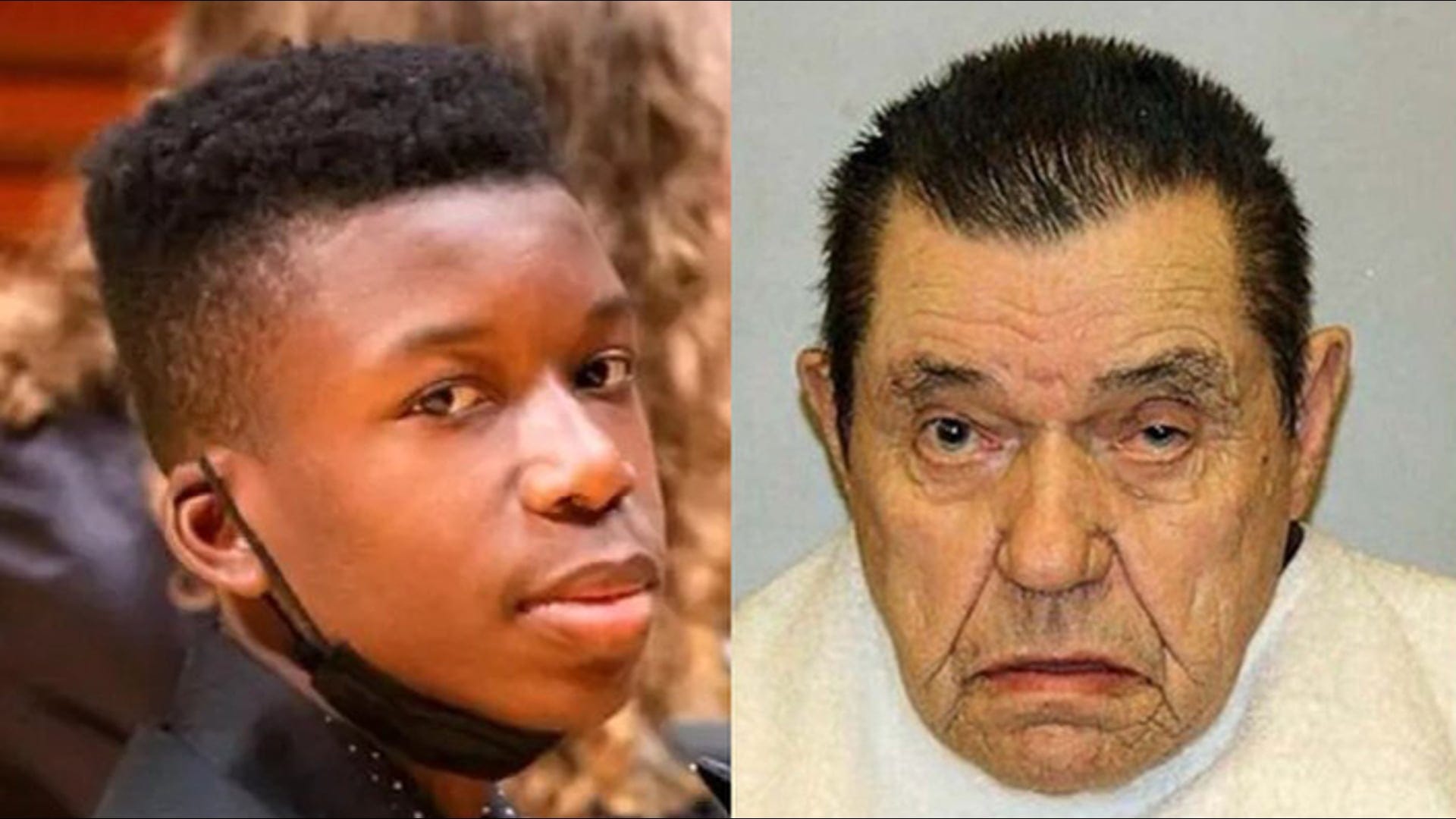
Missouri man who shot and killed black girl dies after pleading guilty
Andrew Lester, the 86-year-old who shot and killed black teenager Ralph Yahr after he accidentally rang his doorbell, has died while awaiting sentencing.
Unbranded – Newsworthy
Contributed by: N’dea Yancey-Bragg, Jeanine Santucci, Terry Collins, USA TODAY


