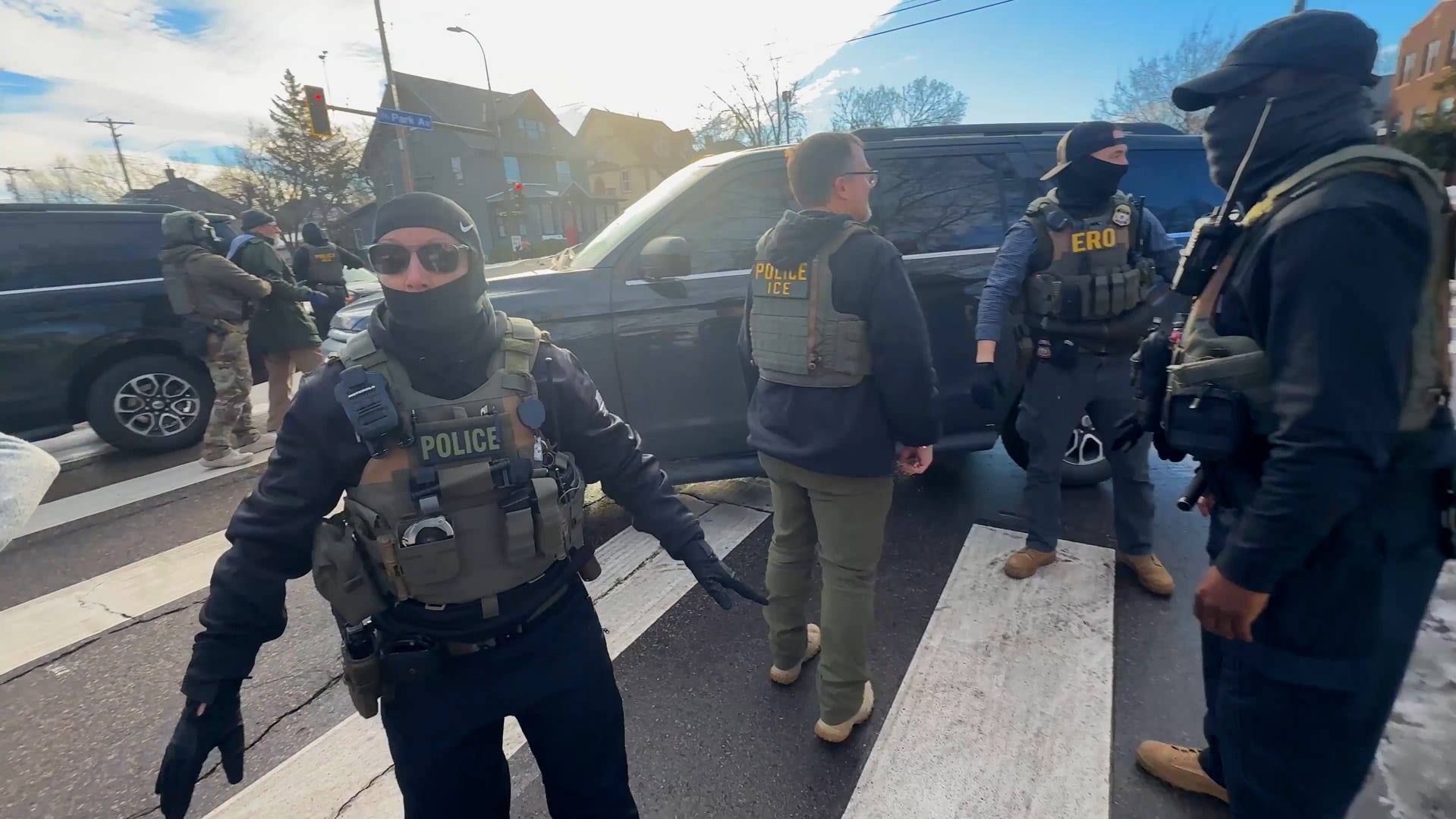

Trump administration ends Minnesota immigration operation
Border czar Tom Homan announced the end of Minnesota’s immigration operation after a deadly shooting sparked tensions and community backlash.
White House Border Secretary Tom Homan announced on February 15 that a small “security force” would remain in Minnesota temporarily as the Trump administration scales back immigration enforcement in the state.
Homan said in an interview on CBS News’ “Face the Nation” that a limited number of federal agents will remain in Minnesota to respond in the event that “we are surrounded by instigators and things get out of control.”
He did not say how many personnel would make up the rapid response force, but said he was “hoping” they would be removed “quite quickly.”
Homan’s comments came days after he announced the end of Operation Metro Surge, a migrant mission in Midwestern states that sparked a national and bipartisan backlash against the Trump administration after the deaths of two Americans at the hands of federal agents.
In announcing the withdrawal, Homan touted the operation as a success, arresting 4,000 illegal immigrants who had been charged with violent crimes. Homan credited the withdrawal to “unprecedented” cooperation between national and Minnesota state and local officials.
“As a result of our efforts here, Minnesota is no longer a haven for criminals,” Homan said at a Feb. 12 press conference.
The move was welcomed by state and local officials in Minnesota, some of whom disputed Homan’s claims and said there was no agreement in place to expand cooperation with federal immigration authorities.
“We don’t enforce federal immigration law. Of course we do. We don’t cooperate with (Immigration and Customs Enforcement) or any agency to enforce federal immigration law,” Minneapolis Mayor Jacob Frey said at a news conference after Homan’s announcement. “The idea that there was an agreement is false.”
Homan said in a separate interview on Fox News’ “Fox & Friends” on Feb. 15 that Minnesota officials “should say thank you.”
Homan was sent to Minnesota in the aftermath of the killings of ICU nurse Alex Preti and Renee Nicole Good, a poet and mother of three, which sparked nationwide protests and increased scrutiny of the tactics of officials carrying out the administration’s deportation plan.
The outrage led to the shutdown of the Department of Homeland Security, as Democrats vowed not to support a funding bill for the department without immigration enforcement reform. Republicans said the request was unrealistic.
Among the key points of contention are masks worn by federal employees. Democrats are calling for their removal, but Republicans say it is necessary to protect employees from having their personal information collected and other forms of harassment.
Homan told CBS News that while he is not involved in the ongoing Homeland Security negotiations, “I don’t like masks either.” Still, the border czar insisted the cover was necessary amid an increase in threats and assaults against immigration officers.
“These men and women have to protect themselves,” he said.
Homan acknowledged that the Minnesota operation needs reform. In a recent statement, Homan highlighted a series of internal changes he made when he arrived in Minnesota, from refocusing on enforcement against undocumented immigrants with criminal records to sending more Internal Affairs officers “to make sure our officers on the ground are doing the right thing.”
But despite the controversy surrounding the Minnesota operation, Homan doesn’t rule out a future surge.
“I think it depends on the situation,” he told CBS News. “I’ve been saying from day one that we need to do that. We need to bring additional agents into the sanctuary city zone. The number of agents depends on the situation on the ground, how many known criminal targets there are. Because we know there are problems in sanctuary cities, and we know that sanctuary cities are emitting public safety threats to the public.”
He added, “I hope other sanctuary cities look at what happened in Minnesota and how we got to where we are. I think it’s a good place to be.”
Christopher Cann is a national breaking news reporter for USA TODAY. Email us at ccann@usatoday.com.


