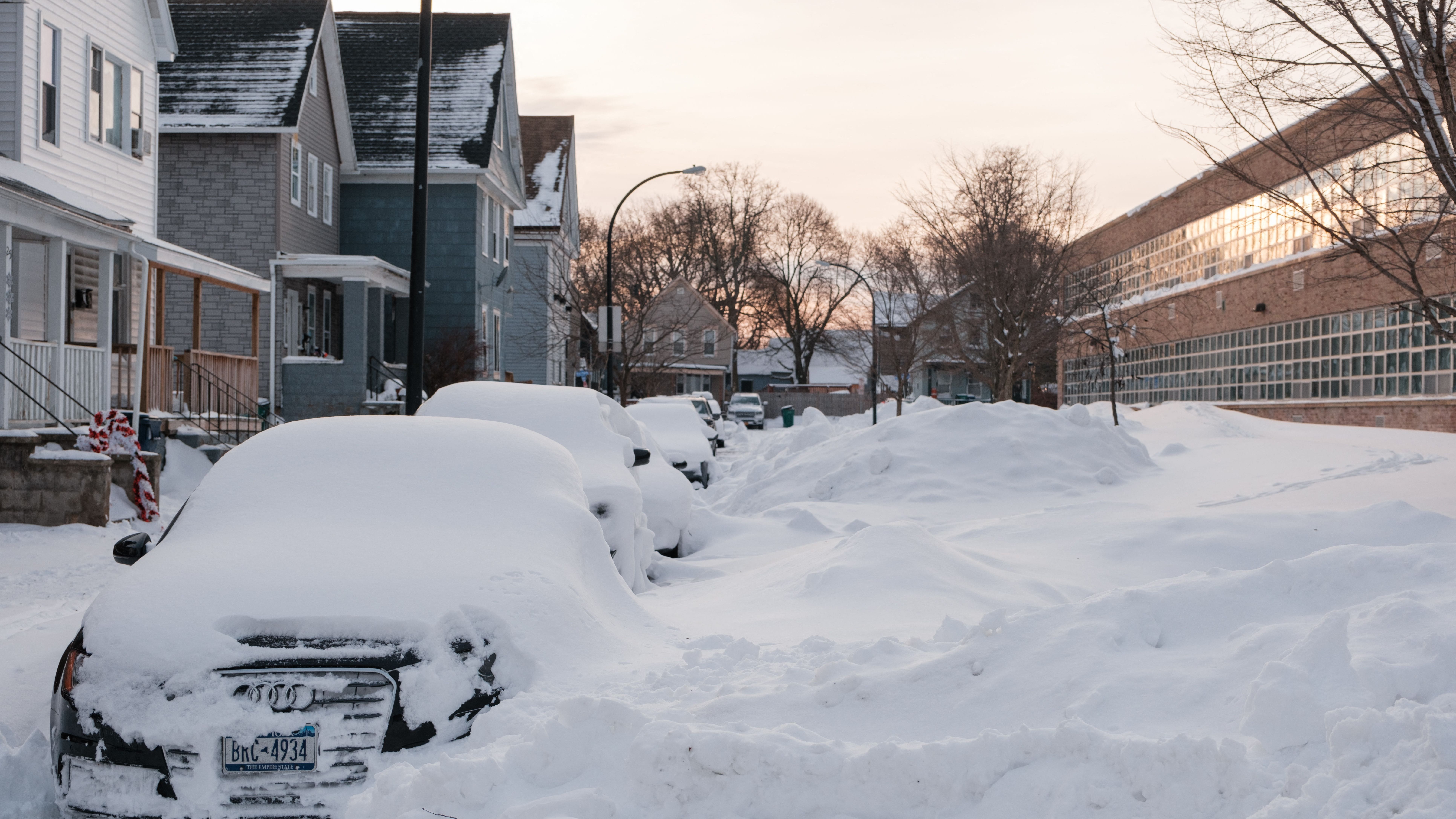

What is a polar vortex? How it affects snow and ice in the United States
A polar vortex is a large region of cold air that circulates over the North Pole. If the wind is strong, the wind will be suppressed, but if the wind weakens, it may sway or stretch.
A record-long federal government shutdown is over, but funding for energy assistance programs that help millions of low-income households heat their homes has yet to arrive.
Last year, the money was distributed to states by the end of October, but officials now say it may not arrive until the end of November.
Meanwhile, local agencies are scrambling for help as a cold snap hits parts of the country and electricity bills soar, raising concerns as more and more homes rely on electricity to heat their homes.
The delays prompted a Nov. 14 letter from Sens. Susan Collins (R-Maine), Jack Reed (D-RI), and Lisa Murkowski (R-Alaska) to urge the Department of Human Services to hurry.
The letter, signed by 31 senators from across the aisle, said: “We urge you to immediately release LIHEAP funds at the highest possible level so that low-income households do not have to choose between paying their utility bills and buying other necessities like food and medicine.”
“With temperatures already dropping, low-income households and the elderly are feeling an added strain on their household finances,” the letter added.
The Low-Income Home Energy Assistance Program (LIHEAP) began in Maine in response to the oil crisis in the 1970s and has since evolved into the current federal program. In recent years, it has received about $4 billion a year and helps about 6 million families. In fiscal year 2024, the program helped heat 1.1 million homes in New York state, more than 400,000 homes in Michigan, and more than 300,000 homes in Pennsylvania.
Mark Wolf, executive director of the National Energy Assistance Directors Association, which represents LIHEAP state directors, said disbursements typically take four to six weeks from approval.
But in a Nov. 18 email to LIHEAP recipients and stakeholders shared with USA TODAY, the agency said funding should be completed by the end of November. An agency spokesperson did not directly respond to USA TODAY’s inquiries regarding timing.
With Thanksgiving approaching, “I think they’re moving heaven and earth to summon the funds,” Wolf said of the funding announcement.
Earlier this year, HHS laid off the entire team responsible for energy assistance programs. A budget proposal leaked from the agency in April showed zero dollars for LIHEAP in the new fiscal year, USA TODAY reported. But the bill passed to end the shutdown left funding for the program unchanged.
LIHEAP provides assistance to vulnerable populations, including people with disabilities, the elderly, and parents of young children.
“They have no discretionary income, so they struggle to pay their daily expenses,” Wolf said. “Some people don’t turn on their furnaces or keep their furnaces so cold that they can become dangerously hot.”
Trends in electricity prices vary by region, but they are generally on the rise. Average electricity bills from June to August increased 5% from last year and 34% from 2019, according to a USA TODAY analysis of federal data. Households spent an average of $204 in July, the highest amount since 2008. This number is not adjusted for inflation.
Like summer electricity bills, winter electricity bills have been rising for most of the past decade, and experts predict this coming winter may be no exception.
Battle for local distributors
NEADA’s November report highlights that high electricity costs disproportionately impact low- and moderate-income households. These households spend three to five times the percentage of their income on energy that high-income households spend on energy.
With energy prices becoming increasingly unaffordable, NEADA predicts that up to 4 million households could face power outages this year, nearly 500,000 more than in 2024.
Most states have cold weather cut protection, but not all states do. Tennessee is one of them. This summer’s electricity bill was 13% higher than last summer.
Misty Goodwin, CEO of the Knoxville-Knox County Community Action Committee, said in an Oct. 30 email that local agencies have some remaining funds from previous fiscal years that will be used for LIHEAP crisis assistance.
“Those who do not meet the crisis criteria will be placed on a waiting list until FY26 funding is released from the federal government,” Goodwin said.
In winter-protected Maryland, Gov. Wes Moore signed an executive order authorizing $10.1 million in energy assistance to fill a federal funding gap.
According to a report by the Howard County Community Action Council, which administers the assistance in Maryland, energy costs have risen along with the number of people seeking assistance, resulting in “fewer people being approved, and those who are approved receiving less assistance.”
Average electricity costs in the three months ending in August were higher in all but nine states than they were during the same period in 2024, according to USA TODAY estimates using data from the U.S. Energy Information Administration.
Why do electricity bills go up?
Experts say the causes of soaring electricity prices are complex to understand, but market forces, policy and the cost of upgrading the grid are all contributing to the trend.
Transmission and distribution costs have risen in recent years as utilities invest in infrastructure upgrades that make the power grid more resilient to extreme weather events such as storms and wildfires. Some of these costs are passed on to consumers.
At the same time, electricity demand is surging after years of flat growth, largely due to data centers powered by artificial intelligence.
“The biggest thing that’s happened in the power industry over the past few years is that demand for electricity has gone from being flat to significantly increasing,” Dave Turk, deputy energy secretary under President Joe Biden, told USA TODAY.
According to a recent report from the Department of Energy and Lawrence Berkeley National Laboratory, the load from data centers has tripled in the past decade and is expected to double or triple again by 2028.
The International Energy Agency predicts that by 2030, data processing could use more electricity than manufacturing all energy-intensive products such as steel and cement.
Demand is also growing due to manufacturing, electric vehicles, and the growing need for air conditioning during hot summers.
Regardless of where demand comes from, if supply can’t keep up, prices will rise. To curb them, we need to bring new power sources online to meet demand.
According to federal data, 82% of the electricity generation scheduled to come online between 2026 and 2029 will come from solar, wind and battery storage. Of note is that of the 20 largest projects scheduled to come online during this period, 19 will be renewable energy projects.
But the projects that could help meet demand are themselves facing growing barriers. In 2024, USA TODAY found that at least 15% of counties have imposed blockades, moratoriums, or outright bans that make it impossible to build large-scale solar and wind projects.
Such development now faces federal challenges after the Trump administration made permitting difficult and ended federal subsidies that experts say have allowed these types of energy sources to be deployed more quickly.
Turk said the Trump administration’s policies are delaying the capacity increases needed to close the supply-demand gap.
“What they’re doing is they’re going to pile failure after failure on solar projects, wind projects, battery storage projects,” Turk said.
At the same time, the administration announced more than $500 million in subsidies for the coal industry and ordered coal-fired power plants on the verge of retirement to keep producing electricity. Coal once made up a large portion of the U.S. energy mix, but gas and renewable energy have replaced it, in part because of cost.
The administration also moved to allow natural gas exports, rescinding a Biden-era moratorium meant to prevent domestic prices from rising. Since natural gas remains the country’s main energy source, export policy could have ripple effects on electricity prices.
Energy Department spokesman Ben Diederich said in a statement that the Trump administration’s policies have made the grid more resilient to outages, adding that without this shift, “energy prices would continue to rise exponentially.”
“We remain focused on lowering prices by unlocking affordable, reliable American energy that works when the wind blows and the sun shines,” Dietderich said.
Tyson Slocum, energy program director for the nonprofit Public Citizen, said President Donald Trump’s policies contradict his campaign promise to lower prices.
“His policies are actively harming all Americans, red states and blue states. The president’s policies will lead to higher energy bills,” Slocum said.
Use USA TODAY’s detailed map below to find out the past 24-, 48-, and 72-hour snowfall amounts, as well as seasonal snowfall amounts in your area.


