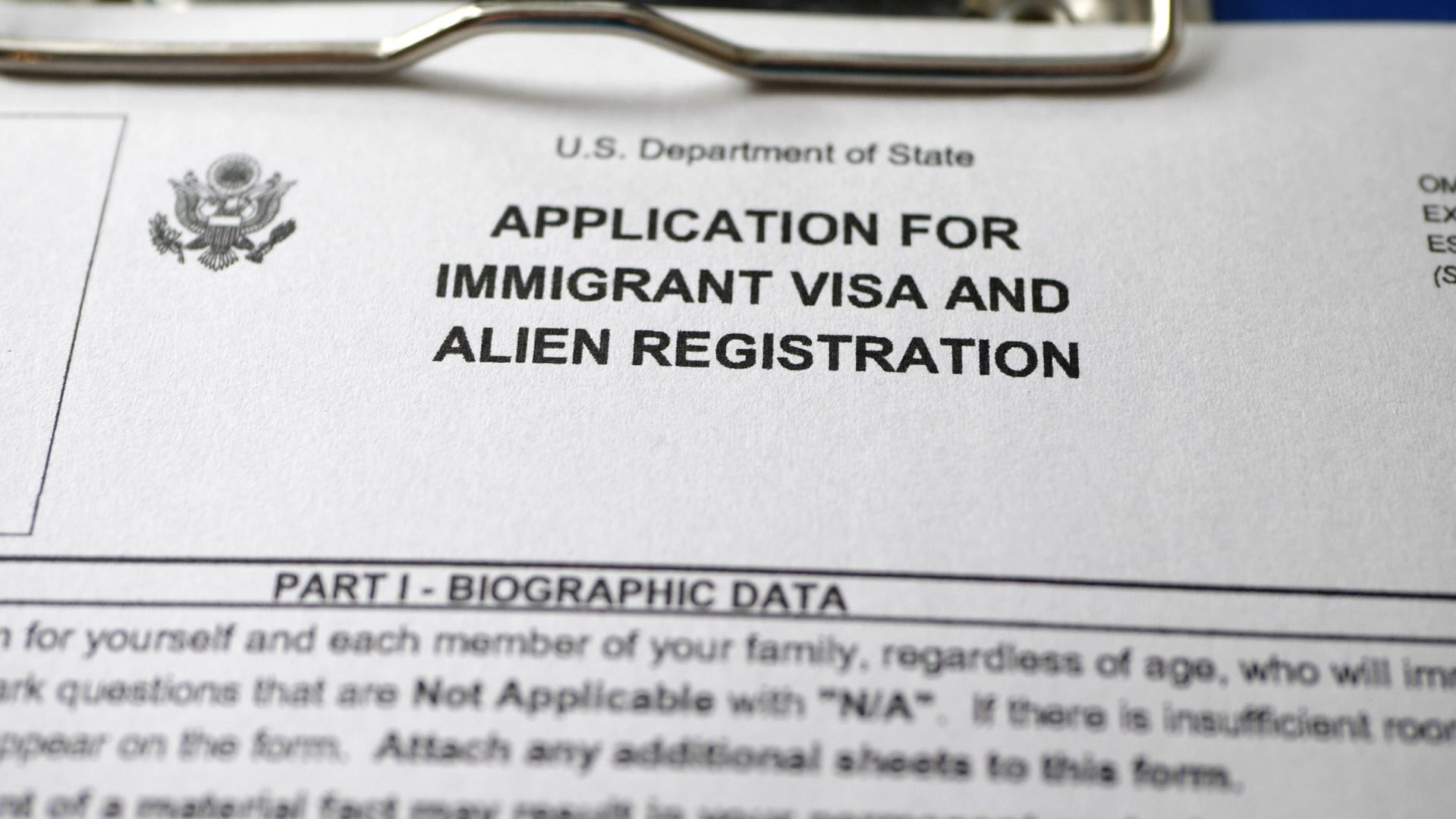

President Trump suspends immigration applications from 19 countries
The Trump administration has suspended green card, citizenship, and visa processing for 19 countries that already have travel bans in place.
As part of a new State Department policy that went into effect Dec. 15, certain visa applicants will have their online presence screened.
The policy expands the previous online screening requirements, which applied to international students and exchange visitors, to include all H-1B applicants and their dependents seeking temporary admission to the United States for professional employment.
The State Department announced the new policy in early December, saying applicants “are directed to adjust the privacy settings on all social media profiles to ‘public’ to facilitate review.”
“The Trump Administration is focused on protecting our nation and its people by upholding the highest standards of national security and public safety throughout the visa process,” a State Department spokesperson told USA TODAY. “A U.S. visa is a privilege, not a right.”
The change comes months after President Donald Trump introduced a $100,000 annual application fee for H-1B visas.
Courts have historically affirmed that First Amendment rights apply to people legally within U.S. borders, even if they are not U.S. citizens. That includes a September ruling by a district court against the Trump administration over efforts to deport unpatriotic student protesters for pro-Palestinian speech.
“Of course, no one’s freedom of speech is unlimited, but the restrictions are the same for citizens and non-citizens alike,” the judge wrote in the ruling, and the government vowed to appeal the decision.
Governments have far greater discretion in making speech-based visa decisions for foreign nationals who are physically present in the country.
Here’s what you need to know about the new policy and its First Amendment implications.
What online content will disqualify an applicant?
“We use all available information in visa screening and review to identify visa applicants who cannot enter the United States, including those who pose a threat to U.S. national security or public safety,” the department said in a statement.
The announcement did not provide details on what exactly the authorities are looking for in the review or what types of content would be considered disqualified.
Reuters previously reported that participating in “censorship,” which includes disinformation, content moderation, fact-checking, and other tasks, would be considered a potential disqualifier when reviewing H-1B applications, according to State Department cables obtained by the news agency.
“If we discover evidence that the applicant was responsible for or complicit in the censorship or attempted censorship of protected speech in the United States, it should pursue a finding that the applicant is ineligible,” according to Reuters.
Why was this policy created?
The new policy was announced around the same time that U.S. Citizenship and Immigration Services suspended immigration applications from 19 countries deemed high-risk.
The agency’s Dec. 2 memo specifically cited the failed 2024 Election Day terrorist attack and the shooting of two National Guardsmen on patrol in Washington in late November.
In the first case in April, an Afghan man took a plea deal.
Another Afghan man has also been arrested in connection with the Washington shooting that killed Sarah Beckstrom, 20, a member of the West Virginia National Guard. Another victim of the attack was 24-year-old US Air Force Staff Sergeant John Johnson. Andrew Wolfe was “slowly recovering” as of early December.
“Given the identified concerns and threats to U.S. citizens, USCIS has determined that a comprehensive review, potential interview, and re-interview of all aliens from high-risk countries of concern who entered the United States after January 20, 2021, is necessary,” the memo states.
U.S. Customs and Border Protection on Dec. 9 proposed rules that would impose new biometric requirements and enhanced data collection on international travelers.
Why are some people concerned about this policy?
Some experts said immigration lawyers are unsure how to advise their clients because of the lack of public information about what exactly online presence screening entails.
Immigration attorney Matthew Maiona said the expanded requirements could cause a “major disruption” to U.S. companies wanting to hire foreign workers whose applications have been slowed by more thorough vetting.
He said many visa applicants have already been told that their appointments will be delayed by several months.
However, he noted that consulates and embassies have the right to investigate applicants’ backgrounds and determine potential threats.
But there are also “grey areas” and the lack of detail has left lawyers “scrambling” about how to advise their clients, said Kate Angustia, supervisory policy and practice advisor at the American Immigration Lawyers Association.
For example, she said it’s unclear whether the government will deny an H-1B applicant’s child because the child posted “Liberate Palestine” on social media.
“We don’t know the scope of the issue, but the fact that anyone’s freedom of speech could be curtailed is a problem and we do not support it,” Angstia said.
Why do some people support this policy?
But others took issue with the idea that the policy posed a challenge to free speech.
“People who are not U.S. citizens have no inherent right to come to the United States,” said Ira Melman, media director for the Federation for American Immigration Reform, which aims to reduce overall immigration. “We can make decisions based on a variety of considerations.”
He noted that the policy is not based on immutable characteristics such as race or religion, adding that the U.S. Supreme Court has given presidents “broad discretion” to define what constitutes a national security threat.
Mellman distinguished between simple policy disagreements and “blatant anti-American rhetoric,” saying the latter could be disqualified because granting a U.S. visa is “a privilege, not a right,” echoing language used by the State Department in announcing the new policy.
“Ideological exclusion has always existed,” Melman said. “Even if Microsoft wanted to hire Nazis, we would not allow Nazis into our country.”
Breanna Frank is USA TODAY’s First Amendment reporter. please contact her bjfrank@usatoday.com.
USA TODAY’s coverage of First Amendment issues is funded by the Freedom Forum in collaboration with our journalism funding partners. Funders do not provide editorial input.


