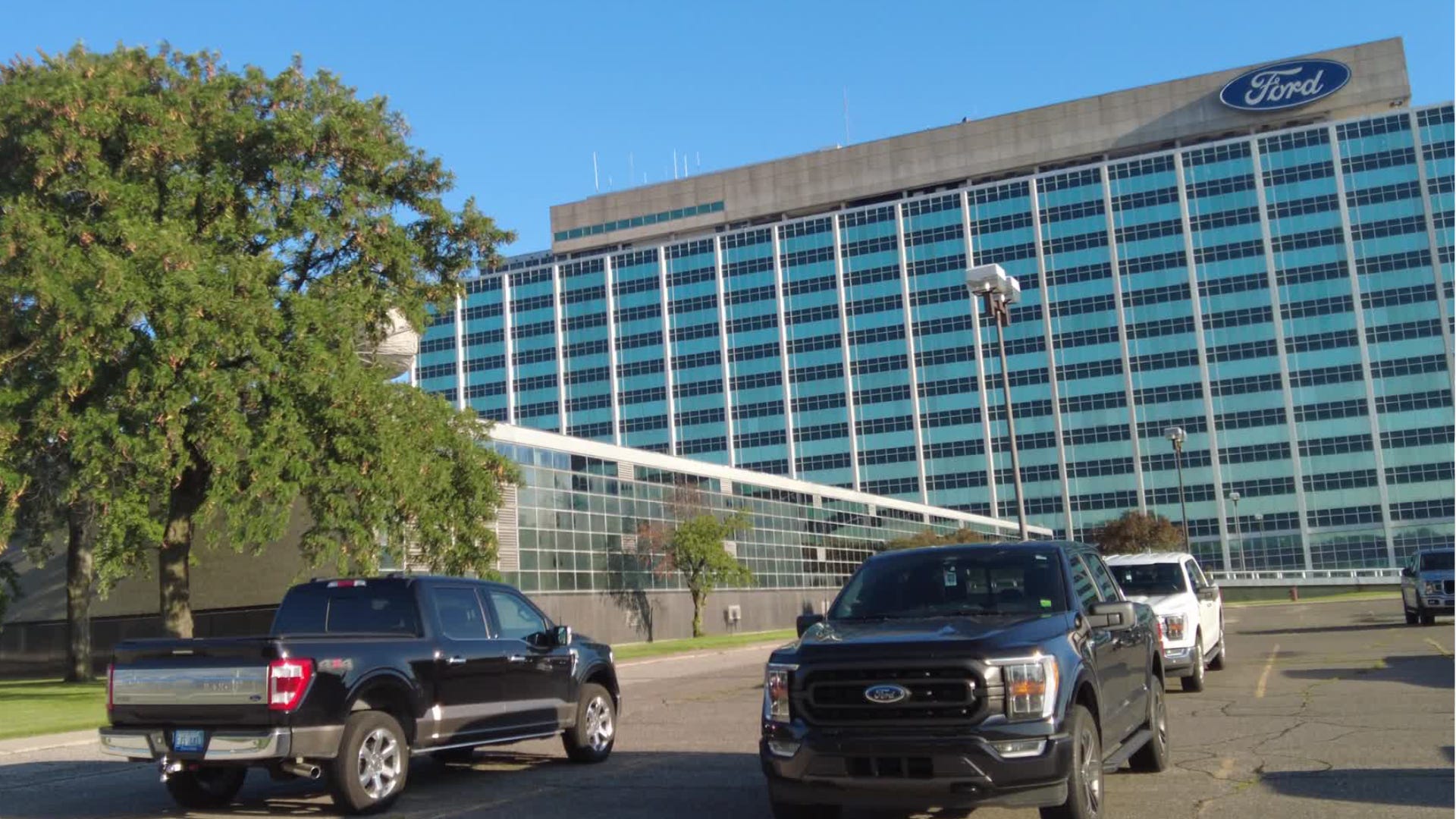

Ford Motor Company: Understanding the automaker’s history and legacy
Explore the rich history of Ford Motor Company, from groundbreaking assembly line innovations to iconic cars like the Model T, Mustang, and F-150.
- A fire at the Novelis aluminum plant in New York has caused an aluminum shortage for Ford Motor Co.
- Ford has temporarily suspended production of the all-electric Lightning and large SUVs, and more vehicles could be affected.
- Experts expect the problem to be long-term, as affected factories may not be able to resume operations until the first quarter of next year.
A late-night fire that destroyed part of the Novelis aluminum plant in New York last month cost Ford Motor Co. more than $1 billion in profits, could lead to layoffs at the plant, and some experts predict the company will be forced to pause production of more vehicles than ever before.
Last week, Ford temporarily suspended production of the all-electric Ford F-150 Lightning and two large SUVs. The downtime could extend to several more weeks due to aluminum shortages, people familiar with the situation said. It remains unclear how many, if any, will be affected, given that some hourly workers may be transferred to other jobs.
Novelis supplies nearly half of the aluminum sheet metal used by U.S. automakers, making Ford its biggest user. Ford uses aluminum in the bodies of many of its vehicles, including its top-selling F-Series pickups. This is because the metal reduces vehicle weight, increases towing capacity and reduces corrosion compared to traditional steel bodies.
On October 13, Ford temporarily suspended production of the Lightning, which was built at its Rouge Electric Vehicle Center in Dearborn, Michigan, due to limited aluminum availability. Production of the vehicle could be halted for several weeks, a union leader familiar with the situation told the Detroit Free Press, part of the USA TODAY Network. The person requested anonymity because he was not authorized to share that information publicly.
That possibility became clear with news on Oct. 14 that Ford temporarily halted some production at its Kentucky Truck plant in Louisville this week. Ford builds the Ford Expedition and Lincoln Navigator large SUVs at the plant, and production of those vehicles is expected to decline “this week and possibly next,” a union official told Gannett’s sister publication The Courier Journal, also part of the USA TODAY Network.
UAW officials say at least two-thirds of Kentucky plants are still operating normally because the Super Duty pickup truck, which is also produced in Kentucky, has not yet been affected by the aluminum shortage caused by the fire.
Ford has said it has a dedicated team to deal with the aluminum issue, but a Novelis spokesperson told the Free Press on Oct. 9 that it had staff “working around the clock” to repair the damage at the aluminum plant, but the company said it did not expect operations to resume until early in the first quarter of next year.
As a result, local UAW leaders in Dearborn are concerned that production of the gasoline version of the F-150, which is being built at Dearborn Trucks, could be affected in the near future, and if Ford’s finances are affected, it could mean layoffs and annual profit-sharing checks for hourly employees.
Industry observers are also preparing for the worst.
“Unless Ford can quickly find an alternative source of supply, there will be a three-month gap in aluminum production, disrupting production of the Super Duty, Ford Expedition, Lincoln Navigator and Ford F-150, among others. “Ford to shut down a major plant just weeks after the pandemic doesn’t bode well for the supply of this critical material,” Sam Fiorani, vice president of global vehicle forecasting at AutoForecast Solutions, told the Detroit Free Press.
He added that President Donald Trump’s 50% tariff on imported aluminum will make it “difficult and expensive” to find alternative sources with sufficient production capacity.
Ford’s costs could rise
Ford has already indicated that the 25% tariffs President Trump will impose on imported vehicles and auto parts this year will result in a net loss of $2 billion in 2025. Tariffs are taxes paid by importers when goods cross national borders.
Morningstar Autos analyst David Whiston told the Detroit Free Press that the aluminum fire could cost Ford more than $1 billion in lost profits in the fourth quarter. But he said: “It’s difficult to know exactly how much production will be lost, so this is a worst-case scenario figure rather than the most likely outcome.”
Whiston said the F-Series is the most important vehicle Ford sells due to its high volume and operating margins that sometimes climb into the 20% range. This means that for every dollar of revenue from the sale of an F-150, Ford retains a profit of 20 cents after all operating costs are covered.
“So it makes sense to prioritize its production over other vehicles, such as the Navigator and Expedition, which are more profitable but produced in much lower volumes,” Whiston said.
The five-day production disruption “won’t be a disaster for dealers waiting on orders, but it won’t help, and Navigator and Expedition inventory at the end of September was down more than 33% and 43%, respectively, compared to the end of September 2024,” Whiston said.
Whiston said it’s certainly possible that there will be more production disruptions given the length of recovery period required for Novelis, but for now “five days isn’t going to kill our quarterly revenue, but it’s not good either, and it’s possible that the various vehicle outages could exceed a total of five days in the fourth quarter.”
Ford’s response to production suspension
Ford spokeswoman Jessica Enoch told the Detroit Free Press in an email on Oct. 15 that the company will provide more details about how the aluminum shortage and production disruptions will impact fourth-quarter results when Ford releases its third-quarter results on Oct. 23.
“Before that, everything was just assumptions and guesswork, including how and why materials were distributed,” Enoch said.
Enoch did not provide further details about the production adjustments other than to reiterate Ford’s statement from earlier this month. “Novelis is one of several aluminum suppliers to Ford. Ford has been working closely with Novelis since the fire approximately three weeks ago, and all teams are dedicated to addressing the situation and considering all alternatives to minimize potential disruption.”
Ford’s “single most important product”
Fiorani said he wouldn’t be surprised if Ford paused Lightning production for a few more weeks, given the aluminum shortage and the expected decline in EV demand in the coming months, as the federal tax credit of up to $7,500 for EV purchases has expired.
He said that while getting aluminum from Canada would boost production, the added cost of tariffs would reduce profits, so one of Ford’s priorities was to ensure dealers had enough F-Series supplies. Fiorani said maintaining market share takes precedence over profitability.
“The F-150 is Ford’s most important product,” Fiorani said.
The revenue and profits Ford is making from the F-150 and Super Duty pickups means the company will do everything it can to keep those assembly lines running, even if it means slowing production of other vehicles.
But “if Ford decides it needs to halt production at any of its truck plants, the automaker is in big trouble,” Fiorani said.
F-Series inventory levels are the highest Fiorani has seen in years, but he said that still doesn’t provide much of a cushion for these trucks. By halting production of the Lightning and large SUVs, Ford will be able to focus on critical F-150 production and “keep two plants open and nearly 10,000 employees dependent on those jobs.”
In addition to the Dearborn Truck Plant, Ford also builds the F-150 at its Kansas City Assembly Plant in Missouri.
“A week of lost production at Kentucky Trucks and the company’s inability to replace that production could cost the company tens of millions of dollars in profits,” Fiorani said, adding that closing a major plant this early in the supplier disruption “likely means this is not Ford’s last production issue of the year.”
Jamie L. Lareau is a senior auto writer covering Ford Motor Company for the Detroit Free Press. Contact Jamie at jlareau@freepress.com. Follow her on Twitter @Jalalean. To sign up for our automotive newsletter. become a subscriber


