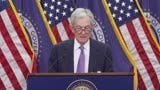

Powell says December rate cut is not certain
Federal Reserve Chairman Jerome Powell said on Wednesday (October 29) that a December rate cut was “not a foregone conclusion” after the central bank cut interest rates by a quarter of a percentage point.
A contentious year for the U.S. central bank is expected by analysts to end with more dissent and uncertainty, two themes that have emerged in recent Federal Reserve meetings.
Most Fed watchers expect a third consecutive rate cut when the Federal Open Market Committee concludes its final meeting of 2025 on December 10th. Still, for those counting on the Fed to provide relief from high prices, a rate cut in December is not guaranteed — something Chairman Jerome Powell said at the end of the last Fed meeting.
Analysts expect there will be multiple objections to another quarterly percentage point rate cut.
“Generally speaking, the board leans dovish, while regional Fed presidents (not all of whom vote) lean hawkish,” Wells Fargo economists wrote in a Dec. 4 memo. “This time as well, we expect opposition to the policy decision on both sides, but there will likely be even more opposition to the policy decision in favor of leaving the policy rate unchanged,” he said.
Why are Fed officials so divided?
Several Fed officials have warned that potential inflationary pressures from tariffs should not be ignored, said James Knightley, chief international economist at ING.
“The economy is still growing, the stock market is at an all-time high, and the unemployment rate is still very low, so there doesn’t seem to be any immediate need for them to cut rates again,” Knightley told USA Today. “But more dovish members of the Fed argue that the second part of the mission, maximizing employment, appears more difficult.”
Mr. Knightley said private-sector layoff data, the Fed’s own Beige Book’s pessimistic assessment of the economy and New York Fed President William Williams’ seeming reluctance to support rate cuts further strengthen the case for further rate cuts.
As of Dec. 7, the CME FedWatch tool predicted that the Federal Open Market Committee would lower the target range for the federal funds rate by a quarter of a point, from 3.5% to 3.75%.
Last meeting of the year under pressure
StoneX senior adviser John Hilsenrath said he expected a “very divisive” December meeting to cap off a high-pressure year.
Since returning to office in January, President Donald Trump has repeatedly attacked Powell in an effort to force the Fed to cut interest rates. In April, President Trump said Powell “can’t be fired soon enough!”
The president’s wish may soon come true. Powell’s term on the Fed’s board expires in 2028, but his term as chairman ends in May 2026. The president is expected to name Powell’s successor early next year.
The recent appointment of Fed Governor Stephen Milan has raised concerns about the Fed’s independence, as Mr. Milan took a leave of absence from his post as chairman of the White House Council of Economic Advisers to join the central bank.
The president also tried to fire Fed Governor Lisa Cook in August for allegedly lying on two mortgage applications in 2021. Cook said President Trump did not have the authority to fire her and said she intended to challenge the decision in court, according to a statement from her lawyer. The Supreme Court said in October that Mr. Trump could not immediately fire Mr. Cook and said it would file a lawsuit in January.
President Trump’s sudden firing of Labor Statistics Secretary Erica McEnterfer following disappointing employment data also caused controversy. Mr. Trump then nominated E. J. Antoni, an economist at the Heritage Foundation, to lead the agency. Trump withdrew his nomination after economists and lawmakers raised concerns about the quality of BLS data under Antoni’s leadership.
Most recently, Treasury Secretary Scott Bessent said he plans to advocate for a requirement that Fed presidents reside in the District for at least three years before being appointed to the position. If not, “we’re going to veto it,” he said.
“The statistical agencies and the Fed are entering the end of the year with their reliability in question,” Hilsenrath said. “(Trump) is prepared to be very aggressive against the Fed, but when he sees markets being shaken, he tends to back off a little bit.”
Data gaps cloud economic outlook
The situation is further complicated by the Federal Open Market Committee still not releasing important recent economic data.
The BLS canceled its inflation and employment report for October after the federal government shutdown delayed data collection and publication, but said some data from that month would be included in its November report. Additionally, the November employment report was postponed to December 16th, and the November inflation report was postponed to December 18th.
The latest consumer price index for September showed inflation at 3%, above the Fed’s target of 2%. U.S. employers added 119,000 jobs in September, but the unemployment rate rose slightly from 4.3% to 4.4%, according to the September jobs report.
Private sector reports fill in some of the data gaps created by the closures. U.S. employers announced 71,321 layoffs in November, down from 153,074 job cuts in October, according to a report from Challenger, Gray & Christmas.
Private employers cut 32,000 jobs in November, according to the ADP National Employment Report, which is based on payroll data.
Economists are skeptical that Powell will be a “definitely hawk” at his Dec. 10 news conference, given how much data is expected to be released before the Fed’s January meeting, according to a Bank of America Global Research report.
“It is unlikely that Mr. Powell will grow out of his data dependence,” the report said. “I wouldn’t be surprised if the market starts pricing in a rate cut more aggressively in the near term (in January).”
Contact Rachel Barber rbarber@usatoday.com X Follow her at @rachelbarber_


