President Trump has indicated that the United States could attack bridges, power plants and desalination facilities if Iran does not agree to a ceasefire or lift the de facto closure of the Strait of Hormuz.
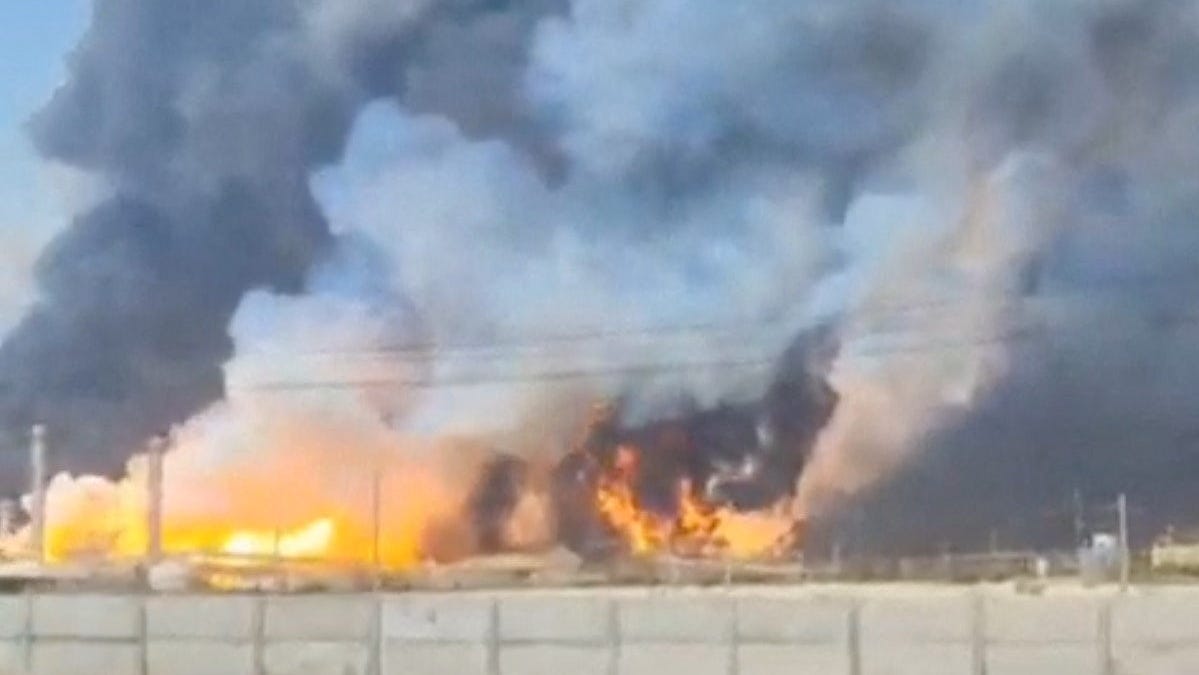

President Trump says US will target Iranian infrastructure on Tuesday
President Trump told Iran that the United States would attack Iranian infrastructure, after weeks of threatening to attack Iran if it did not reopen the Strait of Hormuz.
As the clock ticks down on President Donald Trump’s deadline of Tuesday, April 7, many legal experts and lawmakers are warning that attacks on Iranian infrastructure that he has threatened violate international law and could endanger the lives of millions of Iranians.
On Sunday, April 5, President Trump told Iranian officials in an expletive-laced social media post that Tuesday would be “Power Plant Day and Bridge Day rolled into one,” imposing a strict ultimatum for Iran to reopen the Strait of Hormuz or face attacks on critical infrastructure in the country.
This is not the first time he has made threats. President Trump has suggested in recent weeks that the United States could attack bridges, power plants and desalination facilities if Iran does not reach a deal with the United States or lift a de facto shutdown of a key oil trade route in the Persian Gulf. As the drumbeat intensified, President Trump said on Monday, April 6, that it was “very unlikely” he would extend the deadline amid growing concern and anger.
International law experts and aid groups say the deliberate targeting of civilian infrastructure such as power plants and bridges could constitute a war crime. Lawyers and human rights activists have said over the past week that the destruction of these resources, even if used by the military, would likely wreak havoc on the Iranian people. This taps into one of the core principles of international human rights law: that parties to a conflict must always distinguish between military and civilian objectives.
Nik Jafarnia, a legal researcher at Human Rights Watch, said it is technically possible for bridges and power plants to become military targets. But when civilians also use it, they become targets for problems.
But it is unclear from Trump’s words whether the U.S. attack will be distinguished from infrastructure used only by the military. In recent days, the president has threatened to take Iran “back to its true Stone Age” and on Monday, April 6, threatened to “wipe out the entire country overnight, and that night could be tomorrow night.”
Attacks on power plants serving civilians could severely disrupt resources and cut off power to hospitals, water and wastewater facilities, and other daily services.
“That’s why the law is so obsessed with proportionality,” Jafarnia said. Principles of international law aim to limit the damage caused by military operations and require that the harm to civilian populations not be excessive compared to the military benefits gained from such attacks.
“Unless a particular power plant or a particular bridge that we’re talking about is exclusive to the military, these are going to be used by the public,” she said. “Think about our own lives. What would happen if the power plants in our cities were suddenly attacked? What would not having electricity mean for our lives at a fundamental level?”
President Trump is ‘not worried’ about war crimes risk
At a White House press conference on Monday, April 6, President Trump dismissed concerns that bombing power plants and bridges could constitute a war crime.
“I’m not worried,” President Trump told reporters. “Do you know what a war crime is? Having nuclear weapons. Allowing a sick country with a crazy leader to have nuclear weapons. That’s a war crime.”
A consortium of more than 100 U.S.-based international law experts said in a joint letter on April 2 that the actions of Israel, Iran and the United States raise concerns of “serious violations of international law.” Experts also pointed to the “alarming rhetoric” used by U.S. officials, including President Trump’s threat to “destroy” Iranian power plants.
UN Secretary-General António Guterres told Politico last month that targeting energy infrastructure in a war could violate international law and suggested that all parties may have committed a war crime.
Since the war began with a joint U.S.-Israel attack on Iran on February 28, Iran and Israel have targeted each other’s energy facilities in the Persian Gulf, including oil fields and export hubs. A group of U.S.-based lawyers said in a statement that they were concerned that international humanitarian law was violated during the strike against civilians, including political leaders who have no military role, and civilian resources such as oil and gas infrastructure and desalination plants.
Human Rights Watch listed several instances in the first month of the conflict that it deemed “grave violations of the laws of war,” including attacks by Iran on hotels, homes, and airports in the Gulf, and attacks by Israel and Iran on oil and gas infrastructure. The group also reported that Israel used white phosphorus in Lebanon and that Iran used internationally banned cluster munitions in attacks on Israel.
These violations include a US attack on an elementary school in Minab in southern Iran that killed scores of children. It is considered one of the deadliest single attacks on civilians by the US military in recent decades.
“There is a reason why international law was imposed in the aftermath of the destruction of World War II,” Jafarnia said. “We are now seeing a lot of this unraveling and a lot of civilian casualties.”
Democratic Party leaders claim strike could be ‘war crime’
While Democrats reacted with fury to President Trump’s social media posts on Easter Sunday, Republican leaders remained silent. Some of the most prominent Democrats have warned that the president’s proposed attack could violate international law.
Senate Minority Leader Chuck Schumer, in an April 5 post on the House Minority Leader Hakeem Jeffries called the president’s rhetoric “disgusting and nonchalant,” and Democratic Sen. Chris Murphy called the proposed attack “a clear war crime.”
Sen. Elissa Slotkin, a former CIA analyst and national security official in the Bush and Obama administrations, said the attack violated the U.S. military’s own war guidance and could increase the risk for service members in the region.
Human Rights Watch’s Jafarnia said these threats could have a significant impact on the ongoing war.
“We have repeatedly seen statements by President Trump and other U.S. officials threatening to commit acts that likely amount to war crimes and violations of international law,” she said. “We’re seeing Iran take action on its own, and we’re seeing horrific levels of destruction regionally.”
Civilian lives are at risk as death toll rises
According to the United Nations, joint American and Israeli attacks in Iran and Israeli attacks in Lebanon have killed thousands and displaced millions.
Six weeks into the Iran war, the death toll is in the thousands across multiple countries in the Middle East.
US-based human rights organization HRANA, which focuses on human rights issues in Iran, said 3,546 people have been killed in US and Israeli attacks on Iran since the war began, with 1,616 of the dead confirmed to be civilians, including at least 244 children. Approximately 1,200 deaths are classified as military deaths, and the remaining 711 deaths are unclassified.
Lebanese officials told Reuters that 1,497 people have been killed in Israeli airstrikes since March 2, including at least 129 children.
Missiles fired from Iran and Lebanon have killed 23 people in Israel and 13 U.S. service members have died in the line of duty, according to Israeli emergency services. Dozens of others have been killed in the region, which includes the United Arab Emirates, Qatar, Kuwait, the West Bank, Syria, Oman and Bahrain.
Contributor: Francesca Chambers, USA TODAY.
Kathryn Palmer is USA TODAY’s political reporter. She can be reached at the following address: kapalmer@usatoday.com And to X@Kathryn Purml. Sign up for her daily politics newsletter here.


