The funding crisis had reached a tipping point after more than a month as airport security lines and wait times became unbearably long. The president then said he would pay TSA employees himself.
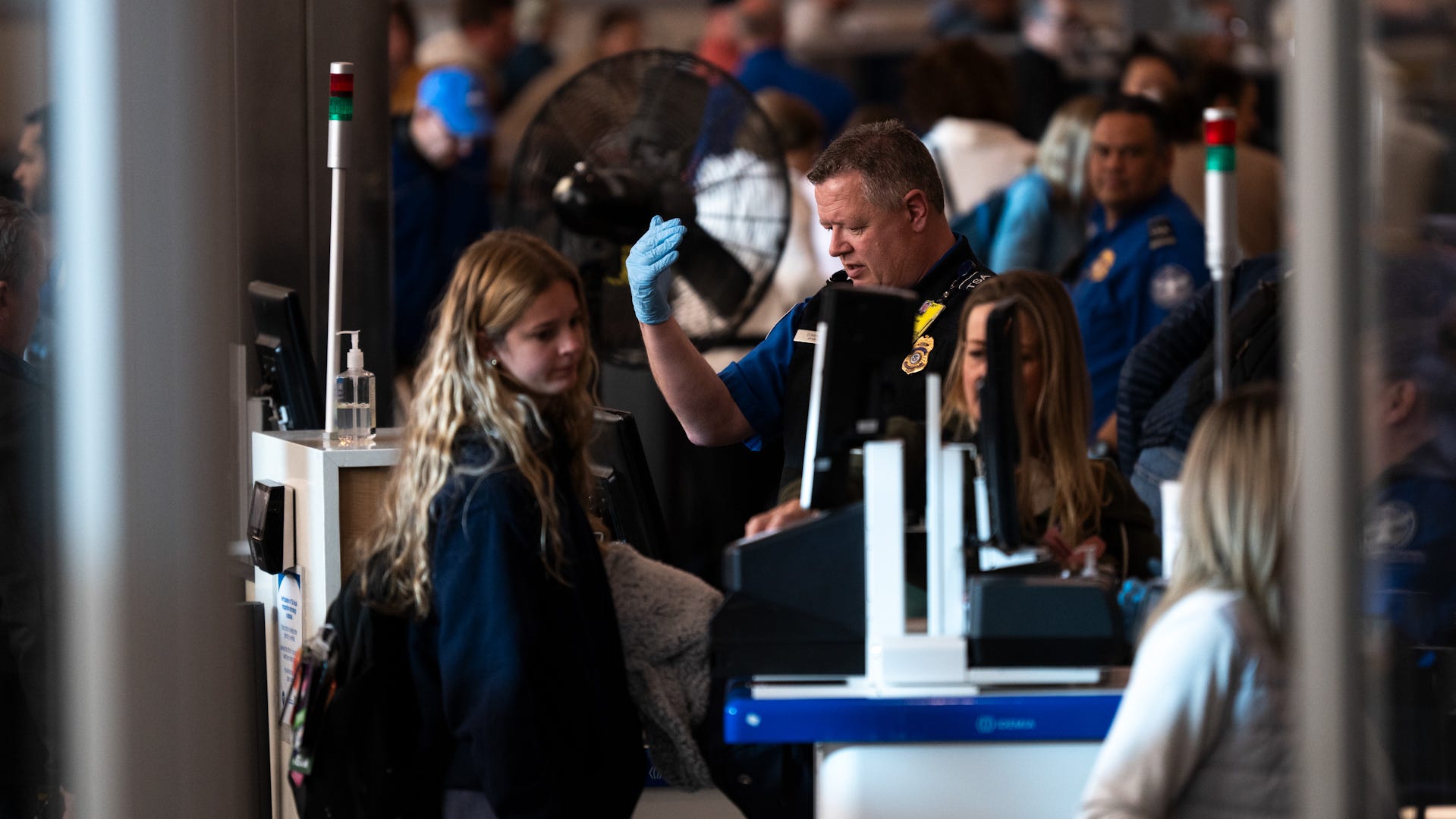

TSA employee continues to work during shutdown, ‘soaked in debt’
Angela Grana, president of the TSA union, told USA TODAY that TSA employees feel “invisible” because they are working for free during the partial government shutdown.
WASHINGTON – With lawmakers eager to get out of town for spring break soon, senators unanimously passed a bill that provides much of the funding for the Department of Homeland Security, clearing a path to ending a six-week shutdown that has left airports in chaos.
The 11th-hour agreement funds all of DHS except parts of Immigration and Customs Enforcement (ICE) and Customs and Border Protection (CBP). The bill still needs to pass the House (originally scheduled to adjourn by the end of this week) and then be sent to the president’s desk.
The late-night deal came after President Donald Trump said earlier in the evening that he would pay Transportation Security Administration (TSA) employees with or without support from Congress, with little sign of a deal in sight. Wait times in airport security lines have reached historic highs in recent days as hundreds of temporarily unpaid TSA employees have left their jobs since the shutdown began, and more have had their jobs canceled.
The bill’s success marked the culmination of a long political showdown that tested Democrats’ resolve to visibly resist the Trump administration’s immigration enforcement policies in a high-stakes midterm election year.
As is common with (increasingly frequent) government shutdowns, the results were mixed.
For a party struggling to grasp the levers of power in Washington, D.C., the gambit has cast an odiously bright spotlight on a controversial and politically complex issue for Republicans for more than a month. And it brought about some important changes. Federal agents were called in from Minnesota after the killings of Renee Good and Alex Preti came under intense scrutiny.
The president fired DHS Secretary Kristi Noem (although this was largely related to a separate controversy over expensive TV ads she oversaw). Her successor has publicly promised greater transparency and at least some new immigration guardrails.
But even the chaos at the airport wasn’t enough to pressure Republicans and the White House to agree to some of the more important reforms Democrats had sought. A ban on mask-wearing and a requirement for judicial warrants for immigration raids were among the demands left out of the final deal.
Once again, Senate Democrats were ultimately satisfied with ending the government shutdown without the concessions they had repeatedly claimed were initially non-negotiable.
“ICE needs to be reformed,” Senate Minority Leader Chuck Schumer (D-N.Y.) told reporters this week. “We need to curb the violence. We have never changed our position.”
The unanimously passed bill does not provide funding to ICE or Border Patrol, but both divisions of DHS already received a large infusion of funding as part of the so-called “One Big, Beautiful Bill Act” passed last year. The tax and spending bill was approved through a special budget process known as reconciliation, which requires support from only a simple majority among senators (instead of the regular 60 votes in the Senate).
ICE and CBP continued to operate during the partial shutdown that began in February. Republicans plan to pass more funding through a separate reconciliation bill, hoping to pass Congress before the next midterm elections, which could return the House majority to Democrats.
Zachary Schermele is a Congressional reporter for USA TODAY. You can email us at zschermele@usatoday.com. Follow him on X at @ZachSchermele and on Bluesky at @zachschermele.bsky.social..


