Although the university is navigating uncharted waters, one dean said, “Nothing fundamentally has changed in the way we carry out our responsibilities.”
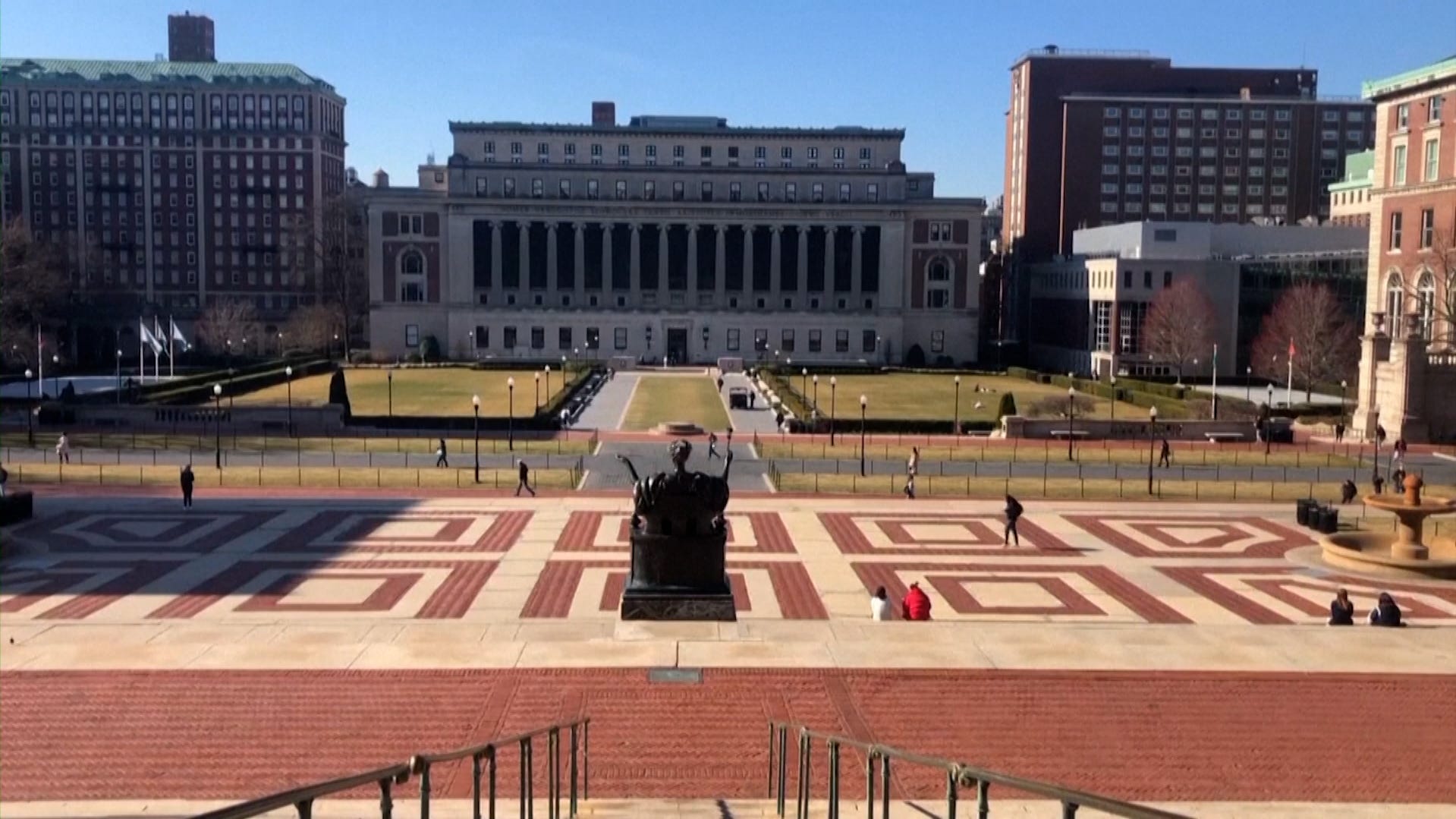

Columbia University to pay $200 million in contract with Trump administration
Columbia University reached an agreement with the Trump administration to restore federal funding.
- Columbia University reached a $200 million agreement with the Trump administration in July. The Knight First Amendment Institute was also concerned that the bill would impede school autonomy.
- While acknowledging Columbia’s challenges, officials were generally optimistic that their institutions can and will continue to work in support of the First Amendment.
Columbia University is embroiled in a massive First Amendment debate on and off campus.
While the school is just one of many targeted by the Trump administration over its handling of pro-Palestinian protests, there are unique tensions between the administration’s actions and the work some of its agencies are doing in support of the First Amendment and opposition to federal oversight.
Columbia Journalism School is considered one of the best and most prestigious schools in the nation, the Columbia Journalism Review is widely respected in the industry, and the Knight First Amendment Institute won a federal court victory against the Trump administration’s efforts to deport foreign-born student protesters for their speech.
Some of these institutions have been vocal about their concerns about what has happened on their campuses this year.
Following the arrest in March of Mahmoud Khalil, who led an anti-Israel protest on Columbia University’s campus, the School of Journalism issued a statement saying the actions “represent a threat to political discourse and the ability of the American news organization to do its essential work.”
“Columbia School of Journalism stands for the First Amendment principles of free speech and freedom of the press that transcend political boundaries,” the statement said.
That same month, the Trump administration announced it was revoking $400 million in federal funding to Columbia University, citing the school’s failure to address anti-Semitism during the Israel-Hamas war in the Gaza Strip.
After the university’s $200 million deal with the government was announced in late July, the Knight Institute said it had “serious concerns” about the terms of the deal, calling it “a surprising devolution of autonomy and power to the government.”
Among other provisions, the agreement requires the university to enforce previously announced policies related to anti-Semitism and harassment, which generally prohibit protests inside academic buildings and require masked protesters to show university identification when asked.
The agreement also states that the school “explicitly disclaims any responsibility for the U.S. allegations or findings.”
Jameel Jaffer, executive director of the Knight Institute, told USA TODAY that the administration’s focus on Columbia is part of a broader attack on specific industries, demonstrated through executive orders against private law firms, lawsuits against news organizations and other negotiations with universities.
Jaffer said leaders of these institutions are in a “very tough position” but are concerned that a deal with the administration could create a domino effect.
“When one university, law firm, or news organization capitulates, it becomes increasingly difficult for the next institution to resist,” Jaffer said.
A school spokesperson instructed USA TODAY that the part of the agreement with the federal government “should not be construed as giving the United States authority to determine faculty hiring, university hiring, admissions decisions, or the content of academic presentations.”
These goals are the university’s “North Star” and “we never wavered from that” in reaching the agreement, Columbia University Interim President Claire Shipman said in a July 23 statement.
“Colombia’s governance remains in our control,” she said. “The federal government does not decide what we teach, who we teach, or which students we admit.”
The Knight Institute says its efforts are “particularly urgent right now.”
When it was founded in 2016, Mr. Jaffer knew that the Knight Institute would have to challenge administrative actions.
Every presidential administration has made efforts to engage freedom of speech and the press in some way, he said, pointing to his past work at the American Civil Liberties Union, where he participated in lawsuits against the George W. Bush and Barack Obama administrations.
But Jaffer said the scale of the Trump administration’s “total attack on the First Amendment” is “unprecedented.”
“We often find ourselves defending principles that we, and most others, assumed were well established,” he said.
The administration rejects such criticism despite taking actions that many see as a threat to the First Amendment.
In response to President Donald Trump’s claims that he has “taken away free speech” in connection with flag-burning, which the Supreme Court has long recognized as protected speech, White House press secretary Abigail Jackson told USA TODAY that President Trump “will always uphold the First Amendment while implementing common-sense, tough-on-crime policies to prevent violence and disorder.”
Professor Jaffer said that while he was “not unsympathetic” to the difficult situation facing university administrators, “it is disheartening to me, and I think so are many others, to see so many of this country’s most powerful institutions complying with the demands of the Trump administration rather than fighting back.”
Jaffer stands by his criticisms of the university, but stressed that his organization has a high degree of autonomy and that Columbia University does not interfere with its activities, much of which focuses on issues off Morningside Heights’ campus.
“I’m more concerned about the Knight Institute than I am about the country,” he said.
Journalism students feel the situation is becoming ‘clarified’
Jelani Cobb, dean of the School of Journalism and publisher of the Columbia Journalism Review, said the school’s agreement with the Trump administration is “the most practical step” among the options available.
Cobb said he was “foolish not to be concerned” about the situation in general, but “not particularly concerned” about the future of the institution he leads. He added that he is more concerned about the fact that universities are created to serve the federal government in the first place, rather than how they serve the federal government.
His latest book, Three or More is a Riot: Notes on How We Get Here 2012-2025, was released in mid-October. It includes Cobb’s thoughts on historical events, social movements, and political developments in the United States leading up to the 2024 election. Cobb wrote that the country will be “fundamentally changed” by the end of President Trump’s second term.
He didn’t say the same about Columbia, but told USA TODAY that the school has certainly been affected by federal oversight and “two years of turmoil and conflict” stemming from the Israel-Hamas war.
“This is very tough terrain…We are trying to overcome it, but nothing fundamentally has changed in the way we carry out our responsibilities,” he said.
Some journalism school students feel the situation is “clarifying,” he said, adding that they have seen firsthand the important role journalism plays in dangerous times.
The school’s student newspaper, the Columbia Daily Spectator, was praised for reporting on a pro-Palestinian encampment on campus, prompting the school to call in police and making numerous arrests.
“I learned a lot this year too.”
But student journalists are also among those affected by a “climate of self-censorship,” senior lecturer Anya Shiffrin wrote in an Oct. 13 column in the Morningside Post, published by the university’s School of International and Public Affairs.
At the same time, she told USA TODAY that her students are “really happy” to be able to discuss the First Amendment, democracy and academic freedom in classes that focus on topics such as global media and disinformation.
Shiffrin said feeling the federal government’s gaze is “not very fun,” but it’s prompting deep reflection and important discussion on campus.
“I think many of us are using this moment to educate not only our students but ourselves about academic freedom and freedom of expression,” she said. “And I think I learned a lot this year.”
Breanna Frank is USA TODAY’s First Amendment reporter. Please contact bjfrank@usatoday.com..
USA TODAY’s coverage of First Amendment issues is funded by the Freedom Forum in collaboration with our journalism funding partners. Funders do not provide editorial input.


