
Ford CEO calls President Donald Trump’s fuel efficiency reset a ‘victory’
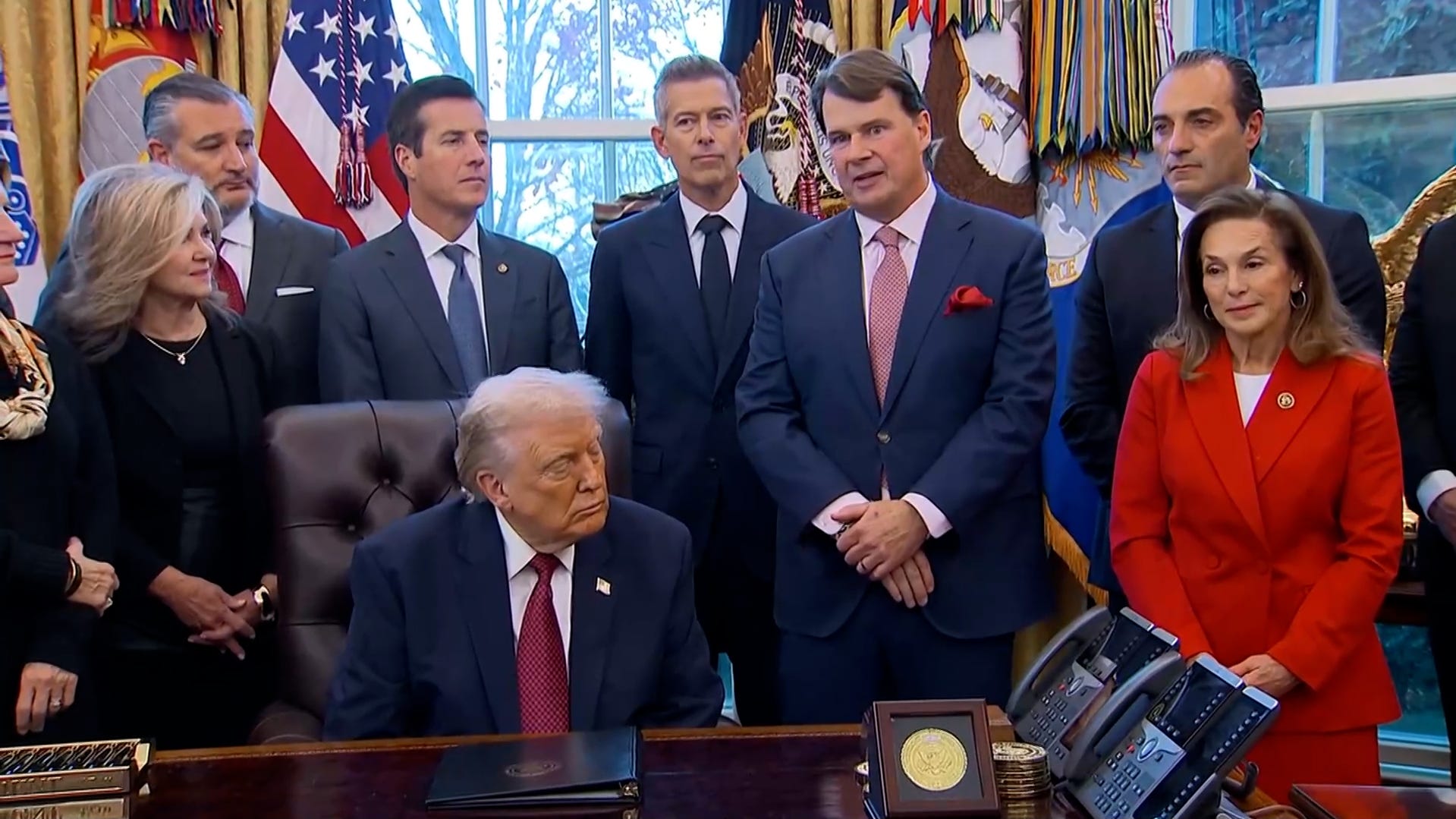
At a meeting in the Oval Office, Ford CEO Jim Farley expressed gratitude for President Donald Trump’s proposal to roll back Biden-era fuel economy standards.
- The Trump administration is lowering federal fuel economy standards to lower new car prices.
- Despite the last policy reduction in 2017, the average price of a new car rose significantly.
- Environmental and consumer groups say the measure would increase pollution and that the federal standards would have minimal impact on car prices.
President Donald Trump lowered federal fuel economy standards for the second time in five years to lower sticker prices for car buyers.
The White House announced Thursday that the U.S. Environmental Protection Agency has finalized a new rule reversing Obama-era scientific findings that greenhouse gas emissions from vehicles and other sources pose a threat to public health.
The 2009 findings, known as the Endangerment Findings, provided the legal basis for some of the federal government’s most ambitious efforts to reduce global-warming vehicle emissions, including rules requiring automakers to average at least 50 miles per gallon for all their vehicles.
President Trump has promised to roll back strict fuel economy regulations that will allow automakers to make cheaper cars.
“This action will reduce regulatory costs by more than $1.3 trillion and lead to significant declines in auto prices,” President Trump said at a White House event on February 12 announcing the measure. “You can get a better car, you can get a car that starts easier, you can get a car that works better for less money.”
With that in mind, the USA TODAY Cars team looked at what happened to car prices the last time President Trump lowered federal fuel efficiency standards, and what car buyers can expect this time.
What happened the last time President Trump rolled back federal fuel rules?
In March 2017, President Trump first announced plans to roll back strict fuel economy rules enacted under former President Barack Obama that required automakers to average 54.5 miles per gallon across their vehicles by 2025. According to Kelley Blue Book, the average price of a new car at the time Trump made his announcement was $34,342.
President Trump’s first rollback froze federal fuel economy standards to about 39 miles per gallon from 2021 through 2026 model years. The average price of a new car in January was $49,191, according to Kelley Blue Book.
When former President Joe Biden took office in January 2021, he almost immediately moved to reinstate strict Obama-era fuel economy standards. Biden ultimately settled on the plan he announced in August 2021. The plan would require automakers to achieve an average vehicle mileage of about 50 miles per gallon by 2031. The average price of a new car at the time was $43,355.
President Trump said his new proposal would eliminate all federal regulations on vehicle emissions.
People’s opinions on President Trump’s reduction in fuel economy
Environmentalists have criticized President Trump’s move to eliminate federal regulations on air pollution from cars, saying it would make cars dirtier and slow the country’s transition to electric vehicles.
“It is irresponsible and deadly for this administration to ignore the evidence of climate change and the persistent policies aimed at curbing climate emissions,” Katherine Garcia, director of the Sierra Club Clean Transportation for All, said in a statement.
“The science shows that an urgent transition to electric vehicles is essential if we are to protect our health and our climate at the pace we need,” Garcia continued.
Daniel Green, senior director of consumer protection and product safety at the Consumer Federation of America, which bills itself as the nation’s oldest consumer advocacy group, said American families should not have to “choose between safety, fuel efficiency and car affordability.”
“Federal safety and fuel economy standards have a small impact on car prices, but they save families thousands of dollars over the life of a car,” Green said.
Mr. Green said the real culprit for sticker shock at car dealerships is not federal emissions regulations but “the production of more upscale models, more expensive vehicle configurations, and higher showroom prices.”
Stephanie Valdez Streety, director of industry insights at Cox Automotive, agreed, saying in a statement provided to USA TODAY, “Historically, changes in fuel economy and emissions regulations have not translated into substantial sticker price relief for consumers.”
“Historically, new car prices have increased by an average of about 3% per year, and regulatory changes have not significantly changed that long-term trend,” he said. “The truth is, politics can move much faster than the auto industry. Policy and regulatory changes tend to affect auto production gradually over multiple model years, rather than a sudden price reset.”


