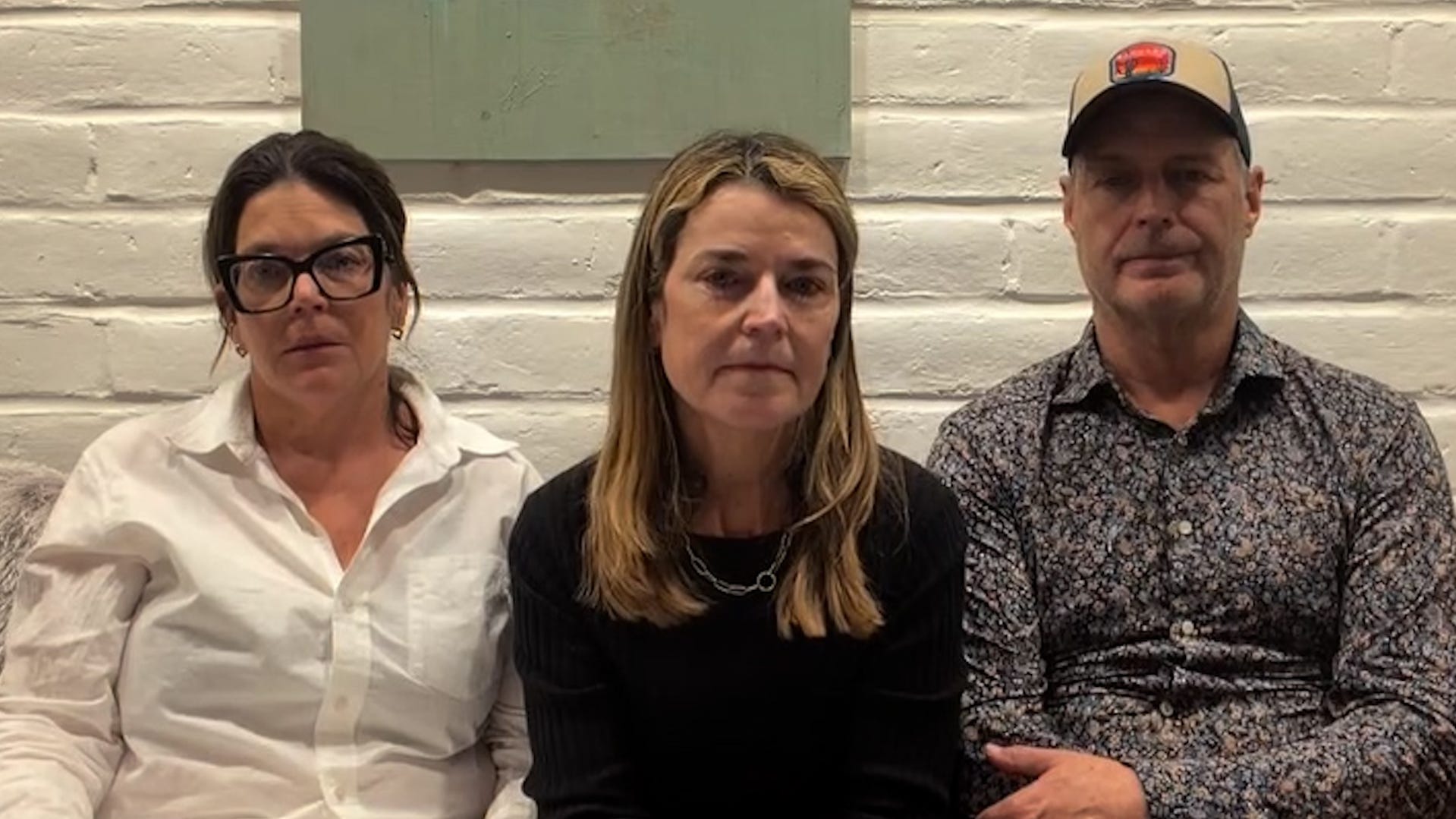

Savannah Guthrie and her siblings ask to take their mother home
Today anchor Savannah Guthrie, seated between her siblings, made an emotional plea on social media to bring her mother home.
Amid the ongoing search for Today co-host Savannah Guthrie’s mother, Nancy Guthrie, TMZ and the CBS News affiliate in Arizona have reported that they have received demands for millions of dollars in Bitcoin for her release.
TMZ said the memo requested millions in Bitcoin cryptocurrency and provided specific Bitcoin addresses. The outlet reported that it had confirmed the validity of the address.
While law enforcement authorities continue to evaluate the memo’s effectiveness, some Americans may wonder whether a Bitcoin address is enough to find the culprit, or at least narrow the search for the kidnapper.
It’s not that simple. Here’s what you need to know about Bitcoin.
How do Bitcoin transactions work?
When someone establishes a Bitcoin wallet with a private key that makes the wallet unique to that user, an initial Bitcoin address is generated that can send and receive Bitcoins. Users can create more addresses.
This is much like an email address that someone uses to communicate with another person, except that each Bitcoin address only needs to be used once. According to Bitcoin.org, an open-source, community-driven website that provides Bitcoin education, each transaction must use a unique Bitcoin address to increase privacy.
Different addresses hide or disperse transactions, making it difficult to link them to a single person. People can use the same address, but you’ll see the pattern of money going in and out of that address.
Knowing a transaction’s address still does not reveal its owner, since the address is pseudonymous and not attached to an email, phone number, or address. To dig deeper you will need more sophisticated tools.
Why would you choose to receive your ransom in Bitcoin?
“Criminals demand ransom payments in cryptocurrencies because they are fast, efficient, and make it easy to verify if and when payments have been made,” Angelena Bradfield and Stephanie Wake of banking advocacy group BPI wrote in 2021.
According to Bitcoin.org, the features of Bitcoin that criminals may like are:
- It is difficult to trace the identity of individuals in Bitcoin transactions. Bitcoin does not require an ID to use, and the trading software can be installed by anyone in the world.
- Using different addresses and possibly different wallets each time for different purposes isolates each transaction and makes it difficult to link them to a single individual.
- Transactions are quick, cheap, irreversible (like cash), and can be made 24 hours a day, 365 days a year, 365 days a year.
- IP addresses (similar to street numbers on Internet devices) can hide a person’s location from easy identification.
Will investigators be able to find the owner of the Bitcoin address?
Ken Gray, a professor at the University of New Haven’s School of Criminal Justice and Criminology and a former FBI agent, said finding the owner of a Bitcoin address is nearly impossible.
“Cryptocurrencies are untraceable,” Gray said. “It’s outside the banking system and you can’t find the owner. That’s why it’s the currency of choice for criminals.”
“Nobody wants to carry around a big suitcase full of cash,” Gray said, because funds sent through PayPal or Venmo can be tracked. “Cryptocurrency is a modern way of transporting large amounts of money,” it quietly states.
What about the story of virtual currency recovery by investigators?
There are numerous stories of investigators recovering billions of dollars in cryptocurrencies. But Gray said such cases typically begin by tracking a person through physical means, such as email or phone calls, and directing them to cryptocurrencies.
In Guthrie’s case, an investigation could begin with a ransom note received by media outlets, he said. Investigators may try to trace the emails. If the criminal is a professional, he or she may have used anonymous email that traverses multiple networks to reach the recipient. This may make tracking more difficult, but the FBI may exploit vulnerabilities.
As for the code itself, “it doesn’t connect you to the person requesting it,” Gray said.
Medora Lee is USA TODAY’s money, markets and personal finance reporter. Please contact us at mjlee@usatoday.com. Subscribe to our free Daily Money newsletter for personal finance tips and business news every Monday through Friday.


