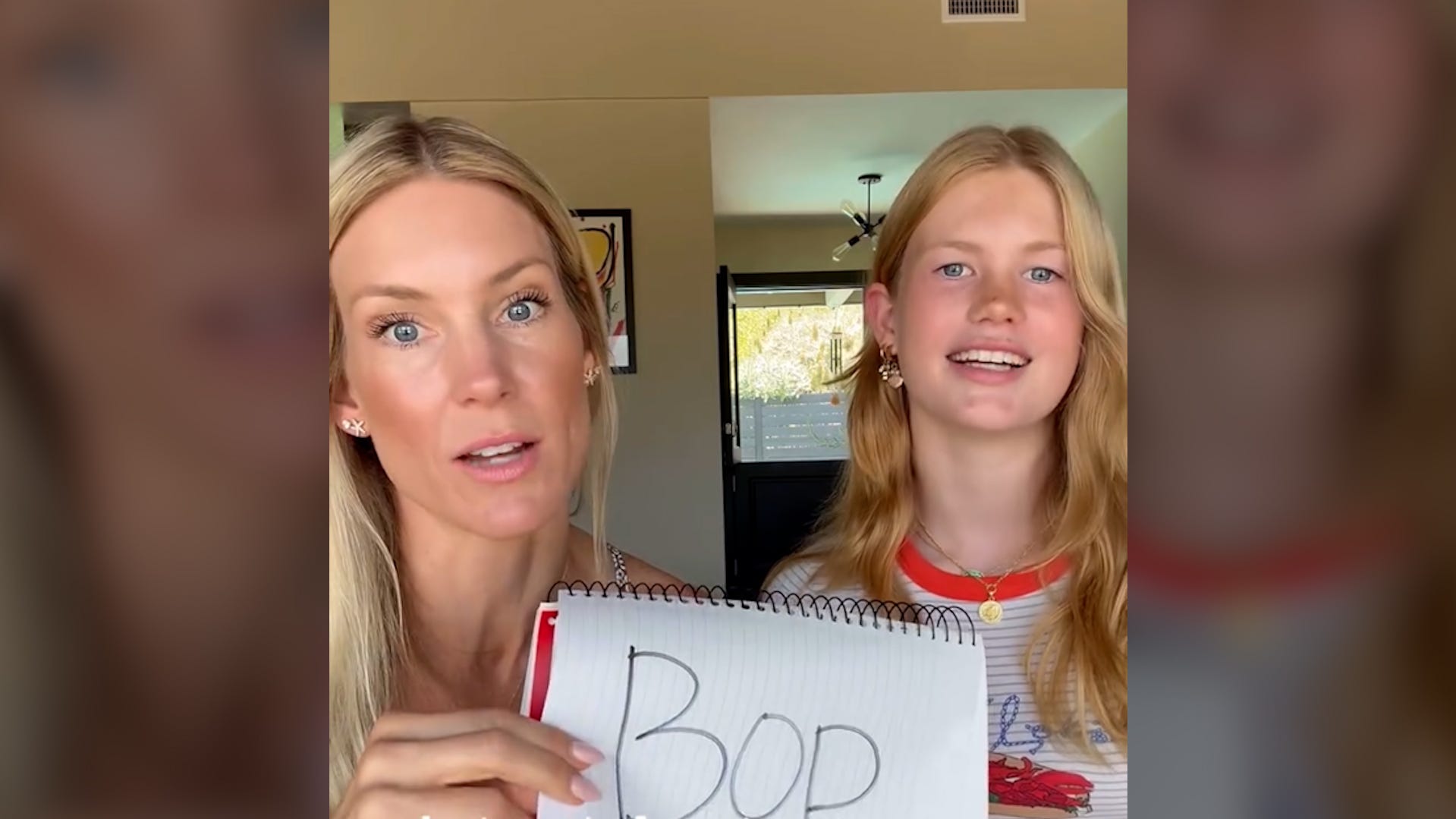

Watch how Gen Alpha introduces their parents to popular slang
A new social media trend focuses on Generation Alpha explaining their complicated slang to their parents.
Are people around you busy cultivating aura? Tired of clip farming your entire FYP? Or are you over 25 and have no idea what that means?
New slang captures the cultural zeitgeist, at least that of some younger members of Generation Alpha (born between 2010 and 2024) and Generation Z (born between 1997 and 2012). One of those terms is “aura farming,” and it’s made a name for itself on the internet, the NFL, and, if you’re a parent, in the back seat of your car driving your kids and their friends to soccer practice.
But “aura farming,” and its perhaps more unpleasant cousin “clip farming,” aren’t just terms coined to embarrass millennials and baby boomers (though they certainly do that, too). According to linguistics and communication experts, they also say a lot about the world in which young people are entering adulthood and, as a result, what is important to them.
“While a ‘new trend’ to some, the teenage habit of establishing coded language and terminology to describe lived experiences and social trends is not a unique tactic,” says Melvin Williams, associate professor of communication and media studies at Pace University. “Instead, the terms ‘aura farming’ and ‘clip farming’ refer to Gen Z and Gen Alpha’s heavy reliance on social media and the role of digital media in promoting nearly all forms of sociability approaches.”
Gen Alpha is “Aura Farming”, “Clip Farming”. What is it?
No, “aura farming” is not some kind of occult ritual. And to understand that, we first need to know what an “aura” is.
In Gen Alpha terms, “aura” basically refers to the special glow that surrounds certain celebrities, influencers, and generally cool people. If someone has an “aura,” that means they’re cool. Therefore, cultivating your aura is something you do to increase your coolness. But be careful: If it looks like you’re trying. too much It’s hard to be cool and you run the risk of looking really lame. Understood?
You’re already doing your best, but we’re here to make your life even better: Sign up for our newsletter Better Yet.
One of the blueprints for aura farming came from a viral video of a young boy casually dancing on a racing boat. He’s been held up online as an example of what it means to successfully cultivate an aura, and his moves in videos have even inspired viral dance trends.
Jeff Hancock, founding director of the Stanford Social Media Lab and professor of communication at Stanford University, says important aspects of “aura” include “cultivating a sense of status and mystique.” Having an aura isn’t just about being cool in the traditional sense. It’s about being mysterious, mysterious, and unassuming. “Ambiguity is also very important,” Hancock added.
Timothée Chalamet is often cited as a man with aura. So is Frank Ocean. And Rihanna is hailed as the queen of auras.
Auras aren’t just for today’s stars. James Dean and Greta Garbo certainly have an aura about them, even in old black-and-white photos, Hancock says.
Similar to “aura farming,” “clip farming” also aims to attract attention and go viral. Like aura farming, this is not entirely new.
Since the advent of television and radio, celebrities have concocted deliberate soundbites to capture and persuade the public’s attention. “Clip farming” is basically the modern-day, TikTok version of that. It’s about doing or saying something, usually in front of the camera, that results in a moment that becomes a viral clip. Like “aura farming,” it risks appearing far-fetched, like an overly obvious attention-seeking act.
What “Aura Farming” and “Clip Farming” Say About Us
So why should someone old enough to not have access to their parent’s health insurance care about aura or clip farming at all? Well, even if this slang doesn’t belong to your generation, experts say it provides a window into the world that will shape the next one.
Adam Aleksik, a linguist and author of Algospeak: How Social Media Is Transforming the Future of Language, says both terms are borrowed from video game jargon. “Farming” in video games involves doing things to gain experience points, which eventually level up and become more powerful.
The fact that Gen Alpha and Gen Z are using video game dialogue to describe real-life experiences shows how interwoven their real world is with the digital world, Alexic said.
“We’re increasingly applying these video game language terms to normal conversation,” he says. “We’ve seen time and time again how a lot of baseball terminology becomes mainstream, like ‘ready to bat,’ ‘on deck,’ etc. The world of sports has always influenced the world of language. Now, video games are becoming more culturally relevant and are starting to borrow more from video game slang.”
And if you feel uncomfortable hearing these phrases, that’s okay.
Hancock says these ever-evolving phrases can make parents feel like their child is speaking another language. “But they are not the only ones feeling excluded,” he added. “And that’s on purpose.”


