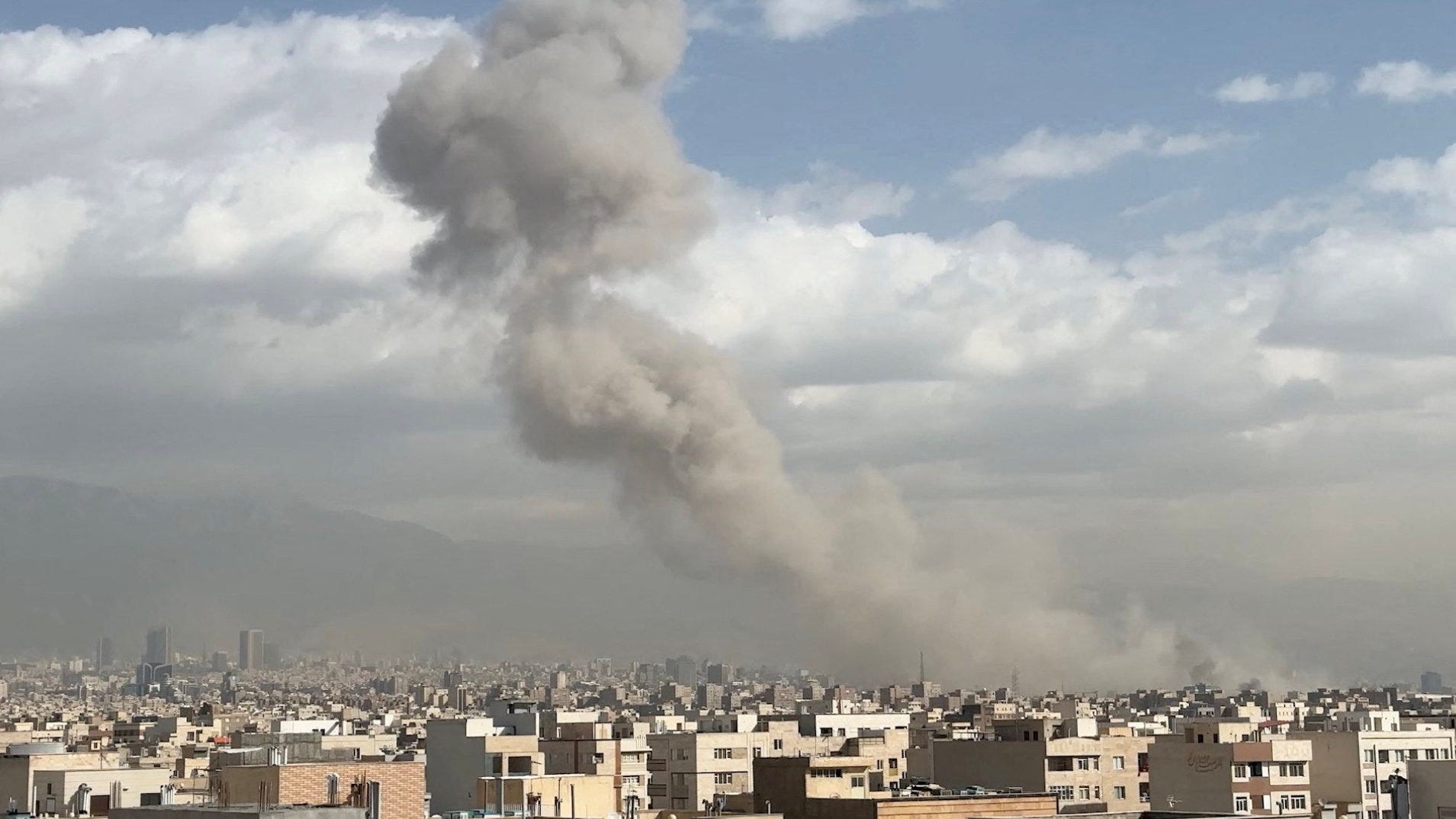

US and Israel report explosion during attack on Iran
As nuclear talks stall and military tensions rise, the US and Israel attack Iran as Tehran is rocked by explosions.
The United States and Israel carried out military strikes against Iran on Saturday, February 28, targeting the country’s top leaders and plunging the Middle East into conflict, which President Donald Trump said would end the security threat to the United States and give Iranians a chance to topple their rulers.
Although the U.S. Constitution gives Congress the sole power to declare war, and this power was last formally exercised in 1942 for World War II, the president can often take military action without formal Congressional approval under the War Powers Act of 1973 or his authority as commander-in-chief.
Every president since Gerald Ford has used this resolution to initiate or justify military action in conflicts such as Vietnam, Yugoslavia, Libya, Iraq, and drone strikes in the Middle East.
Has the United States officially declared war?
The United States, along with Israel, carried out a major military attack against Iran on Saturday, but has not formally declared war.
In the United States, only Congress can declare war. Lawmakers have not voted on any declarations or new authorizations related to Iran. Instead, the president ordered the attack under his authority as commander in chief, calling it a “massive combat operation” aimed at thwarting what he described as an imminent threat.
The Pentagon dubbed the action “Operation Epic Fury,” a term typically used for military operations that do not amount to a declaration of war. Although fighting is ongoing and Iran is retaliating, under U.S. law, Iran is not officially at war unless Congress does so.
What is Congress’ reaction to Operation Epic Fury?
As expected, Congress is sharply divided between Republicans and Democrats.
Republican leaders and national security hawks largely praised the attack, saying Iran was an imminent threat and that diplomacy had failed.
Senate Majority Leader John Thune and House Speaker Mike Johnson supported President Trump’s decision and said senior lawmakers had been briefed in advance.
Sens. Lindsey Graham and Tom Cotton argue that this operation is necessary and long overdue, with Sen. Graham openly supporting regime change in Iran.
Criticism of democracy and concerns about military strength
Many Democrats and a few Republicans denounced the strike as unauthorized and warned that the president was bypassing Congress.
Rep. Thomas Massie (R-Ky.) said he will once again work with Rep. Ro Khanna (D-Calif.) to force a vote on the War Powers Act.
“I’m against this war,” Massey said on social media. “This is not ‘America First.'”
An information session will be held, but no voting will take place.
Administration officials notified members of the bipartisan Group of Eight before the strike, but Congress did not vote on a declaration of war or new authorization. That gap is now prompting calls for lawmakers to return to Washington and formally seek input.
USA TODAY’s Kim Hjelmgaard, Francesca Chambers, Bart Jansen, Will Carless and Sarah D. Wire contributed reporting to this story.


