These earthquakes are not thought to be related. But they are a reminder of the dangers that lurk.
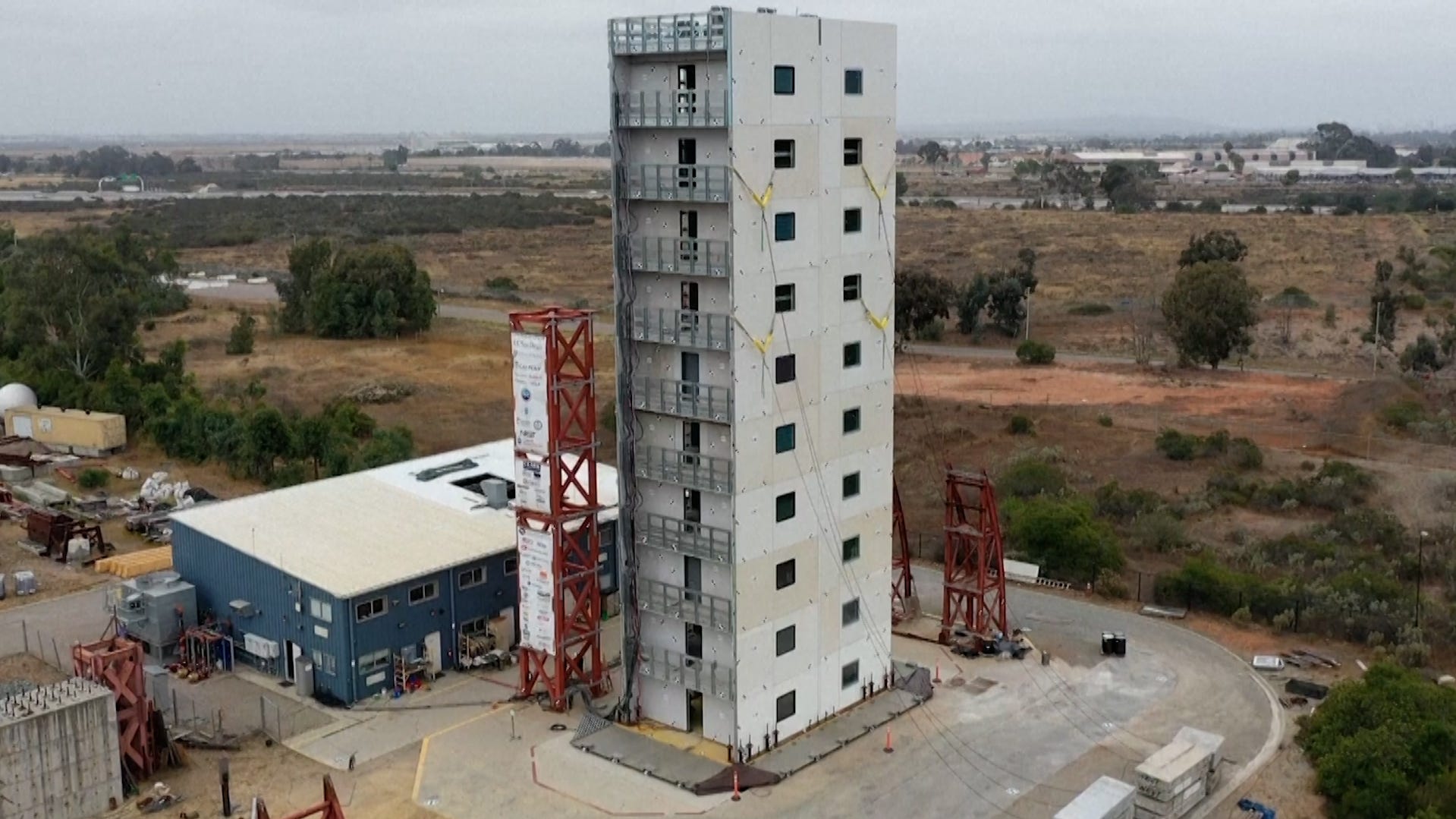

UCSD researchers test 10-story building in earthquake simulator
Researchers at the University of California, San Diego simulated a magnitude 6.9 earthquake to see if the 10-story building would remain intact.
Two earthquakes of magnitude 7.0 or higher have occurred in Alaska and Japan within the past few days, raising concerns that another major quake will strike.
The first earthquake occurred in Alaska on December 6th, with a magnitude of 7.0, a magnitude that could have caused severe damage if it had not occurred in a remote area near the Canadian border. The second time was on December 8, when a 7.6-magnitude earthquake struck northern Japan, injuring at least 30 people and causing a tsunami warning to be issued but later lifted. Tens of thousands of people were evacuated from their homes.
Aftershocks were recorded from both earthquakes. Japanese authorities on December 8 warned that an even more powerful earthquake could occur within the next week, urging residents from the northernmost tip of Hokkaido to Chiba Prefecture, east of Tokyo, to be on high alert.
The earthquake was notable for its strength.
According to the U.S. Geological Survey, approximately 16 major earthquakes are expected around the world each year, of which 15 are magnitude 7.0 or greater and one is magnitude 8.0 or greater. This is based on records dating back to approximately 1900. Over the past 40 to 50 years, the long-term average number of large earthquakes per year has exceeded by about 12.
However, two such earthquakes within a short period of time are occasional occurrences and do not necessarily indicate that another disaster is imminent.
“It doesn’t happen all the time, but it’s not that unusual,” said Rice University professor and seismology expert Brandon Schmandt.
This reminds us of an uncomfortable truth in earthquake science. Scientists know a devastating earthquake is coming, but they have no reliable way to predict when it will occur.
“No one can predict earthquakes, but by studying faults and past earthquakes, scientists can more accurately assess the likelihood of future earthquakes and their strength,” the USGS said.
How strange is it that two major earthquakes occur?
Speaking of “pure coincidence,” it’s actually not uncommon for two earthquakes of magnitude 7.0 or greater to occur at the same time so close together, according to California Institute of Technology seismologist Lucy Jones.
“Somewhere in the world, on average, there is a magnitude 7.0 earthquake every month,” Jones said.
Jones said an average of one per month will be randomly distributed. After months of nothing, multiple conditions can develop in a short period of time. Jones said the estimate is based on the probability that earthquakes of magnitude 7 or higher are likely to occur within half a week of each other once every few years.
“It doesn’t always happen, but we looked for a physical correlation and couldn’t find it,” she said.
Like aftershocks, one earthquake can cause another, but there is no connection between the Alaska and Japan earthquakes, which appear to be completely unrelated, Schmandt said. Aftershocks tend to occur in the same geographic area as the main shock.
Jones said that after an earthquake occurs, there is about a 5% chance that another, larger earthquake will occur nearby within a few days. While a 5% chance may not seem like a big deal, it is much greater than the base probability, which is what is driving Japanese authorities to remain on high alert for the time being, she said.
The most recent example occurred in 2019 near Ridgecrest, California, Jones noted. A magnitude 6.4 earthquake occurred on Independence Day, followed by less strong aftershocks. The next day, a magnitude 7.1 earthquake struck Southern California, the strongest to hit Southern California in 20 years.
Is the United States at risk of a devastating earthquake? What about “The Big One”?
A U.S. Geological Survey report released last year found hundreds of unidentified faults across the country, putting much of the country at risk of earthquake damage within the next 100 years.
According to the USGS, people in 37 states have experienced earthquakes of magnitude 5.0 or greater over the past two centuries.
The danger is most concentrated on the West Coast and southern Alaska, where the most active tectonic plate boundaries are found.
Concerns about the so-called “Big One” phenomenon, a huge earthquake that could cause untold devastation, have long worried residents in these regions. Experts say it can happen at any time or it can’t happen for a long time. And there may be more than one “Big One.”
Schmandt said the Cascadia subduction zone, which stretches from northern California through Oregon and Washington to Canada, could harbor what could be considered a “Big One” event. The last known earthquake on this fault occurred in January 1700 and had an estimated magnitude of 9.0, according to the Oregon Emergency Management Agency.
“Scientists currently predict that there is an approximately 37 percent chance that a major earthquake of magnitude 7.1 or greater will occur in this fault zone within the next 50 years. This earthquake will be felt throughout the Pacific Northwest,” the department said.
What does earthquake magnitude mean?
According to Michigan Technological University, the size of an earthquake can have the following effects:
- Less than 2.5: generally not felt
- 2.5 to 5.4: Minor damage or no damage
- 5.5 to 6.0: Minor damage to building
- 6.1 to 6.9: serious damage
- 7.0-7.9: Big earthquake. serious damage
- 8.0 or higher: Massive damage, potentially destroying communities
Contributed by: Elizabeth Wise and Terry Collins, USA TODAY; Reuters


