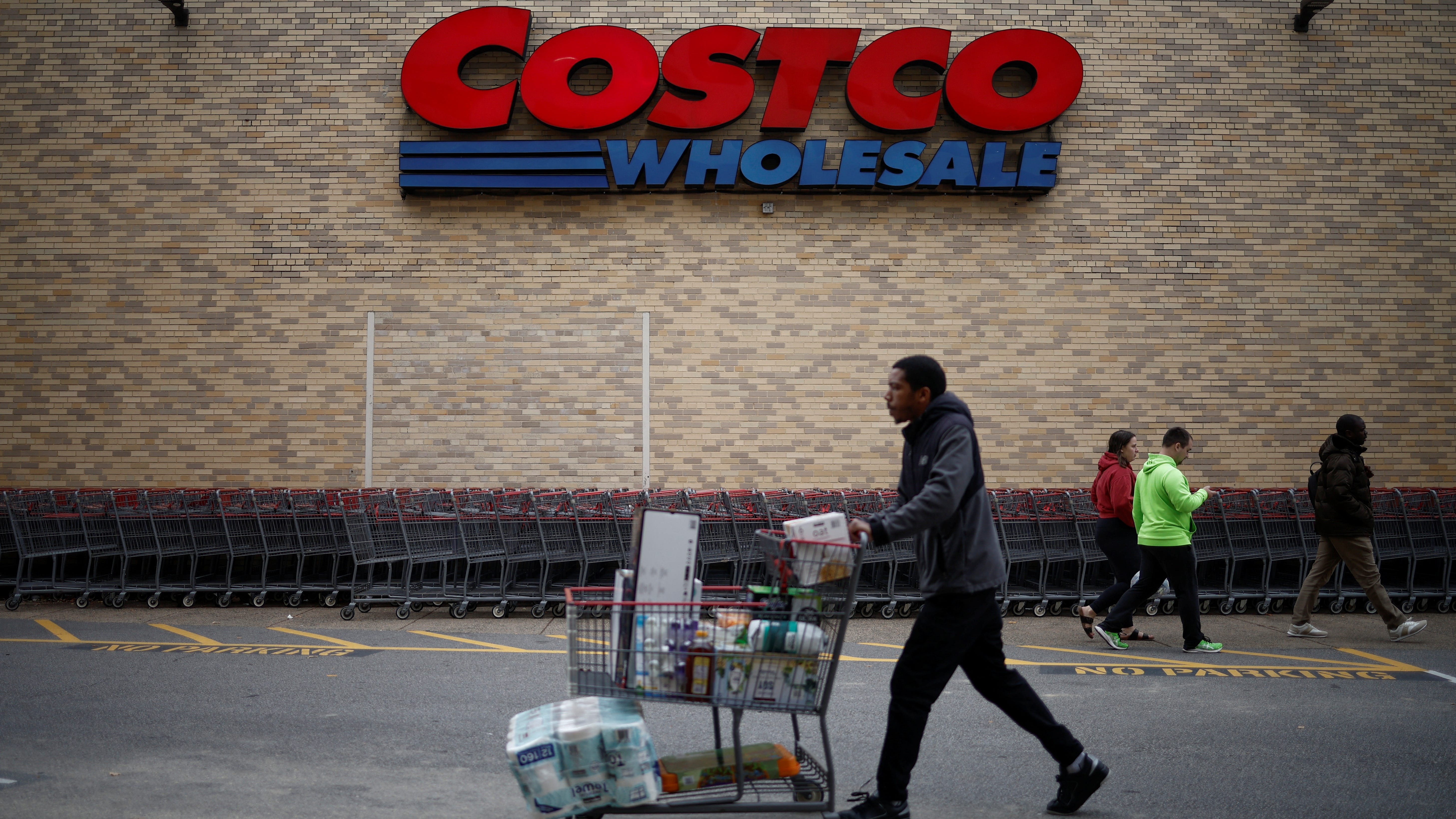

Companies Standing Up to Trump on DEI
Companies like Costco and Levi’s are rejecting the White House’s positions on diversity, equity, and inclusion.
As the nation approaches its 250th anniversary, the country’s population is larger, older, significantly older, more racially and ethnically diverse, and more foreign-born than at the time of the nation’s 200th anniversary, according to a report compiled by the Pew Research Center.
According to the center, the U.S. population has grown by more than 120 million people over the past 50 years, reaching 340 million. Much of that growth is due to immigration, longer life expectancies, and increases in the number of Asian Americans and Hispanic Americans, the report said.
When the 1970s began, baby boomers were only 6 to 24 years old, said Ken Johnson, a sociology professor at the University of New Hampshire who was not involved in the report.
“Back then, a lot of women were the first generation to go to college,” Johnson said. “Older generations were born during the war and the Great Depression, so they were relatively small in number, and while immigration was on the rise, it had been modest in previous decades.”
Johnson said the baby boomer generation was the first to produce many women who received higher education. As a result, many women married later in life, reducing their chances of having children, and this pattern was passed on to future generations.
This is supported by Pew’s analysis of U.S. Census data, which shows that Americans today are less likely to get married and women are more likely to earn a college degree.
However, the center said economic inequality is widening, even though many people are better off economically than they were half a century ago.
Baby boomers now range in age from 62 to 80, and the percentage of Americans 65 and older has nearly doubled, from 10% to 18%, according to the center. The nation’s average age is rising across racial and ethnic groups, but the increases are most pronounced among white Americans (30 to 45 years old) and black Americans (21 to 36 years old).
Immigrants carve a niche
Since 1970, non-Hispanic white Americans have made up an increasingly smaller share of the U.S. population, dropping from 83.5% to 56.3%, according to the center. Meanwhile, Asian Americans have now grown from less than 1% to 6%, and Hispanics, who were just 4.4% of the population in 1970, now make up 20%.
The percentage of foreign-born Americans has more than tripled since 1970, rising from an all-time low of 4.7% to 14.8% in 2024, according to the center. The numbers are highest among Asian Americans and Hispanic Americans, and most concentrated in the western and northeastern United States.
Johnson pointed out that while many white Americans are aging and no longer having children, many immigrants are younger in childbearing age and have above-average birth rates.
“The diversity of the U.S. population is greatest for young children and least for older adults,” he said.
Immigration is slowing across the country, with nine out of 10 U.S. counties seeing lower immigration levels from July 2024 to July 2025 compared to the previous year, according to Census Bureau data released this week.
Meanwhile, a Pew Center analysis found that the U.S. population is also shifting geographically, moving to southern and western states.
In 1970, less than half of the U.S. population lived in the South (31%) and West (17%), according to the report. More than 6 in 10 people now live in the Sunbelt, and white Americans make up about less than half of the population.
Divided over the benefits of diversity
The center says Americans generally view the country’s racial and ethnic diversity positively and its efforts to promote it in the workplace. But it turns out that Americans are divided along racial, ethnic, and partisan lines about DEI’s impact on American culture and its commitment to a just society.
Late last year, the Pew Center measured these sentiments and published its findings along with half a century of analysis.
Three-quarters of American adults (including 86% of Democrats and 66% of Republicans) think racial and ethnic diversity is good for the country, according to the center.
Of the nearly 14,000 respondents surveyed in late 2025, 62% said diversity has a positive impact on American culture, but opinions were divided sharply along party lines: only 45% of Republicans said diversity had a positive impact, compared to 82% of Democrats.
Nearly two-thirds say promoting diversity is very or somewhat important for U.S. companies and organizations, down from 75% in a 2019 Pew survey. While the share of Democrats edged up to 87%, the decline was primarily among Republicans, with just 40% of Republicans saying such efforts are important, compared to 61% in 2019.
Similarly, Americans were divided on whether these efforts would lead to a more just society. While 65% of Democrats say diversity efforts have made society more fair, only 18% of Republicans feel the same way.
Respondents were also divided along racial and ethnic lines. Only 38% of white adults say diversity efforts at work and school make society more fair, compared to 53% of black adults, 48% of Asian adults, and 46% of Hispanic adults.
The changing American family
According to the center, American families have changed significantly over the past half century. Americans today are marrying later and having children than in the past, with the average American woman having about three children in 1970, but that number has hovered around two over the past few decades.
About half of American adults are now married, down from 69% in 1970, and the decline is even steeper among adults without a four-year college degree. The share of unmarried adults over age 50 rose from 7% to 10%, while the share of black adults tripled, from 7% to 21%.
According to the center, children in the United States are much less likely to live with two married parents than they were half a century ago, dropping from 82% to 63%. This decline occurred across racial and ethnic groups, with the exception of households headed by Asian adults, which saw a slight decrease from 87% to 83%.
Meanwhile, 22% of Americans now live in multigenerational households, compared to 13% in 1970, according to the center. This increase was highest among blacks, Hispanics, and Asian Americans, rising to 30% among these groups compared to 16% among white Americans.
“Many Asian Americans still live in high-priced housing markets,” said Melanie de la Cruz Viesca, associate director of the Center for Asian American Studies at the University of California, Los Angeles. “If they live in California or New York, they’re more likely to feel comfortable living together. There’s a lot of stigma about risky spending, and the idea that it’s better to save and stay out of debt than to be alone.”


