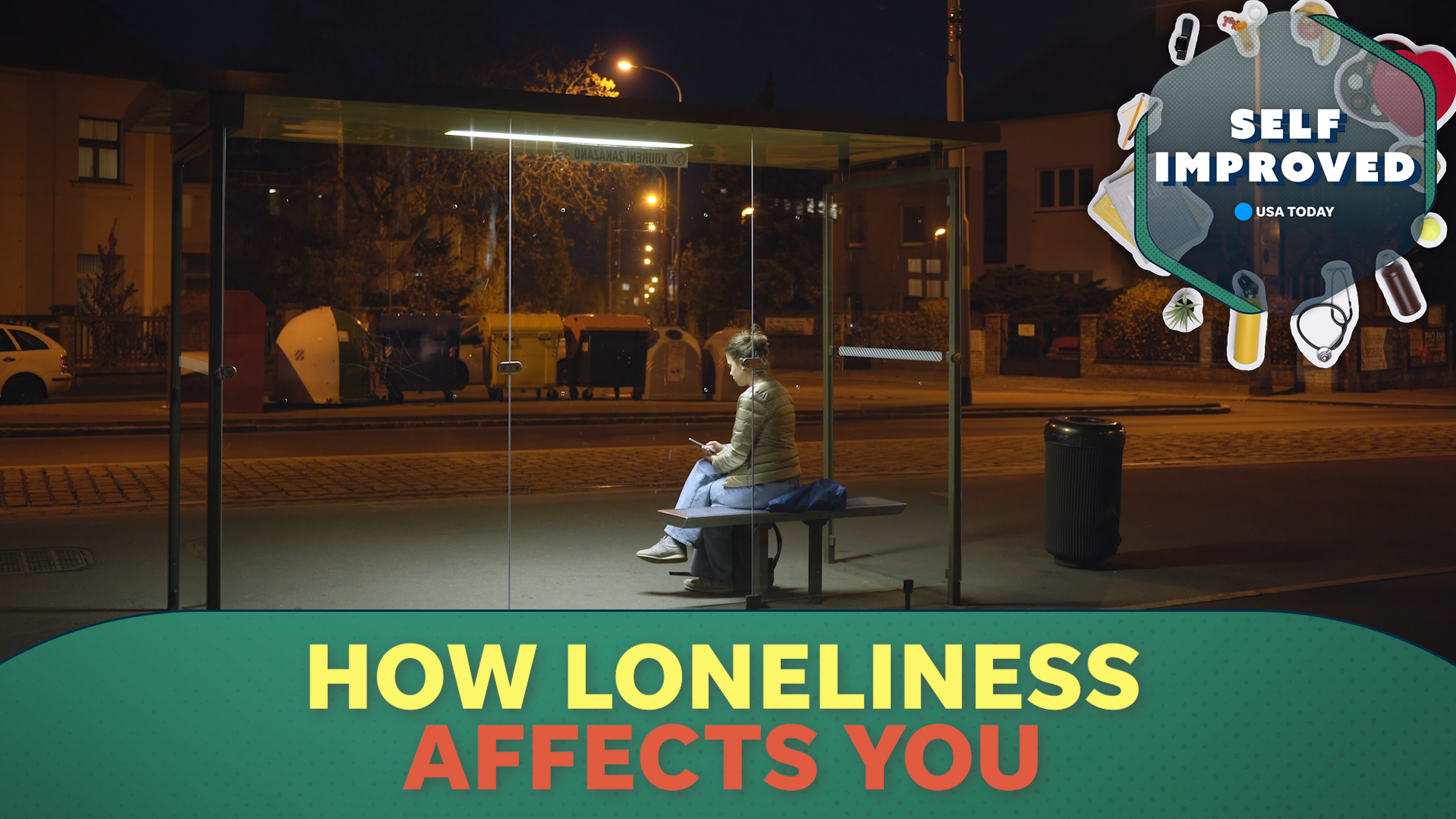

Psychologists reveal how loneliness affects the mind and body
Loneliness can have a huge impact on our bodies and minds. Clinical psychologist Dr. Ali Mattu explains how to cope.
“I don’t know how to make new friends at this age.” “I feel isolated at home.” “I’m worried that I won’t have any friends at work when I retire.”
These are the kinds of comments I receive in my side job as a writer for a weekly advice column on social connections. It wasn’t in my career plans to start giving advice to people over 50, but now that our lives are getting longer, many of us are in our second, third, and fourth acts anyway. Business in the advice industry is booming as the nation and world rapidly age, raising concerns about loneliness and loss of social networks as we age.
This is a big problem. Being lonely has all kinds of negative effects on your health. This is especially true later in life, when both physical and cognitive health are likely to decline. While more and more people are realizing that loneliness is linked to everything from heart disease to diabetes to dementia, it’s still surprising that researchers determined that being lonely is roughly equivalent to smoking 15 cigarettes a day. And a new national survey released by AARP in December 2025 found that 40% of adults over 45 are lonely, a significant increase from the 35% surveyed by AARP in 2010 and 2018.
Feelings of loneliness are not evenly distributed among older adults. For example, men are more likely to be lonely than women, but so are those who don’t work, earn less than $25,000 a year, live in rural areas, and identify as LGBTQ+. Conversely, no group is immune from the threat of loneliness, but it is better to be well-educated, wealthy, and over 70 years old.
To be fair, there’s really no period of our lives where we’re safe from the modern plague of loneliness. However, loneliness later in life needs to be a focus of public health policy. That’s not only because loneliness rates are increasing, but also because there are so many older people in the United States now. If you do the math from AARP’s research, it becomes clear that there are more than 50 million adults over the age of 45 who are considered lonely. It’s a public health crisis.
What’s happening with America’s elderly and lonely?
AARP’s research provides clues to the causes of our declining social connections. It’s not that we’re any less friendly as humans than we were 10 years ago, but we’re far less likely to participate in activities that bring us social connection. The decline in social connections dates back to at least the 1980s – Robert Putnam’s Bowling Alone has its roots in the social trends of that era – but what has happened to older Americans in just the past 15 years is shocking.
According to AARP, for people age 60 and older, attendance at religious services fell from 50% to 37%, membership in community groups fell from 32% to 25%, and volunteering rates plummeted from 47% to 33%. These are major and revolutionary changes that have occurred in just the past 15 years for older Americans. One might speculate that COVID-19 has something to do with it, but the trend predates the pandemic, and there is no evidence that participation rates among older adults have rebounded over the past three years.
How to build a more connected society
What can I do about this?
Social connections are becoming more and more like the weather. We all talk about it, but no one does anything about it. Former public health secretary Vivek Murthy declared a loneliness crisis in 2023, but left office without taking many concrete steps to address it. The new Make America Healthy Again (MAHA) report, to its credit, identified loneliness and lack of social connection as causes of poor health among America’s youth, but to its discredit, only one of its more than 180 recommendations relates to social isolation, and even that recommendation (phone use in school) is outside the traditional purview of the federal government.
Local governments are occasionally aware of the problem, but there is little sustained attention. New York State appointed Ruth Westheimer as its first Loneliness Ambassador in 2023, but the position has remained vacant since her death in 2024.
Piecemeal efforts are insufficient to address the problems that undermine the health and well-being of so many older Americans. The issue is particularly complex because everything from the way we live (we’re far apart from each other) to the way we work (older workers routinely lose their social networks when they’re kicked out of the workplace) to the way we use technology (too much of it) all contribute to the loneliness epidemic.
But we can take heart from the fact that our fellow countries are seeing loneliness in older people as a public health crisis, rather than a problem that each person must address for themselves. The UK and Japan have both appointed loneliness ministers, and Germany, for example, is building a network of around 400 older people’s offices with the express purpose of helping older people find volunteer opportunities and social connections. Japan’s Silver Jinzai Human Resources Center helps approximately 1 million seniors between the ages of 65 and 100 work part-time.
These societies and other countries with successful aging are building social health infrastructures to support connection, purpose, and engagement later in life. They are creating a roadmap that we can all follow and hopefully put me out of business as a social connections advice columnist.
Ken Stern writes Ask Ken, an advice column about social connections. He is also the author of the book “Healthy to 100: How Strong Social Bonds Lead to Longevity.”


