A three-month forecast released June 18 by NOAA’s Climate Prediction Center shows a wide range of possibilities for above-average temperatures.
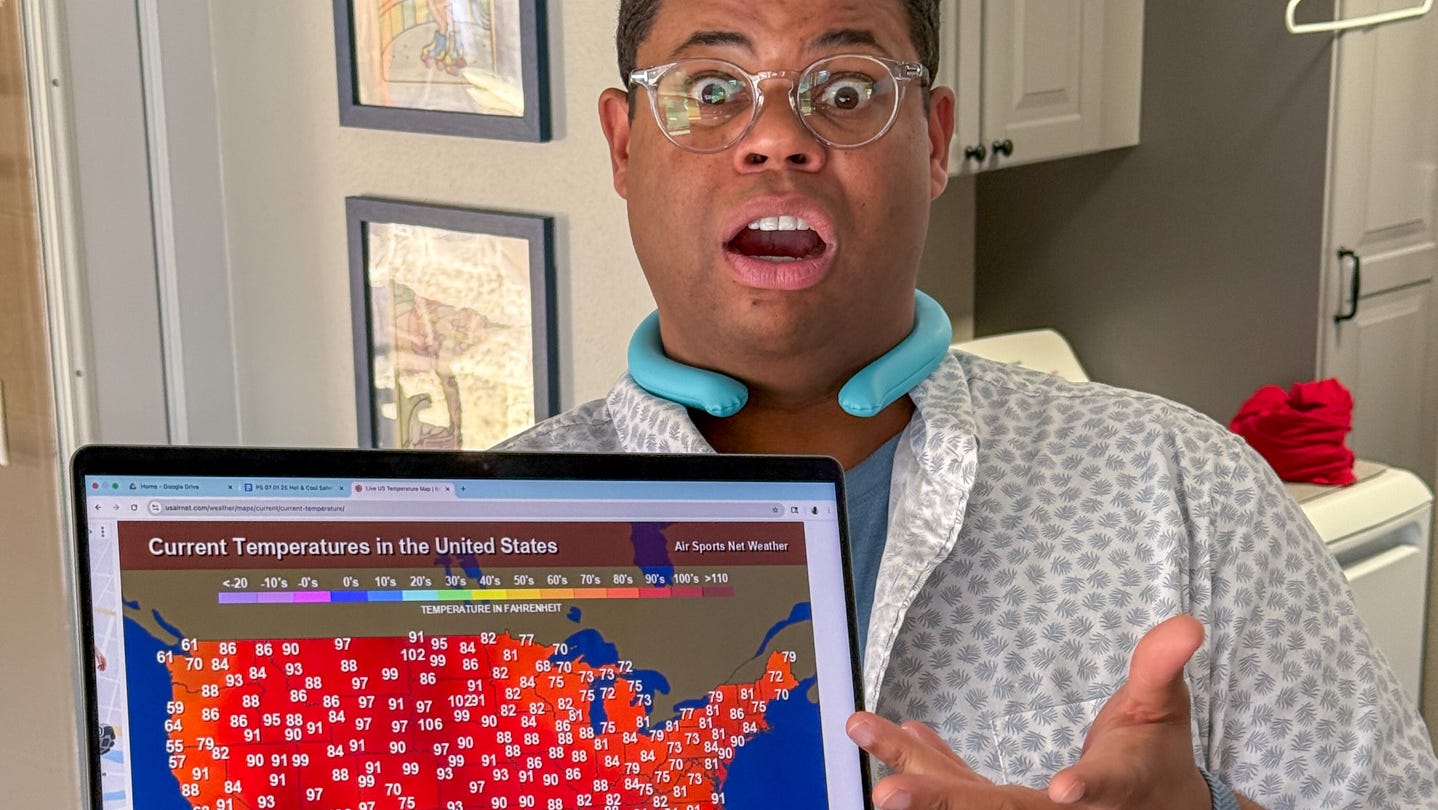

How to beat the summer heat with simple tips
Do you respond to heatwave warnings? These easy hacks will help you stay cool all summer long.
Summer officially begins on June 21st, and with it comes the heat.
A three-month forecast released June 18 by NOAA’s Climate Prediction Center broadly indicates that temperatures will likely rise above historical averages across much of the country. Oregon and Washington are most likely to experience above-normal temperatures in July, August, and September.
Illinois and parts of Wisconsin, Iowa and Missouri are the only states with about a 30% chance of falling below historical average temperatures in NOAA’s forecasts, which are based on data from 1991 to 2020.
“What we’re seeing over the course of July, August and September is that the warming trend continues across much of the country,” said National Weather Service meteorologist Scott Handel.
Summer 2026 brings fire and drought risks
Precipitation amounts over the next three months are expected to be little changed compared to historical averages across most of the United States. But parts of Southern California, Utah, Arizona and Nevada, Idaho, Wyoming, Colorado, and New Mexico are forecast to see “above-average” precipitation, which could be especially beneficial for areas prone to droughts and wildfires.
AccuWeather senior meteorologist Chad Merrill said the above-average rainfall expected in these states is due to a combination of monsoonal moisture and one or two eastern Pacific tropical cyclones.
AccuWeather’s long-range weather forecast identifies areas in the Northwest as warmer and drier than average, resulting in higher-than-average fire danger throughout the fall season.
Drought is expected to intensify across the northern Rocky Mountains, Merrill said, adding that in the Southwest, dry thunderstorms could lead to wildfires early in the monsoon season.
As moisture increases in late July and August, wildfire threats can quickly turn into flooding.
“In the Southwest, conditions that go from very dry summers, very hot conditions and wildfire risk to sudden flooding could be a big target,” Merrill said. “We also believe there is an increased risk of flooding from North Texas to the Midwest.”


