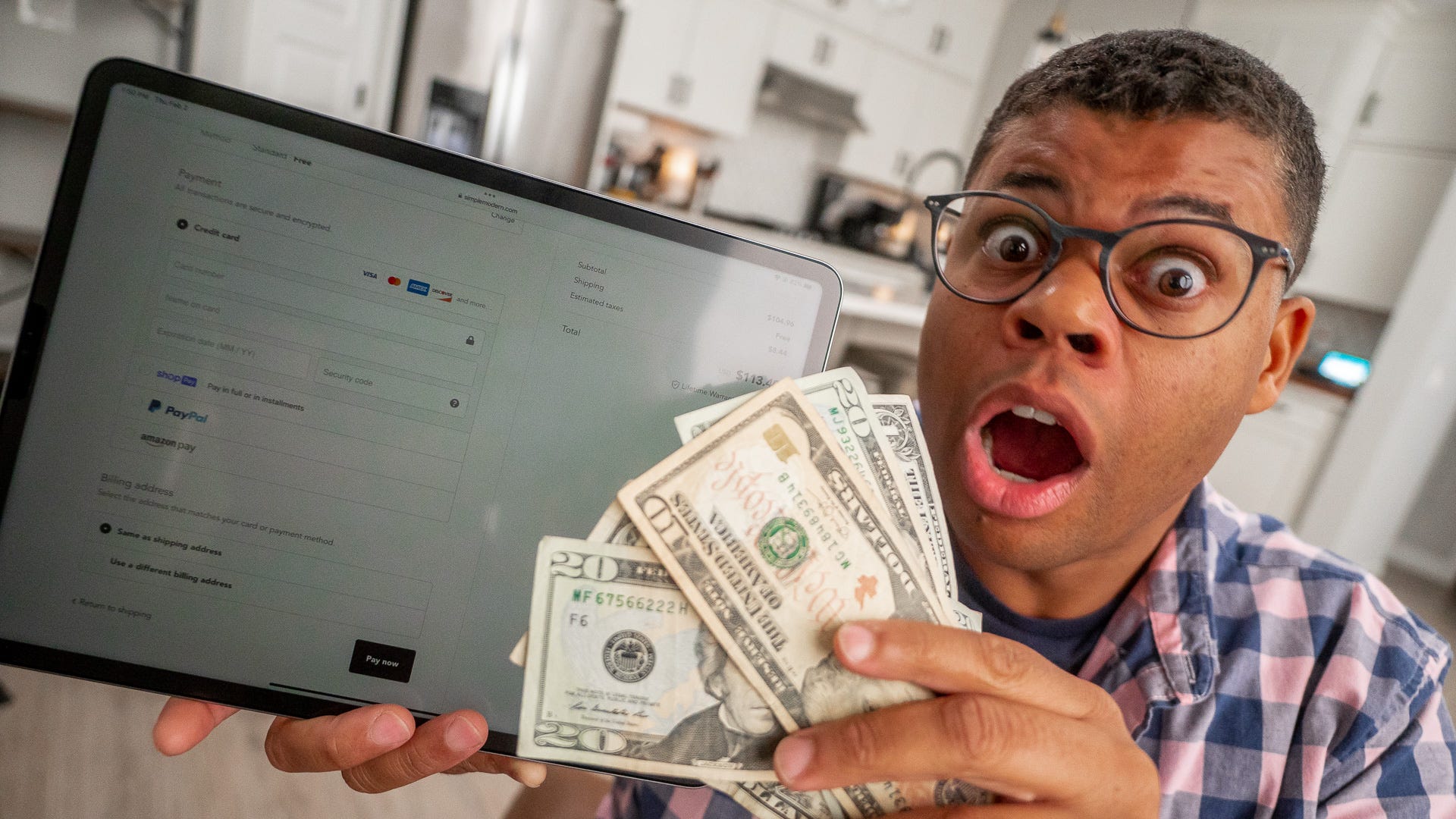

How to stop online shopping addiction
Quit unhealthy online shopping habits with these helpful tips.
Problem solved, USA TODAY
A new study finds that even though American consumers are feeling their wallets tighten, many are still making impulse purchases.
53% of consumers surveyed by PartnerCentric said their overall budget is tighter in 2026 than in 2025. However, 81% of consumers said they had made an impulse purchase so far in 2026. The average number of impulse purchases was 7, and the median spend per purchase was $50. The average amount spent on one single biggest impulse purchase was $355.
“The consumer economy is in a strange place right now. Even though the majority of consumers say they’re on a tight budget this year, they’re still shopping beyond the essentials,” Stephanie Harris, founder and CEO of PartnerCentric, told USA TODAY.
“In fact, Gen Z and Millennials are the most likely to report making an impulse purchase in 2026, at 86% and 85%,” she says. It’s an emotion, a desire for small rewards when life is expensive and you feel a lot of pressure. ”
What did people buy on impulse?
The top categories for impulse purchases were food or beverages at 54%, followed by clothing at No. 2 (53%), electronics at 35%, and shoes or accessories at 26%.
The number one reason for impulse purchases was price, with 65% citing price, and 64% saying it was because of a treat or reward. 41% of respondents said it made them feel good in the moment, and 28% said they didn’t know they wanted it until they saw it.
But there were also generational differences.
Gen Z shoppers were the most likely (74%) to say they needed a little treat or treat, compared to 59% of Millennials, 62% of Gen Xers, and 50% of Baby Boomers. Baby boomers were the most likely to make impulse purchases based on price or bargains, with 71% jumping on bargains, compared to 67% of millennials, 65% of Gen Xers, and 63% of Gen Zers.
Women were more likely to buy clothing, food, and beauty products on impulse, while men were more likely to buy electronics, food, and clothing.
Additionally, online or major e-commerce sites are the most popular place for impulse purchases at 64%, compared to 36% in person at a big box store, 34% at a grocery store, and 22% during the holidays.
Why do people make impulse purchases?
Impulse buying is often driven by an interaction between emotion, environment, and immediate gratification, said Sining Wang, an assistant professor of economics at Case Western Reserve University’s Weatherhead School of Business. Mr. Wang teaches courses in economic behavior and psychology, among others.
The modern retail environment, especially online platforms, is designed to reduce friction and encourage faster decision-making through personalized recommendations, limited-time offers, one-click purchases, and continuous exposure to products, Wang told USA TODAY.
Shoppers don’t always make completely rational or long-term optimization decisions, Wang said.
“Emotional states can temporarily shift our attention from future outcomes to immediate rewards,” he says.
Buying something can create short-term pleasure, control, and even a sense of accomplishment, he said.
“This is especially true when the individual purchases are relatively small, even though they may accumulate over time,” Wang said.
Stress can increase impulse buying
Stress also plays a big role in impulse buying, Wang said. Under stress, people often experience a decrease in self-control and an increased desire for immediate comfort and reward.
“Shopping can temporarily relieve anxiety or create a sense of control during times of uncertainty, which is one reason why impulse buying may increase during times of economic uncertainty, work schedule demands, or broader social stress,” Wang said.
There is also evidence that mental fatigue affects the quality of decision-making. When individuals are cognitively exhausted, they are less likely to evaluate purchases carefully and more likely to rely on emotional or habitual decision-making, Wang said.
Tips to avoid impulse purchases
According to Wang, here are ways you can avoid or curb impulse purchases.
- Implement a “cooling-off” period before making non-essential purchases, especially online. Waiting 24 hours greatly reduces emotional decision-making.
- Avoid shopping when you are stressed, mentally upset, or overly tired.
- Create structure before entering the store or website with a shopping list and predefined budget.
- Remove stored credit card information from online retailers to make the purchasing process more hassle-free.
- Track small discretionary purchases over time. Consumers often underestimate how quickly small impulse purchases can add up.
- Be wary of marketing tactics designed to create a sense of urgency, such as countdown timers or “while stocks last” messages.
“While impulse purchases themselves are not necessarily harmful, problems tend to arise when repeated emotional spending is disconnected from long-term financial goals,” Wang says.
Betty Lin-Fisher is a consumer reporter for USA TODAY. Contact her at blinfisher@USATODAY.com or follow her at @blinfisher on X, Facebook and Instagram and @blinfisher.bsky.social on Bluesky.. Sign up for our free The Daily Money newsletter, breaking down complex consumer and financial news. Subscribe here.


