
Millions of asylum seekers affected as case numbers rise
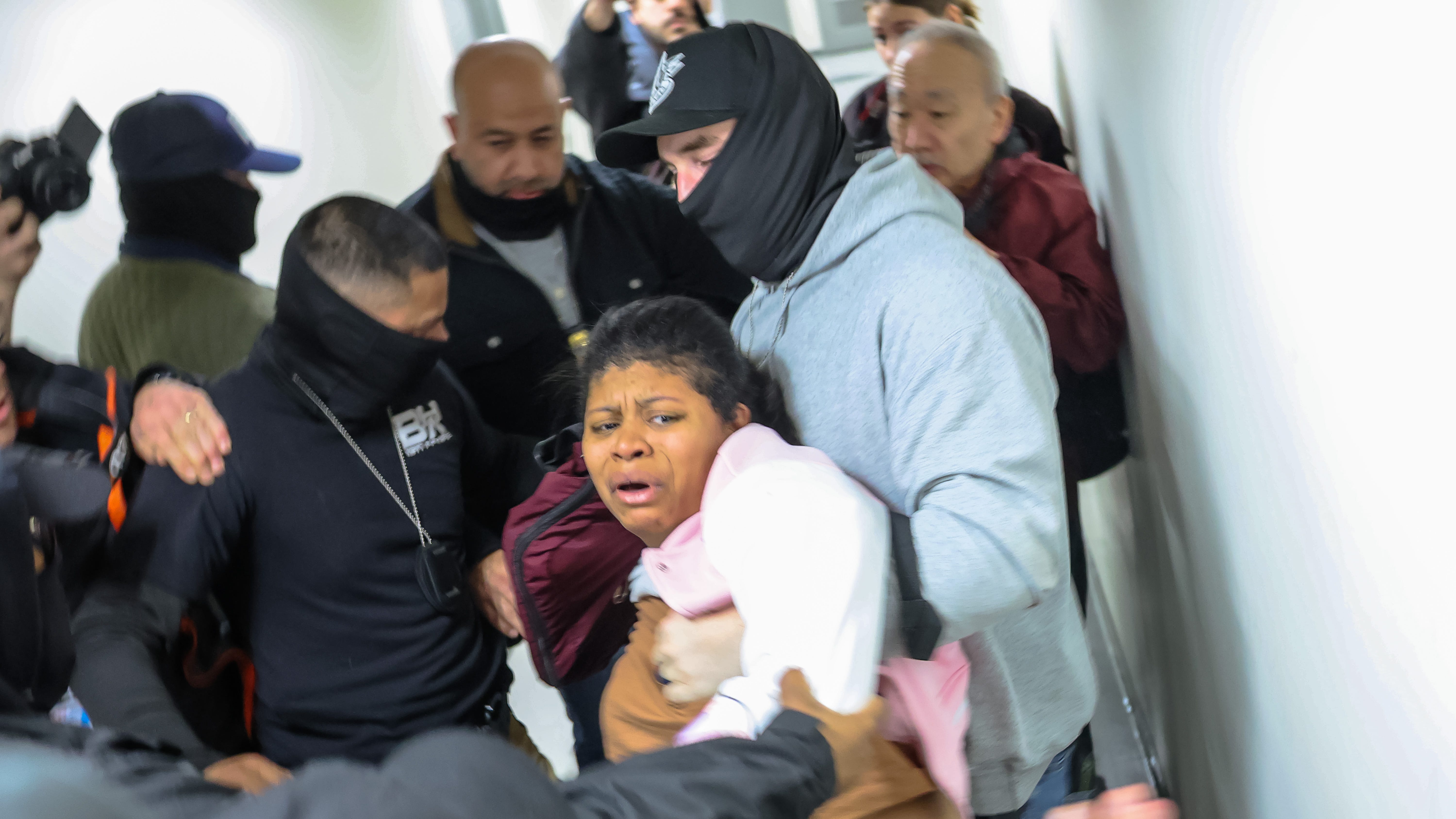
A general crackdown on immigration courts, which the administration considers liberal, has led to the firing of dozens of immigration judges.
Murderers, leeches, rights junkies. Scientists, engineers, nurses.
Behind the legal battle unfolding in the Supreme Court over deportation protections for Haitians is a long-running battle over defining the contributions, or security risks, of one of the nation’s oldest immigrant groups.
On April 29, the Trump administration plans to argue grounds for terminating the Haitians’ temporary protected status in a lawsuit that could affect about 1.3 million TPS holders in more than a dozen countries. For the Haitian diaspora, the fight is the latest chapter in a long story dating back to the 18th century in which the U.S. government has targeted them in immigration crackdowns, often using racist terms.
There were fewer than 1 million Haitian immigrants living in the United States in 2022, according to the think tank Migration Policy Institute. But for half a century, they have been a frequent target of immigration crackdowns by both Republican and Democratic administrations.
Immigration advocates say President Donald Trump’s focus on Haitian immigrants stands out for the dramatic way he has sought to define Haitians in the United States to justify deporting them.
President Trump has repeatedly singled out Haiti and Haitians on the campaign trail and in the White House, calling African countries and Haiti “shithole countries” and repeating debunked claims that Haitian immigrants “probably have AIDS” and were eating family pets in Ohio.
“As I’ve always said, if you import Third World, you become Third World,” President Trump said in an April 9 Truth social post in which he shared a video of a Haitian immigrant who allegedly killed a convenience store clerk. The Department of Homeland Security publicized his arrest by U.S. Immigration and Customs Enforcement.
Haiti’s defenders argue that its diaspora did not bring its insular problems to the United States any more than the Irish brought famine, Italians brought poverty, and Jews became persecutors through waves of immigration in the 19th and early 20th centuries.
“We are honest. We are hard-working people. We believe in education,” said Renold Julien, director of Combit Negrakai, a Haitian community center in Rockland County, New York. “That’s why our children become important members of society. Our children become doctors, lawyers, judges, teachers and nurses.”
When TPS ends, approximately 350,000 Haitian immigrants will be stripped of their right to legally live and work in the United States.
White House press secretary Abigail Jackson told USA TODAY that TPS was “never intended to be a path to permanent residency or legal residency, no matter how much left-wing organizations wanted it to be.”
Tense relations, history of immigration
Five Haitian immigrants eligible for TPS, including an aspiring neuroscientist, a software engineer, and a registered nurse, allege in their lawsuit that the Trump administration terminated their protected status in order to advance a policy agenda that favors white immigrants over people of color and failed to take into account that Haiti remains plagued by instability, rampant violence, and hunger, as required by law, according to a review of the conditions by Human Rights Watch and the U.S. State Department.
According to a July Federal Register report ending TPS, the Trump administration said the situation in Haiti represented a national security risk to the United States. At the time, Homeland Security Secretary Kristi Noem cited ICE’s arrests of Haitian gang members as evidence of the “pervasive risks posed by increased Haitian immigration.”
Separately, in a social media post in December, Noem recommended a complete travel ban “against all countries that are flooding our country with murderers, leeches, and rights junkies.” The ban went into effect in January and targeted more than a dozen black-majority countries, including Haiti.
But they say Haitians remember words and actions that targeted them going back two centuries.
“If you look specifically at the relationship with Haiti and immigration, you can go back 200 years,” said Gealine Joseph, executive director of the Haitian Bridge Alliance, a nonprofit organization that advocates for Haitian immigrants.
She and others recall how their nationals fleeing U.S.-backed authoritarian governments in the 1980s were intercepted at sea and sent home or detained at immigration prisons in Florida and the Guantanamo Bay military base in Cuba. The modern immigration detention system was essentially created by President Ronald Reagan to detain Haitians, she said.
Or, she said, going back even further to the beginnings of both countries, how the U.S. government in the 1800s refused for decades to recognize both countries, which were founded by former slaves who overthrew French slavery. Some Haitians, including free black men and women, fled to the emerging nation of America, from New Orleans to Philadelphia, in what was said to be America’s first refugee crisis.
In modern times, the Obama administration first instituted “metering” at the U.S.-Mexico border to prevent Haitian asylum seekers from entering the country. The Biden administration left Haitian asylum seekers in squalid encampments on the Texas border.
Joseph said what stands out is President Trump’s efforts to define Haitians in negative terms. She and the Haiti Bridge Alliance formally asked Ohio prosecutors to file criminal charges against Trump and then-Vice Presidential candidate J.D. Vance for their derogatory comments about Haitian immigrants in Springfield. Prosecutors refused.
“They created a narrative that dehumanized the Haitian people in a vile way that was not true,” she said.
“Haitians want a better life”
Tessa Petit, director of the Florida Immigration Coalition and a Haitian political asylum seeker, said the arguments the administration is using to end TPS “are about who we are.”
“Yes, we are from poor countries,” she said. “Yes, we are a black nation. One thing we all have in common is that Haitians want a better life.”
Evan Auguste, an assistant professor of psychology at the City University of New York, runs a support group for Haitians grappling with the “yo-yo of policymaking” and the looming threat of deportation. This is a place where people in the diaspora can share memories of their homeland.
“People express that they miss the food, the land, the air, the sea, and each other,” he says. “People would want to go and build a beautiful Haiti if they could. These policies have a huge impact on people’s ability to do that.”
In mid-April, Jeremiah Johnson, a former U.S. immigration judge fired by the Trump administration, visited Mexico’s southern border. There, thousands of Haitian immigrants had gathered in hopes of reaching Mexico City and thus Canada.
At 6 p.m., about 2,000 Haitians gathered in a park in Tapachula, a colonial city near the border between Mexico and Guatemala. The two began walking through a downpour toward Mexico City, some 1,100 miles away. A video he shared with USA TODAY shows him walking in the rain wearing a plastic poncho and wrapping his belongings in garbage bags. He walked with them to the edge of town.
“They’re down-to-earth people,” he said. “I heard there are more opportunities in Mexico City.”
The U.S. State Department warns Americans in no uncertain terms: “Do not travel to Haiti for any reason.” As of April 16, the ministry maintained a Level 4 travel advisory, warning of “risks of crime, terrorism, kidnapping, insecurity, and limited medical care.”
According to the State Department, U.S. commercial flights to Haiti’s capital Port-au-Prince are currently suspended. Deportation flights will continue once a month.
Lauren Villagran covers immigration for USA TODAY. Contact him at lvillagran@usatoday.com or Signal (laurenvillagran.57).


