
Hegseth says the Strait of Hormuz blockade will last “as long as necessary”
Secretary of State Pete Hegseth has warned that the Strait of Hormuz blockade will remain in place until Iran abandons its nuclear ambitions under pressure from the United States.
For Pentagon Secretary Pete Hegseth, the U.S.-Iran war is a “gift to the world.”
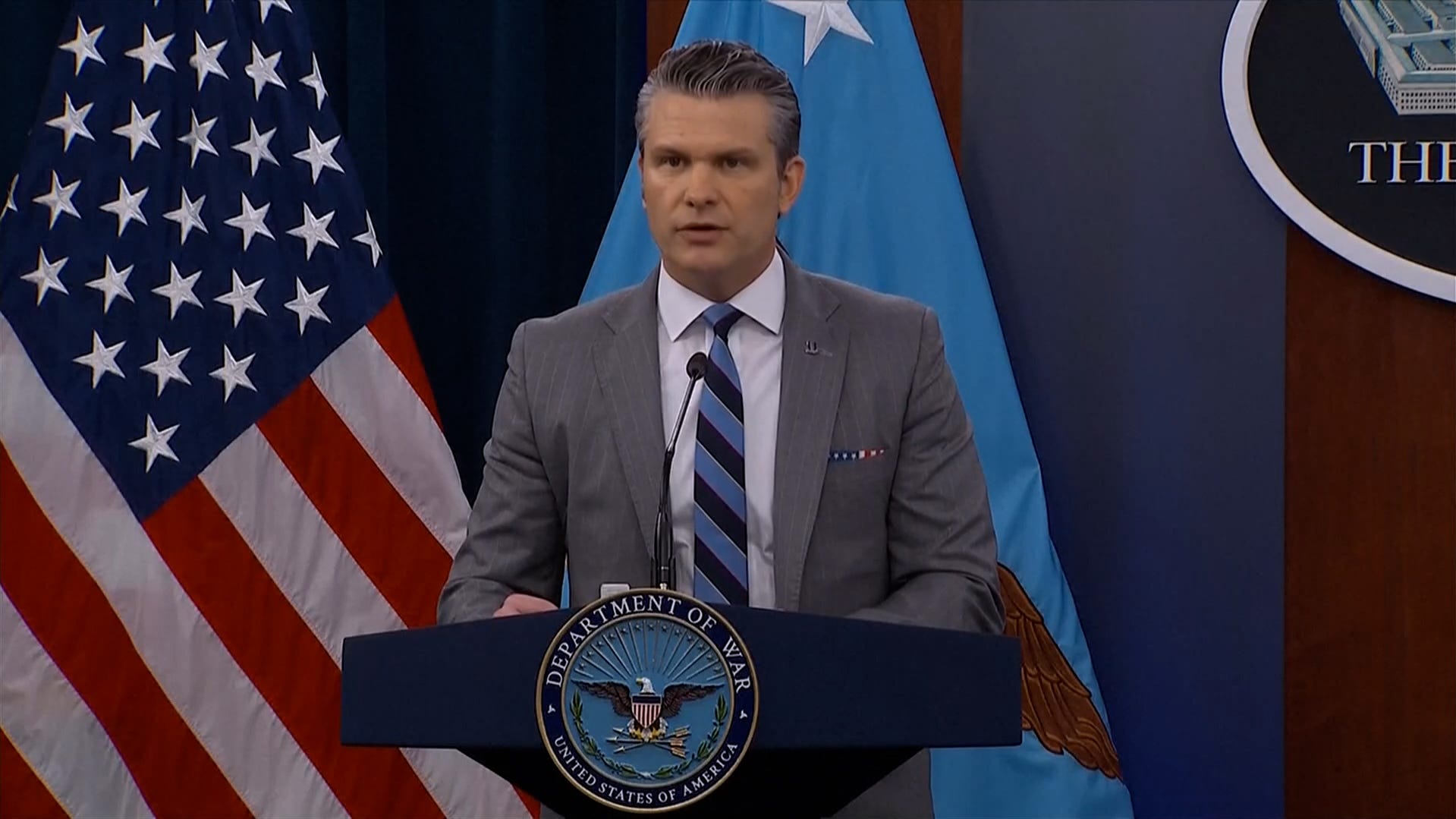
Hegseth’s comments were made April 24 during a press conference at the Pentagon. Hegseth told reporters that the US blockade of Iranian shipping in the Strait of Hormuz is “ironclad” and will continue “as long as necessary” to accomplish America’s “bold and dangerous” mission to end Iran’s threat to global security.
“We are in control. Nothing is going in or out,” Hegseth said of the Iranian port blockade. He added that Iran is acting like a “pirate gang” that seizes ships from other countries.
Earlier this week, Iran seized two container ships in the Strait of Hormuz, which Hegseth said were small high-speed vessels equipped with AK-47s.
Hegseth’s remarks came as U.S. special envoy Steve Witkoff and President Donald Trump’s son-in-law Jared Kushner are scheduled to depart for Islamabad, Pakistan, on April 25 to resume talks with Iranian officials on a deal.
Hegseth suggests European and Asian countries are ‘free riding’
Hegseth also told a news conference that European and Asian countries were “free riding” by not supporting the United States in securing the Strait of Hormuz.
“We don’t rely on Europe, but they need the Strait of Hormuz more than we do, and they may want to have less conversations and fancy meetings in Europe and more boats,” Hegseth said.
Hegseth is referring to a recent multilateral planning conference led by the UK and France that explored ways to reopen the Strait of Hormuz. His comments echo those of Trump, who told European countries in March to “get our own oil!”
“You have to start learning how to fight for yourself. America is not there to help you anymore, just like you were not there for us,” Trump said in a March 31 Truth social post.
How effective was the lockdown?
The blockade, which went into effect on April 13, has forced 34 ships to turn back, according to Gen. Dan Cain, chairman of the Joint Chiefs of Staff.
In a new briefing at the Pentagon on Friday, Kaine explained how the U.S. military seized an Iranian-flagged vessel that ignored orders over the weekend. He said the breach led to the US military firing precision rounds into the ship’s engine room, effectively disabling it. U.S. Marines then boarded the ship by helicopter.
“The ship and its crew remain secure under U.S. control,” Kaine continued, adding that the blockade is tightening as more military assets move into the Persian Gulf region.
Despite the blockade, ship tracking data shows Iran is still able to transport some of its sanctioned oil, PBS News reported.
Lloyd’s List Intelligence, a maritime intelligence firm that provides real-time ship tracking, said there was a “steady flow of shadow convoy traffic” moving in and out of the Persian Gulf, including 11 tankers laden with Iranian cargo that have left the Gulf of Oman outside the Strait of Hormuz since April 13, the report said.
USA TODAY’s Bart Jansen and Francesca Chambers contributed to this report.
Fernando Cervantes Jr. is a trending news reporter for USA TODAY. Contact us at fernando.cervantes@usatodayco.com and follow us at X @fern_cerv_.


