Coast-to-coast drought has caused many states to enact water restrictions even before the thirsty summer season begins.
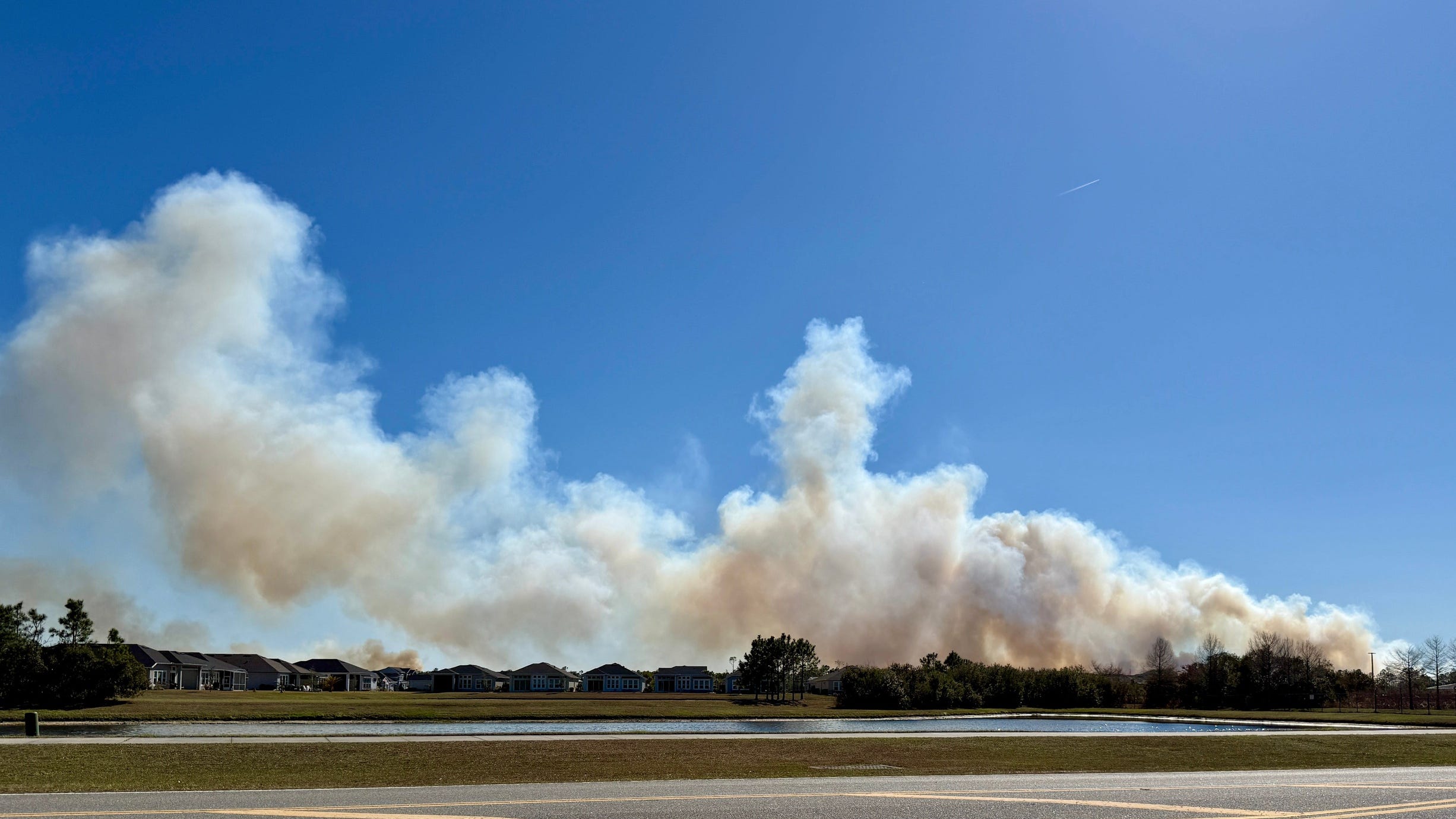

Drought increases wildfire risk this spring
Multiple areas of the country, including Florida and the Four Corners region, are at risk of dangerous wildfires this spring.
accuweather
Is it dry enough?
As the drought stretches from coast to coast, water restrictions are already in place in many states even before the thirsty summer season begins. In fact, more than 61% of the United States is currently in drought, the highest percentage in nearly four years, according to the latest U.S. Drought Monitor.
In total, 45 of the 50 states are in drought, with only Alaska, North Dakota, Michigan, Connecticut, and Rhode Island completely free of drought.
At the South Texas Botanical Garden and Nature Center there, staff are promoting water reuse from sources such as humidifiers, leftover tea and boiled egg water, the Corpus Christi Caller Times, part of the USA TODAY Network, reported. Staff water the plants by hand two to three times a week.
An Arizona town is warning residents it could officially run out of water by July, FOX10 reported. Kearney, Arizona, a city of about 2,000 people, is asking residents to save 30%, meaning they can’t wash their cars, water their lawns or water their pools. And if possible, take shorter showers and reduce the number of laundry days.
As drought conditions continue, cities and states across the country are implementing water restrictions and proposals ranging from shorter shower times to rules on how cars are washed. States affected by recent drought restrictions include Colorado, the Carolinas, Virginia, Texas, and Florida.
Towns across the country add rules on lawn watering and car washing
People in the Carolinas are learning to live with new water restrictions as drought conditions worsen, WSOC-TV Charlotte reports. Charlotte Water announced on April 16 that it will voluntarily restrict non-essential water use, such as watering lawns and washing cars.
“Water companies are asking customers to do their part to address the extreme drought conditions affecting much of the region,” WSOC-TV said. “With light rain in the forecast and temperatures continuing to rise, these restrictions will remain in place until further notice.”
Severe drought conditions continue across Colorado, with many cities and municipalities declaring water restrictions to preserve limited water supplies, Colorado Public Radio said in an online report. While most companies encourage self-regulation, including at least limits on outdoor watering, some companies, like Denver Water, have instituted mandatory water restrictions, including fines. This comes after the worst snowfall in the state’s history.
Caroline County in eastern Virginia announced on April 16 that it would immediately impose restrictions on residents who draw water from public water supplies. Residents and businesses are required to use automatic irrigation systems only every other day, as simultaneous use of automatic irrigation systems overloads the county’s water storage and processing capacity.
In Corpus Christi, Texas, one of the areas in the state to conserve water, officials implemented Stage 3 water restrictions enacted under “emergency” drought conditions. Residents cannot water their lawns using drip irrigation, handheld hoses, or small buckets, except on designated days every other week. Also, the pool must be covered when not in use, and only 5 gallons of water in a bucket can be used to wash cars.
Sarasota County, Florida, also said it is increasing enforcement of lawn watering violations. The county typically issues warnings, but after April 17, no warnings will be issued before a citation is issued.
Drought regulations impacting local businesses
In Raleigh, North Carolina, the city of Raleigh will implement water restrictions for residents and businesses starting Monday, April 20, due to the ongoing state-wide drought. Raleigh officials said the drought rules also include restaurants providing tap water only upon request. Hotels, motels and other lodging establishments will ask guests staying for multiple nights to reuse towels and sheets instead of washing them daily.
How long will the restrictions last? “I don’t know,” Ed Buchan, Raleigh Water’s deputy manager, told the News & Observer. “Unless we get some miraculous rain in the coming weeks, we will remain in Stage 1 (restrictions).”
Several Florida communities are asking residents and businesses to conserve water. In Sarasota County, beautiful fountains can only operate for a maximum of four hours per day. The restaurant only serves water upon request.
Here are ways to help save water
Here are some tips for saving water. For more information, visit Ready.gov.
Before the drought:
- Never pour water down a drain if it has another purpose. For example, use it to water your indoor plants or garden.
- Repair dripping faucets and check all pipes for leaks.
- Choose appliances designed to improve efficiency and performance.
- Plant drought-tolerant grasses and native grasses and plants.
- Position sprinklers to avoid paved areas.
- Cover pools and spas to reduce water evaporation.
During drought:
- Take a short shower instead of a bath. Run water until wet and foamy, then rinse again.
- Don’t leave the water running when brushing your teeth, washing your face, or shaving.
- Run the clothes washer only when it is fully loaded, or set the water level according to the size of the load.
- If your lawn needs watering, do it early in the morning or later in the evening when temperatures are cooler.
- In extreme droughts, wait until the lawn dies to save trees and large shrubs.
- Use a commercial car wash that recycles water. If you wash your car yourself, use a shut-off nozzle on the hose that allows you to adjust a fine spray.
Farms, AI data centers are among the large water users
Experts told Capital Press that farmers, ranchers and some communities in Oregon will face water restrictions this summer. “If there is water available, the irrigation season will be significantly shorter,” said Matt Warbritton, a supervisory hydrologist with the U.S. Department of Agriculture’s Natural Resources Conservation Service.
He added that preparations were in place for longer and more severe wildfires.
Oregon climatologist Larry O’Neal told Capital Press that severe conditions could prompt policymakers to take action, especially when combined with economic impacts. “This is not a dry year for garden varieties,” O’Neill added. “Essentially, this is a test of our resilience to changes in snowpack and water supply.”
According to the U.S. Department of Agriculture and the U.S. Geological Survey, droughts can have devastating effects on agriculture, which uses nearly half (about 47%) of the U.S.’s freshwater “withdrawals,” primarily to irrigate crops, making it the nation’s largest water-using sector.
Meanwhile, high-tech data centers are also a major source of water usage. It’s estimated that a single large data center can use up to 1 billion gallons of water per year, or as much as 2.7 million gallons per day during the peak summer heat, according to WRAL-News in Raleigh.
“This is similar to the daily usage of several entire towns and enough water to fill hundreds of swimming pools,” WRAL said.
AI data centers may be bound by local water regulations, but in most regions of the country they operate with few restrictions even in times of water scarcity. This is because most water and drought regulations were enacted before the demand for AI-scale cooling.


