The president and the pope don’t always see eye to eye on policy, but experts say Trump’s criticisms are unusually openly aggressive.
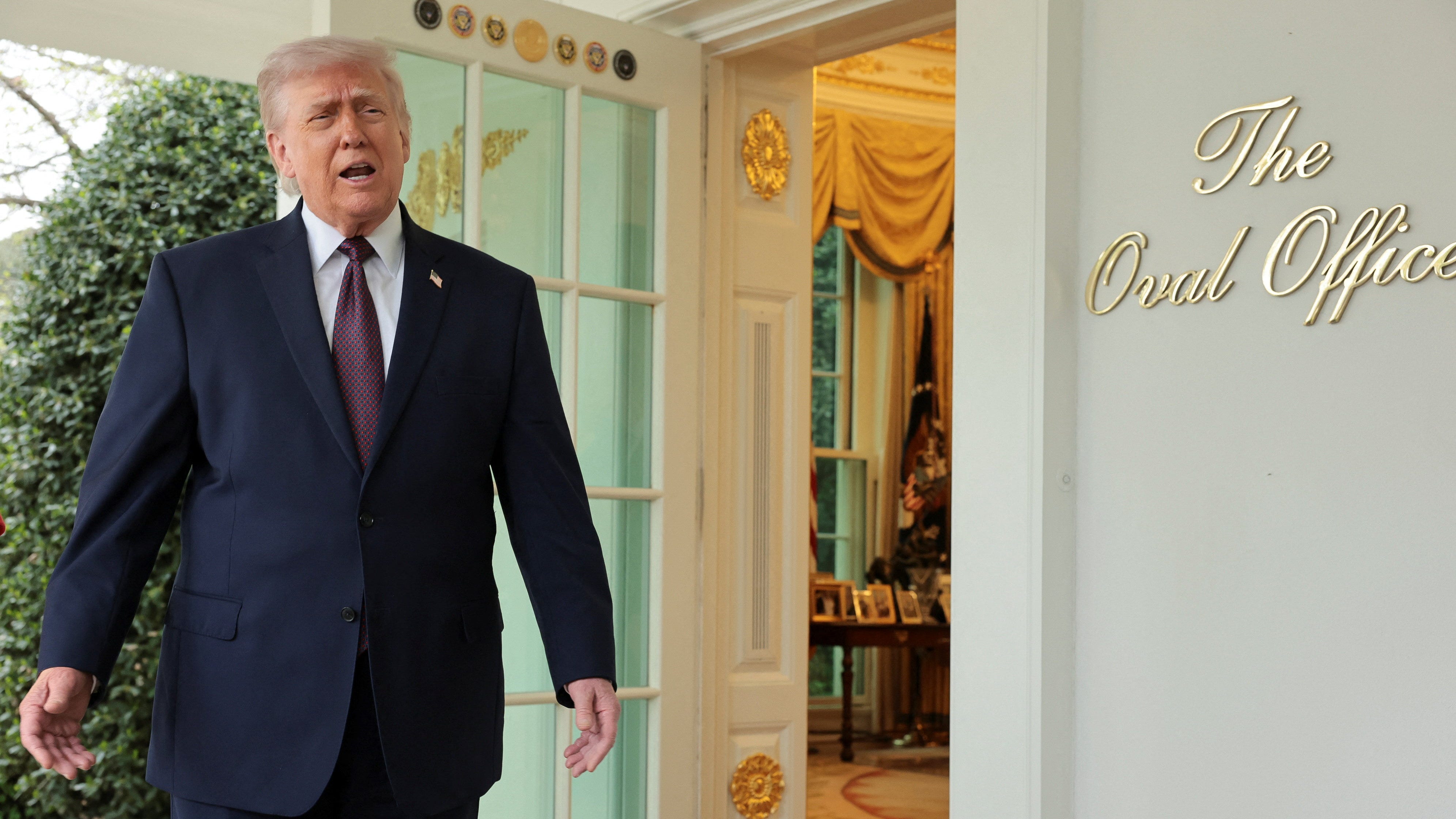

President Trump says he has no obligation to apologize to the Pope
President Trump defended his comments criticizing Pope Leo over his stance on Iran and said he would not apologize.
- President Donald Trump criticized America’s first pope, Pope Leo XIV, in a social media post.
- The public disagreement has worried some of Mr. Trump’s Catholic allies and could affect the 2026 midterm elections.
- Political observers say the rift is unusually personal and public compared to past disagreements between the White House and the Vatican.
President Donald Trump stepped on a political hornet’s nest with his attack on Pope Leo XIV, infuriating Catholics around the world. The rift with the Vatican could worsen an already difficult 2026 election season for Congressional Republicans, as President Trump risks alienating key constituencies.
In a lengthy post on Truth Social on April 12, the president accused the world’s first American pope of being “soft on crime and terrible on foreign policy,” and later told reporters he was “not a big fan” of religious leaders.
Several conservative Catholic leaders have called on Trump to publicly apologize, but the president has refused, saying no one should be forced to choose between their faith and country. “There is no question that President Trump’s post insulting Pope Leo once again crossed the line of decorum that plays an important role in diplomacy,” Kelsey Reinhardt, president and CEO of the political advocacy group Catholic Vote, said in an April 13 post on X.
Catholics are the single largest religious denomination in the United States, making up one-fifth of the population, according to the Pew Research Center. According to Pew research, Catholics are 10 percentage points more likely to lean Republican than Democratic in 2025.
Trump lost the Catholic vote to Joe Biden in 2020, 47% to 52%, but won the Catholic vote in 2024 over Kamala Harris, 59% to 39%, according to CNN exit polls.
2026 is expected to be a tough year for Republicans as forecasters shift more races in favor of Democrats.
Republican pollster Brent Buchanan said his polling company Signal has been tracking Catholic voters since the 2022 midterm elections. He said American Catholics have repeatedly demonstrated independence from the Vatican’s policy guidance, but if President Trump continues to quarrel with the pope, it could cause problems for Republicans this fall.
“The papacy is an institution that has been around for thousands of years,” Buchanan said. “Even if you don’t believe in Catholicism, you know who the Pope is, you know what the Pope stands for, and it’s usually something broad, positive, and moral.”
“Catholics tend to be one of the most volatile groups in this country, and whatever direction Catholics go politically, the country goes politically,” Buchanan said.
“They’re kind of like a bellwether,” he added. “So it’s unnecessary noise for important swing groups.”
Leo, who leads about 1.4 billion Catholics, applauded the president and said he was “not afraid” of the administration. He vowed to continue speaking out against the U.S. and Israel’s war against Iran and to protect immigrants from the Trump administration’s aggressive deportation efforts.
Political scientists say Washington and the Vatican have been at odds over policy in the past, but this war of words is uniquely intense.
“It’s never been this public, it’s been this personal, it’s never been this partisan,” David Campbell, a political science professor at the Catholic University of Notre Dame, told USA TODAY in an interview.
The White House did not respond to requests for comment.
Conservative Catholics plead for cooling of relations
U.S. presidents have sought a relationship with the Holy See for decades as the influence of Catholic voters has grown since 1959, when Dwight D. Eisenhower had an audience with Pope John XXIII.
But it’s often a difficult political situation for presidents of both parties.
While Republicans like Trump often clash with the Catholic Church’s teachings on war, social justice, immigration and the death penalty, Democrats have struggled with Catholic opposition to support for abortion rights and gay rights.
Popes are often seen as honest intermediaries in international diplomacy, such as when Pope John Paul II implicitly criticized President George W. Bush over the Iraq war.
An NBC poll conducted in March found Mr. Leo more popular than Mr. Trump, making it difficult to ignore his clear condemnation of the war against Iran over the past few weeks. The phrase took on particular significance as administration officials cited Jesus and other references when seeking national support for the U.S. mission.
Even conservative Catholics who support President Trump’s policies are wary of his tone. Kevin Roberts, president of the Heritage Foundation, a group closely aligned with the White House, said the two men “ultimately want the same thing” for the United States and Iran: peace.
“As a devout Roman Catholic and a proud supporter of President Trump, I believe the world would benefit from more direct dialogue between our two leaders, modeled on the fruitful relationship between President Ronald Reagan and Pope John Paul II,” Roberts told USA TODAY in a statement.
“While I believe there are more constructive ways for the president to engage with the church on policy differences, I, like most Americans, fully share the president’s goal of quickly and permanently ending this conflict in Iran.”
Reinhardt, leader of Catholic Vote, said too many people were trying to turn public disagreements into an “epic showdown” between Mr. Trump and Mr. Leo. “That is wrong and Catholics should reject it,” she said.
Bishop Robert Barron, a member of the President’s Commission on Religious Freedom, said in an April 13 post on X that “serious Catholics” in the administration, including Vice President J.D.
Campbell, a professor at the University of Notre Dame, said the comments show how little there is for Trump and the Republican Party to gain by taking on a popular religious figure like Leo, who has been a calm and measured critic.
He said Republican candidates vying to keep their seats in Congress this fall are likely to try to avoid the issue altogether.
“There’s no benefit to picking a fight with the pope,” Campbell said. “More broadly, I think you would think that Republicans, especially in battleground states with large Catholic populations, would not want to be perceived as hostile in any way to the church or church leaders.”
President Trump’s polling problems among Catholics
Some conservative leaders believe Mr. Trump’s ties to his religious base will overcome any reservations about his disdain for the Pope.
Ralph Reed, a prominent Christian conservative activist and member of the president’s Faith Advisory Council, told The Associated Press that Trump has a “deep treasure trove of gratitude” among faith-based voters that can withstand disagreements over social media posts.
This is particularly important to the political right, given the reported resurgence of faith and increased interest in religion among younger voters, especially Gen Z men born between 1997 and 2012.
“Today, as young people seek out the Catholic faith in droves, it is important that the Church and American voters alike recognize that the Trump administration’s policies are a great benefit to people of faith in the United States, and that because of their policies we are on the cusp of America’s Golden Age,” said Heritage President Roberts.
Buchanan, the Republican pollster, said April’s events will have little impact on November’s election, but President Trump and his allies need to be careful about allowing this to continue, given how swayed Catholics are against the administration.
Polls show that a majority of Catholics, like most Americans, agree with Leo that they think Trump has done badly as president and oppose the Iran war.
Before the Trump-Leo fight broke out, a March survey conducted jointly by Republican polling firm Shaw & Company Research and Democratic polling firm Beacon Research showed that 52% of Catholics disapproved of Trump’s job performance as president. The poll also revealed that 60% of Catholics do not support the war.
Asked how Republican candidates seeking re-election who are hoping for Trump’s exit should talk to voters about the ups and downs, Buchanan said they needed to change the subject: “My response would be, ‘What about those Yankees?'”


