Even within President Trump’s Republican base, rifts have emerged over the Iran conflict. Young Republicans are far less likely to support war.
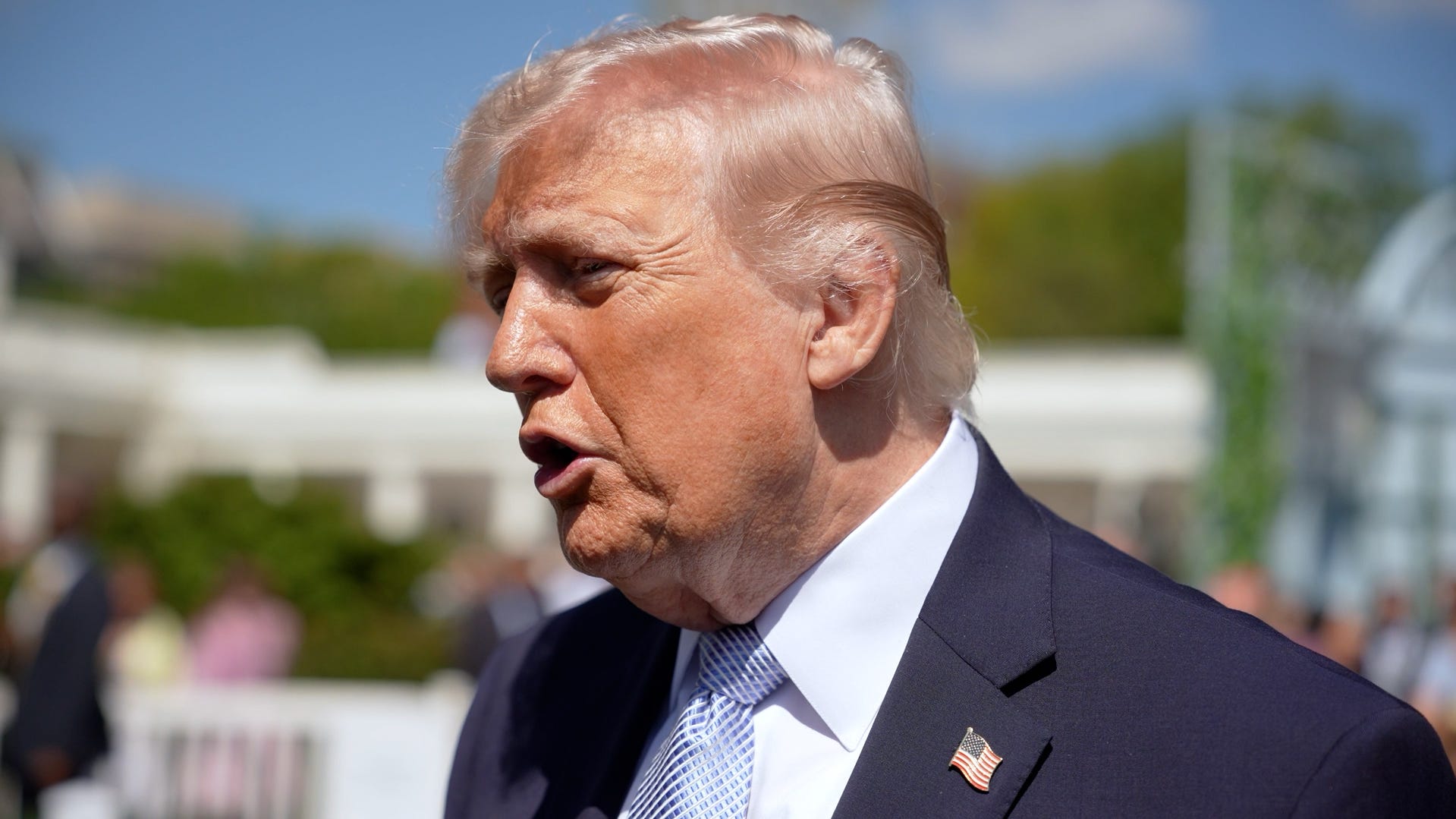

President Trump slams Iran for doing a ‘terrible job’ in dealing with Strait of Hormuz
President Donald Trump has accused Iran of restricting oil shipments through the Strait of Hormuz as it ties ceasefire terms to protecting Lebanon.
Alabama resident Gray Holland said a big factor in voting for President Donald Trump was his belief that he would avoid another war in the Middle East.
“He really operated on the principle of no war,” Holland said.
The U.S. is currently at war with Iran and the Netherlands, and the 25-year-old Republican from Birmingham, who works in sales for a flooring manufacturer, said he was not happy with the president’s decision.
“We don’t want to get into another foreign war with Iran or any of the other countries that were going on in the Middle East at the time,” Holland said. “I think we need to stay away from that and worry about ourselves.”
Polls show that most Americans disapprove of the Iran war, and while older Republicans primarily support Mr. Trump, younger Republicans are much more likely than their elders to oppose the Iran war.
A Pew Research Center poll released last month found that fewer than half (49%) of Republicans and Republican-leaning independents ages 18 to 29 approve of President Trump’s handling of Iran.
Overall, 69% of Republicans and Republican-leaning people approve of President Trump’s handling of the Iran conflict, according to the Pew survey, and support increases with age. 84% of Republicans and Republican voters 65 and older approve of President Trump’s record on Iran, compared with 79% of 50-64 year olds and 60% of 30-49 year olds.
The poll found that only 37% of Americans approve of President Trump’s approach toward Iran.
President Trump, facing deep skepticism about the war at home, has pushed to end the conflict, announcing an April 7 ceasefire and negotiations for a durable solution in Pakistan. However, the ceasefire appears to be on shaky ground, with both sides accusing the other of not honoring the agreement. Further fighting remains a possibility, and the outcome could further divide the Republican Party ahead of November’s midterm elections.
Trump’s “decreased” rating
Trump expanded his support among young voters during his successful 2024 campaign, winning 39% of voters under 30 (up from 35% in 2020).
But now some of his younger supporters are growing disillusioned with his decision to start a war, which they believe violates his campaign promise. “I’m not going to start wars. I’m going to stop wars,” President Trump said on election night in 2024.
Trump campaigned as a staunch critic of past U.S. wars in the Middle East, but has recently been accused of betrayal by some who subscribe to his anti-interventionist “America First” pledge.
Prominent Trump supporters like podcaster Joe Rogan, whose audience is largely young men, have criticized the Iran war.
“It seems insane given what he ran for president,” said Logan, who supported Trump in 2024. “I mean, this is why so many people feel betrayed, right?”
Holland said Trump’s campaign comments on the Middle East conflict were “at the forefront of my decision to vote for Trump.”
“I thought at the time it was better not to do anything there and I thought he would do it, but he didn’t,” Holland said. “So my opinion of him has definitely gone down.”
Some younger Republicans told USA TODAY they are concerned about the cost of living and want President Trump to focus on economic issues rather than Iran. The Netherlands pointed to housing costs.
“There are a lot of issues at home that we need to focus on other than Iran,” Holland said.
“There’s a big problem with that.”
Nevada Republican Morgan Kahn said his biggest concern is providing for his family.
“There’s no question that we need to protect the American people…but sending young men and women to war is not at the top of my list of priorities,” said Khan, who works in the insurance industry.
Khan, 46, voted for Trump. She has personal reasons to be concerned about the war.
“I have a big problem with this just because I have two children in the military. I hope they never have to go to war,” she said.
Khan is unsure whether the war was justified and does not feel well-informed. But she questioned the threat posed by Iran.
“I’m absolutely against it until we feel really threatened,” she said, adding, “Right now I don’t feel like we’re extremely threatened.”
Most Republicans support President Trump on Iran
Despite concerns from many young Republicans and some prominent MAGA voices about Iran, the Republican base remains largely supportive of Trump on the war.
The demographic divide within the Republican Party regarding Iran is also reflected in its population. According to a CNN/SSRS poll, only 19% of U.S. adults ages 18 to 34 say they approve of President Trump’s handling of Iran, compared to 41% of adults ages 45 and older. According to the Economist/YouGov survey, only 13% of adults aged 18 to 29 support war.
Jeff Friedman, a professor at Dartmouth College, said young voters grew up living through the wars in Iraq and Afghanistan, and there is a sense of public disillusionment with those conflicts.
“I think this really gave a poor impression of the public’s attitude toward military power,” said Friedman, who studies politics with a focus on foreign policy.
Friedman added that older voters saw the United States as having “won the Cold War and decisively won the 1991 Gulf War.” Older Republicans also came of age at a time when the party was “more focused on a strong military presence overseas,” he said.
Republican Vernon Somers, 62, said the “positives outweigh the negatives” for him so far when it comes to Iran.
“From my perspective, it seems like they had to do it because their desire to build nuclear weapons persisted,” added Somers, a retired former masonry company owner from Sarasota, Fla., who voted for Trump.
Minnesota Republican Jessica Stawalski, 43, voted for Trump three times and continues to support him. She trusts the administration regarding the Iran war, but is concerned about the prolongation of the conflict.
“I know he didn’t fight a forever war or a stupid war, so I feel like there must be a good reason for it,” said Stawalski, a Waite Park resident who works at a salvage yard.
“If it drags on…I would be a little hesitant to support it, but for now I support the administration,” she added.
Somers acknowledged that a prolonged war could hurt Republicans, pointing to rising gas prices.
“It doesn’t matter if we’re in a Democratic or Republican party, as long as we have a problem with the economy, which is probably one of the biggest drivers of people going to the polls and demanding change,” he said.
A decline in President Trump’s support for the Republican Party could exacerbate an already significant challenge for the party heading into the midterm elections. Democrats achieved a series of victories in the 2025 and 2026 elections, raising questions about whether a blue wave is brewing.
“We live in a country where the electoral margins are very thin…If this is an event that moves public opinion toward the Republican Party by half a percentage point, that could be decisive,” Friedman said.
Holland said the Iran conflict is on his mind ahead of the election.
“It definitely discourages people from voting,” he says.


