Speaking in Detroit, Austan Goolsby said that while rising oil prices and inflation pose risks, consumer spending continues to support U.S. growth.
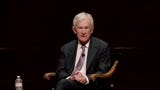

Powell tells students to be optimistic about the U.S. job market and AI
U.S. Federal Reserve Chairman Jerome Powell told Harvard Economics students on Monday (March 30) that he is optimistic about the medium- to long-term employment prospects for U.S. college graduates, despite the current period of very low job creation because the U.S. economy is the most dynamic and productive in the world.
- “I think the job market is basically stable, but not great,” said Austan Goolsby, president and CEO of the Chicago Fed.
- The Fed’s Austan Goolsby pointed out that the Fed is designed to get independent news from across the country, not just Washington, D.C. and Wall Street.
Austan Goolsby, president and CEO of the Chicago Fed, is personally concerned about the possibility of inflation heating up amid the current weakness in the U.S. economy and the ongoing war with Iran.
But he remains “hopeful and fairly optimistic” that the U.S. economy will continue to grow thanks to continued overall consumer spending.
“My concern at this point is that we have to get a grip on the oil crisis,” Goldsby said Tuesday, April 7, at the Detroit Economic Club.
Goldsby spoke at the historic Masonic Temple in a conversation moderated by Sandy Barua, president and CEO of the Detroit Regional Chamber.
Why Goolsby is concerned about stagflation
In response to a question, Goldsby said it’s the threat of stagflation that keeps him up at night. Stagflation is a period of high inflation, few employment opportunities, and stagnant economic growth. He worries that higher oil prices and increased uncertainty could ultimately lead to consumers becoming more cautious, cutting back on spending and even hoarding money.
Unfortunately, he noted, the energy price hikes that followed the Iran war took a toll before the effects of higher prices due to tariffs had fully subsided. Increased costs related to energy prices both contribute to inflation.
Goolsby talks about jobs, employment and consumer spending
“I think the job market is basically stable, but not great,” Goldsby said.
He said many business leaders are anxious, creating a highly unusual situation where employers are often reluctant to hire or fire workers. He said many companies appear to be holding back until the situation becomes clearer.
In an interview after the Detroit Economic Club meeting, Goldsby suggested that some sectors of the economy are slowing, given rising costs for many businesses.
But he sees no signs of a “regular recession,” which typically includes large-scale layoffs and extremely low unemployment.
Goldsby told the Detroit Economic Club that “the economy continues to grow” thanks to U.S. consumer spending. “I’m basically optimistic that the boom will continue.”
Impact of soaring crude oil prices on manufacturers
He said a concern for auto companies and manufacturers is that higher gas prices will impact supply chains as companies face higher costs to transport parts, supplies and products. He said many companies said they would likely pass those higher costs on to consumers.
Goolsby noted that Michigan has been hit by the highest tariffs, but they are now becoming more easing. “There’s an oil crisis going on right now, but I hope it’s temporary,” Goldsby said.
Economists expected Mr. Goldsby to provide more detailed evidence to the Detroit Economic Club about why the Fed is unlikely to cut rates in the near future. However, he did not mention interest rate trends at the Detroit Economic Club luncheon.
Inflation reaches ‘orange’ danger zone
On Monday, April 6, Reuters reported that Goolsby and Cleveland Fed President Beth Hammack believe inflation is a bigger problem now that energy prices are soaring due to the Iran war.
The podcast hosts of Planet Money’s “The Indicator” asked Goolsbee and Hammack to rank states using a four-color rating system, from red for “the house is on fire” to green for “everything’s on fire.” Goolsby’s view of inflation is “at least orange,” and even “more recently, it’s been turning from orange to red.” He gave the country a “yellow” rating, citing the labor market situation with few hiring and layoffs.
Mr. Goldsby heads the Chicago Fed, which researches and monitors regional economic conditions in much of the central Midwest, including Michigan, Indiana, Wisconsin, Iowa and Illinois.
He will serve as one of five alternate members of the Federal Open Market Committee, which will decide monetary policy in 2026. Mr. Goldsby was a voting member of the FOMC in 2025, but not a voting member in 2026, according to the Fed. He plans to become a voting member again in 2027.
Why the Fed won’t cut interest rates in 2026
The last time the country’s central bank cut short-term interest rates by a quarter of a percentage point was on December 10, 2025.
The Fed’s December rate cut raised the short-term federal funds rate to its target range of 3.5% to 3.75%. Goldsby and Jeffrey Schmidt voted against the December rate cut and wanted the target range for the federal funds rate to remain unchanged at that meeting. Fed President Stephen Milan also voted against a rate cut in December, preferring to lower the target range for the federal funds rate by 0.5 percentage points.
Goolsby said in an interview with CNBC in January that if efforts to strip the Fed’s independence were successful, there could be a “strong rebound” in inflation.
Speaking at the Detroit Economic Club, Goldsby pointed out that the Fed is designed to get independent news from across the country, not just Washington, D.C. and Wall Street. He said the Fed’s main objectives are price stability and maximizing employment.
He said the Fed’s job is not to please Wall Street or Washington.
He said the central bank needed to be independent and separate from the demands of political leaders. Otherwise, he pointed out, there would be a temptation to cut rates whenever it serves one group in power, essentially acting on the theory that if inflation comes back, it’s someone else’s problem.
“People don’t like inflation, so be careful,” Goldsby said.
Goolsby previously described Federal Reserve Chairman Jerome Powell, who has been heavily criticized by President Donald Trump, as a “first-ballot Hall of Famer” for his work in controlling inflation without causing a recession.
In a speech in Detroit, he noted that it is a rare event for inflation to fall without causing a recession.
Years before assuming a leadership role at the Chicago Fed in December 2022, Mr. Goldsby served as chairman of the Council of Economic Advisers under former President Barack Obama.
The Fed is sitting still, not raising or lowering short-term interest rates until early 2026. The next Federal Open Market Committee policy meetings are April 28th and April 29th.
Rising oil prices could accelerate inflation, making the possibility of future rate cuts more complicated in the near term, with Goolsby telling CBS News in early April that a rate cut could be delayed until 2027.
Other economists warn of rising recession risks
Since the US and Israel began their war with Iran on February 28, there has been a gradual increase in uncertainty about what will happen next for the US economy.
The many uncertainties include: How will the war in Iran ultimately unfold? How high will gas prices and inflation rise? Will consumers continue to spend? Or will consumers become more cautious and spend less, fearing future job losses or even rising prices?
Ben Shoesmith, senior economist at KPMG, said the probability of a recession had been increasing since the beginning of 2026 and now stood at 30%.
He said the more the important oil supply route in the Strait of Hormuz remains closed and more infrastructure is damaged or destroyed, the more likely an economic recession will be.
“People usually focus on the energy side because pump prices are a visible reminder of war, but the breadth of industries affected is surprising,” Shoesmith told the Detroit Free Press, part of the USA TODAY Network.
He pointed out that petroleum derivatives are found in everything from medical equipment to textiles and furniture.
For example, cutting off the flow of fertilizer and aluminum through the Strait of Hormuz would mean higher prices for agricultural products and cars, he said.
“The tentacles of the strait closure have extended beyond energy, and its effects will not go away any time soon.”
He said consumer prices were expected to soar in the second quarter, reaching almost 4.8% year-on-year, up from 2.4% before the start of the Iran war in late February. And it is likely to exceed 4% until the first quarter of 2027, he added.
President Trump is actively urging the Fed to continue lowering interest rates. Of course, many consumers want to know when credit card rates, mortgage rates, etc. will drop and whether they will stay that way.
In reality, however, wars and rising prices may put the possibility of raising interest rates to combat inflation back on the table.
“The odds of a recession next year are uncomfortably high and rising,” Mark Zandi, chief economist at Moody’s Analytics, told the Detroit Free Press. He put the probability of a recession next year at 45%, a significant increase from the 30% chance at the end of 2025.
“Inflation is high and will accelerate this year as the Iran war increases energy and other prices,” Zandi said.
Zandi said inflation, as measured by the Personal Consumption Expenditure Price Index, is currently near 3% and will approach 4% in the second half of this year. The Fed’s inflation target is 2%.
For consumers, large tax refunds are now helping cover rising prices at things like gas pumps, heating costs and other expenses.
The average federal income tax refund as of March 27 was $3,521, an increase of 11.1% ($351) from the same period last year.
Overall, the IRS has issued $221,697 million in tax refunds through March 27, an increase of 13.6% from the same period last year.
“Tax rebates are softening the blow from rising energy and other prices, but this will only last until April,” Zandi said. “If the Iran war continues into the summer, reimbursement support will fade.”
Gasoline prices have increased significantly in the past six weeks — Constantly alerting consumers to rising costs at every turn..
According to AAA, which tracks gas prices, unleaded gas prices reached a national average of nearly $4.12 per gallon. A year ago, the national price was about $3.26 per gallon.
“If oil prices rise to $125 a barrel for more than two to three months and gasoline prices approach record highs of $5 a gallon, the economy will likely suffer. The economic hit to consumers will be unbearably large,” Zandi said.
Contact personal finance columnist Susan Tompol: stompor@freepress.com. follow himr X @tompor.


