The Supreme Court said Colorado’s ban on conversion therapy for minors violates the free speech rights of Christian counselors.
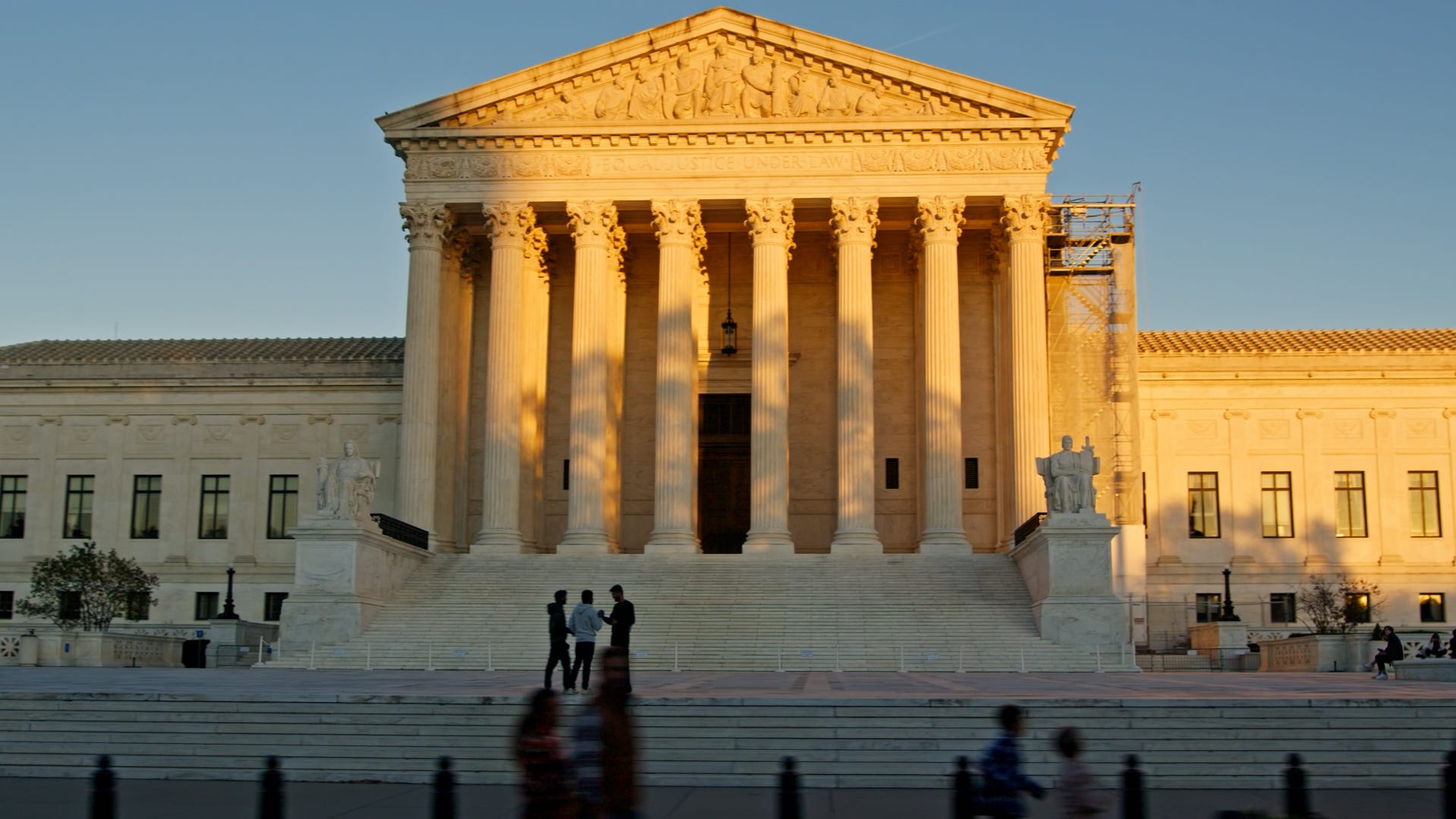

Supreme Court takes up Colorado ‘conversion therapy’ case
U.S. Supreme Court justices heard oral arguments over Colorado’s ban on “conversion therapy.”
WASHINGTON – The Supreme Court said on March 31 that Colorado’s ban on LGBTQ+ “conversion therapy” for young people violates the free speech rights of Christian counselors, overturning a lower court ruling that upheld the law.
Colorado officials argued that the law is similar to regulations in about half of the states and regulates professional conduct, not speech. And major medical organizations reject conversion therapy as ineffective and harmful.
But the Supreme Court upheld the therapist’s challenge to the ban by an 8-1 vote, agreeing that the Denver-based 10th Circuit Court of Appeals should have applied a stricter constitutional review to evaluate the law.
Justice Neil Gorsuch, writing for the majority, said Colorado law dictates what views therapists “may or may not express.”
“Colorado may believe its policies are essential to public health and safety; certainly censorship-sensitive governments throughout history have believed the same,” Gorsuch wrote. “But the First Amendment is a shield against any effort to enforce orthodoxy in thought and speech in this country.”
Justice Ketanji Brown Jackson, who read part of the dissenting opinion in front of the court, said the court’s decision could impede states’ ability to regulate health care and could cause “serious harm to the health and well-being of Americans.”
“The Constitution does not preclude reasonable regulation of harmful medical practices just because substandard medical care is delivered with words rather than scalpels,” she wrote.
Christian counselor supported by Trump administration
Colorado’s Mild Conversion Therapy Act, enacted in 2019, defines conversion therapy as “an attempt to change an individual’s sexual orientation or gender identity, including efforts to change behavior or gender expression, or eliminate or reduce sexual or romantic attraction to or feelings for individuals of the same sex.”
Kaylee Childs, a licensed counselor with a master’s degree in clinical mental health who practices from a Christian perspective, acknowledged that the law would help young people accept their transgender identity, but said it would not help them “grow up peacefully and comfortably in their current bodies.”
The Justice Department under the Trump administration sided with Chiles, telling the court that Colorado was “silencing an aspect of the ongoing debate in the mental health community about how to discuss issues of gender and sexuality with children.”
Colorado says conversion therapy is harmful
During oral arguments in October, Colorado Attorney Shannon Stevenson said that while there is no evidence that conversion therapy works, research shows that “telling someone that they are inherently capable of changing” can be harmful.
However, Chiles’ attorney disputed whether the study was applicable to her counseling format.
And the Justice Department noted that relying on a “general standard of care” to regulate treatment is problematic, noting that as recently as the 1970s, the medical community agreed that being gay was a mental illness.
The American Psychiatric Association declassified homosexuality as a mental illness in 1973.
More than a dozen mental health and medical professional organizations, including the American Psychological Association and the American Psychiatric Association, now say efforts to change someone’s sexual orientation, gender identity, or gender expression “do not meet the standard of legitimate treatment.”
Still, the Trevor Project, an advocacy group for LGBTQ+ people, announced in 2023 that it had identified more than 600 professional counselors who claim they can help someone change their sexual orientation or gender identity. (The group has identified hundreds more unlicensed counselors who operate in a religious capacity and are not covered by laws like those in Colorado.)
“The Supreme Court’s decision to treat the dangerous practice of conversion therapy as constitutionally protected speech is a tragic setback for our country and will put young lives at risk,” Trevor Project CEO James Black said in a statement after the ruling.
Justice Elena Kagan, one of two liberals who voted with the court’s six conservatives, said Colorado could regulate counseling as long as the state’s rules are “viewpoint neutral.”
“But a full consideration of that issue can wait until another day,” she wrote in a concurring opinion joined by Justice Sonia Sotomayor. “We don’t need to decide here how to evaluate perspective-neutral laws regulating health care provider expression, because, as the court has held, Colorado is not the law.”
A spate of losses in Colorado’s LGBTQ+ lawsuits
Colorado, a pioneering gay rights state, has been at the center of two Supreme Court cases on LGBTQ+ issues in the past seven years.
In these cases, courts sided with website developers and cake shops who objected to providing some services to gay customers because of their religious beliefs.
Most recently, in the Tennessee case, the Supreme Court ruled last year that states can ban gender-affirming care for minors.
And the justices are now considering whether states can prevent transgender girls and women from playing on women’s sports teams.


