Let’s take a look at how President Trump’s attempts to drastically limit birthright citizenship could affect millions of Americans.

SCOTUS Lawsuit Grants Birthright Citizenship to Tourist Babies
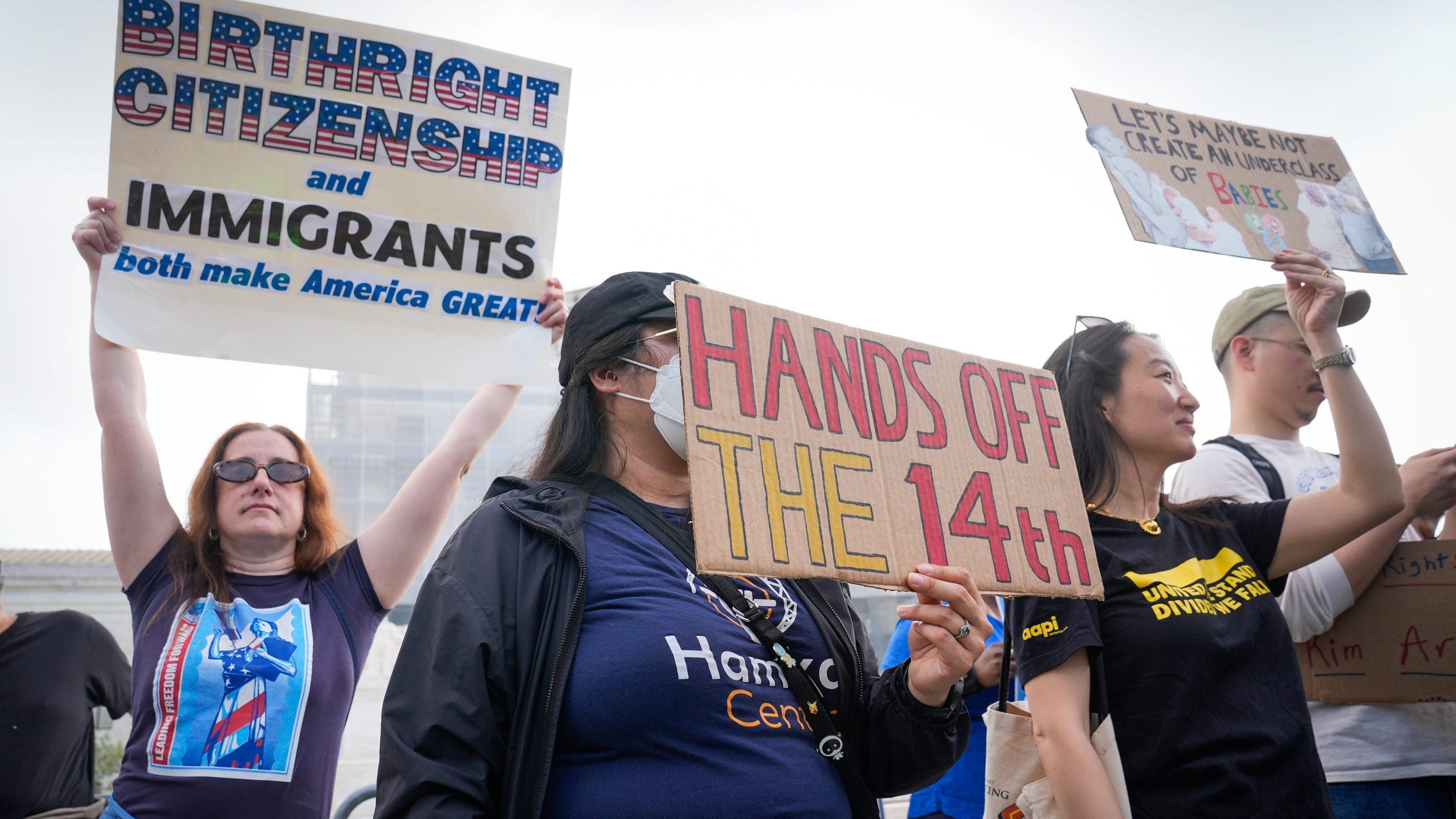
The Supreme Court is scheduled to hear arguments on April 1 on whether President Donald Trump can restrict birthright citizenship by executive order.
- The Fourteenth Amendment automatically grants citizenship to “all persons born or naturalized in the United States and subject to the jurisdiction of the United States.”
- Under President Trump’s policies, approximately 255,000 children born on U.S. soil each year will start their lives without U.S. citizenship.
- Once the order goes into effect, all new parents will need proof of their citizenship or immigration status to confirm that their child is a citizen.
WASHINGTON – President Donald Trump’s attempt to sharply limit who automatically becomes an American could affect the legal status of up to 255,000 babies born in the United States each year, according to some estimates.
Additionally, parents of millions more children will have to prove their newborns’ citizenship.
These are some of the key findings that will be at issue when the Supreme Court debates the legality of President Trump’s order on April 1.
Here’s who could be affected if the 6-3 conservative-controlled court sides with Trump.
What will happen to President Trump’s executive order?
14th The proposed amendment would automatically grant citizenship to “all persons born or naturalized in the United States and subject to the jurisdiction of the United States.”
The main exemption from birthright citizenship was for the children of foreign diplomats.
But President Trump has argued that children of people in the country illegally or temporarily should also be exempt. This includes infants born to parents who are in the United States on student or work visas, as well as infants who have been granted temporary residence through humanitarian programs or because they are seeking asylum.
On the first day of his second term, President Trump signed an executive order directing federal authorities to deny citizenship to infants born in the United States if neither parent is a citizen or lawful permanent resident.
When will President Trump’s policies take effect?
President Trump’s executive order was scheduled to go into effect on February 20, 2025, but was blocked by a lower court.
If the Supreme Court upholds the order, the justices could also set a new effective date. For example, when the court limited judges’ power to block the policy last year, it put the order on hold for 30 days to give lower courts time to respond.
How many people will be affected by President Trump’s policies?
Under President Trump’s policies, about 255,000 children born on U.S. soil each year would start their lives without U.S. citizenship, according to the Migration Policy Institute. This corresponds to approximately 6% of all expected births.
The institute estimates that the proportion of the U.S. population without citizenship or legal status will increase by 40% in 2075 compared to if there were no changes.
Who are we talking about?
According to the Aoki Center for Critical Race and National Studies at the University of California, Davis School of Law, nearly 80% of the approximately 14 million undocumented people living in the United States are from Mexico, Central and South America.
An additional 5.5 million to 6.5 million people in the United States have temporary or provisional status, including those with pending asylum claims, undocumented immigrants brought to the United States as children, and those who entered the country through humanitarian programs. Over 90% come from Latin America, Asia, Africa and the Caribbean.
What happens to babies born without citizenship?
Some children born in the United States will be stateless (meaning no country claims them) and will have no path to citizenship, even if their parents are citizens. For example, mothers seeking asylum cannot add children to their applications, said Conchita Cruz of the Asylum Seeker Advocacy Project.
That’s because, although the laws are subject to change, many federal immigration laws are built on a presumption of birthright citizenship and do not address such situations.
Is this policy retroactive?
President Trump’s executive order applies directly to people born after the executive order takes effect. But if the Supreme Court agrees with the Trump administration’s opinion, 14th Immigrant rights groups say the amendment has been misunderstood for generations and will “cast a shadow” on the citizenship rights of millions of Americans.
“The decision the government is seeking would actually mark a kind of open season for questioning the citizenship of other Americans, something we see all too often already,” said Cody Wofsey, an attorney with the ACLU Immigrant Rights Project.
How might this policy affect all parents?
Immigration law experts say that once the order goes into effect, all new parents will need proof of their citizenship or immigration status to confirm that their child is a citizen.
Stephen Yale Roher, a longtime immigration law scholar and former professor at Cornell Law School, said this is an intolerable burden for millions of Americans.
At least 3.8 million Americans do not have ready access to birth certificates, passports, or naturalization documents proving their citizenship, according to a recent study by the Brennan Center for Justice.
“Adjudicating citizenship for newborns would essentially require a new federal bureaucracy,” Yale Rohr said.
Can the Supreme Court avoid constitutional issues?
There are multiple ways the Supreme Court could rule against President Trump’s executive order. The justices will be able to avoid determining whether his policy violates the original understanding of Article 14.th amend and instead argue that it violates the Immigration Act of 1952.
It will still be a victory for those who challenge this command, but it will be an incomplete victory. For example, Congress could amend immigration laws, which would likely result in new legal challenges and send the constitutional issue back to the high court.
When will the Supreme Court rule?
The Supreme Court is expected to issue a decision by the end of June or early July.


