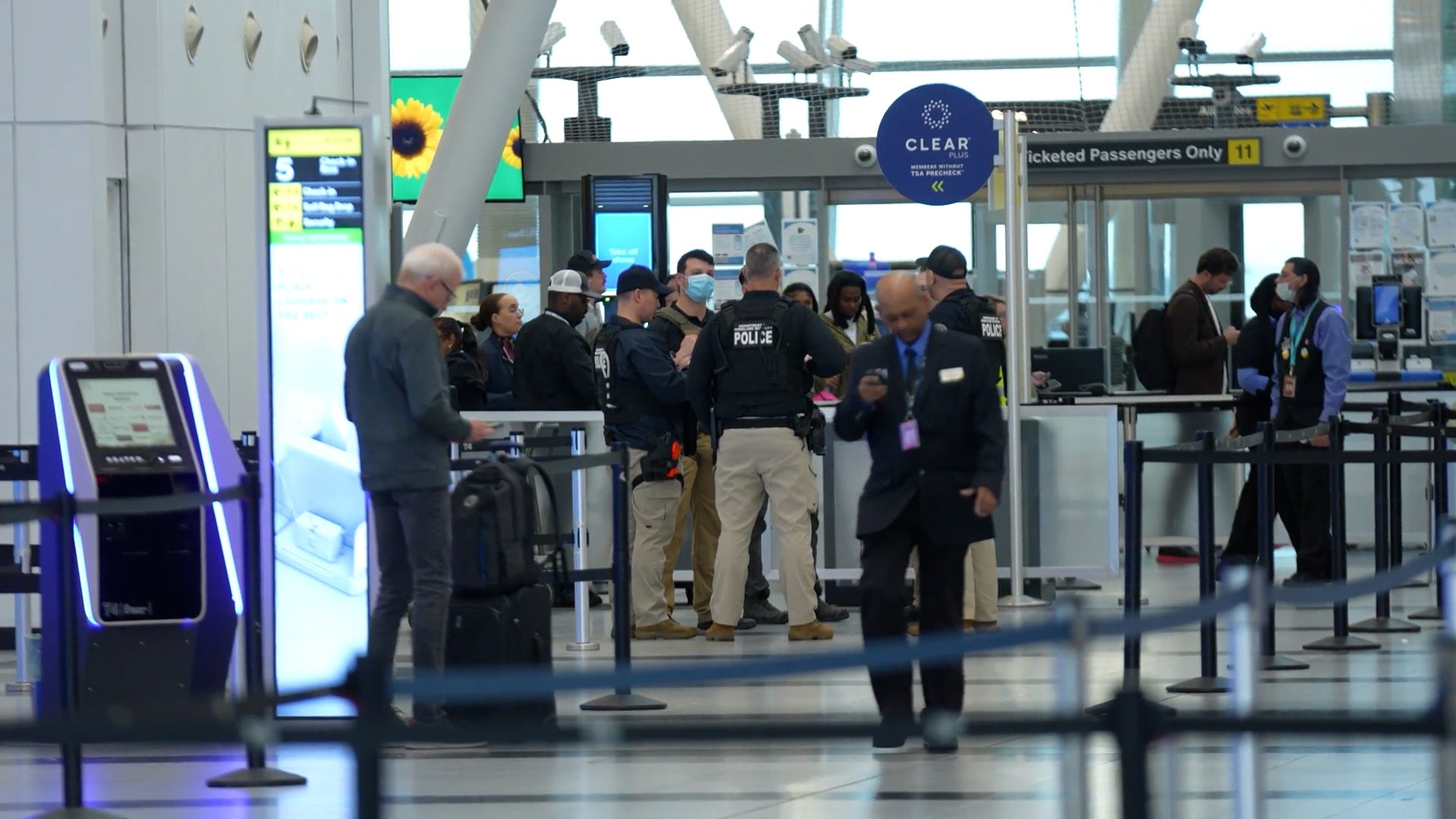

ICE agents dispatched to airports as TSA shortage worsens
Travelers are facing long lines at TSA as ICE officers are deployed to airports during the partial government shutdown.
Transportation Security Administration employees remain unpaid and on the front lines of airport security during the partial shutdown, with President Donald Trump on Monday, March 23, ordering Immigration and Customs Enforcement agents to enter airports across the country.
Photos and videos of ICE officers at the airport quickly spread on social media, prompting criticism that immigration agents continue to receive paychecks while TSA officers have not received their full paychecks since late February.
TSA employees have already missed one paycheck since the shutdown began on February 14th, and are scheduled to miss another paycheck on March 27th. In contrast, ICE officers continue to receive regular paychecks because they are classified as essential personnel within the Department of Homeland Security.
Why is ICE funded but TSA not?
Republican lawmakers last year passed the One Big Beautiful Bill Act, which funds immigration enforcement through 2029. The bill would provide $170 billion to ICE, more than double DHS’s annual discretionary budget, and allow the agency to continue paying its employees during the shutdown.
DHS said in an emailed statement that pay disparities are contributing to staffing challenges, with more than 400 TSA employees resigning and thousands taking time off work because they can’t afford basic expenses like gas, child care, food and rent.
The agency said ICE’s continued presence “will help strengthen TSA’s efforts to keep our skies safe and minimize disruption to air travel,” but the decision has drawn criticism from TSA employees and their unions.
Everett Kelly, president of the American Federation of Government Employees, which represents TSA officers, denounced the move in a news release, arguing that ICE officers are not trained or certified in aviation security.
“TSA officers spend months learning how to detect explosives, weapons, and threats specifically designed to evade detection at checkpoints. These skills require specialized instruction, on-the-job training, and ongoing recertification,” Kelly said.
“You can’t improvise that,” Kelly added. “Putting untrained personnel at security checkpoints doesn’t close the gap; it creates a gap.”
When will TSA funding be reinstated?
Lawmakers said Tuesday, March 24, that momentum is building for a deal to end the nearly six-week Department of Homeland Security shutdown before Congress goes on spring break on March 30, even though President Trump said he was not satisfied with “very little” of what lawmakers would negotiate.
Contributors: Zac Anderson and Zachary Schermele, USA TODAY


