‘It’s immoral’ That’s what the Catholic Church told the Supreme Court about President Trump’s attempt to abolish birthright citizenship for some infants born in the United States. Something to watch in the upcoming showdown.
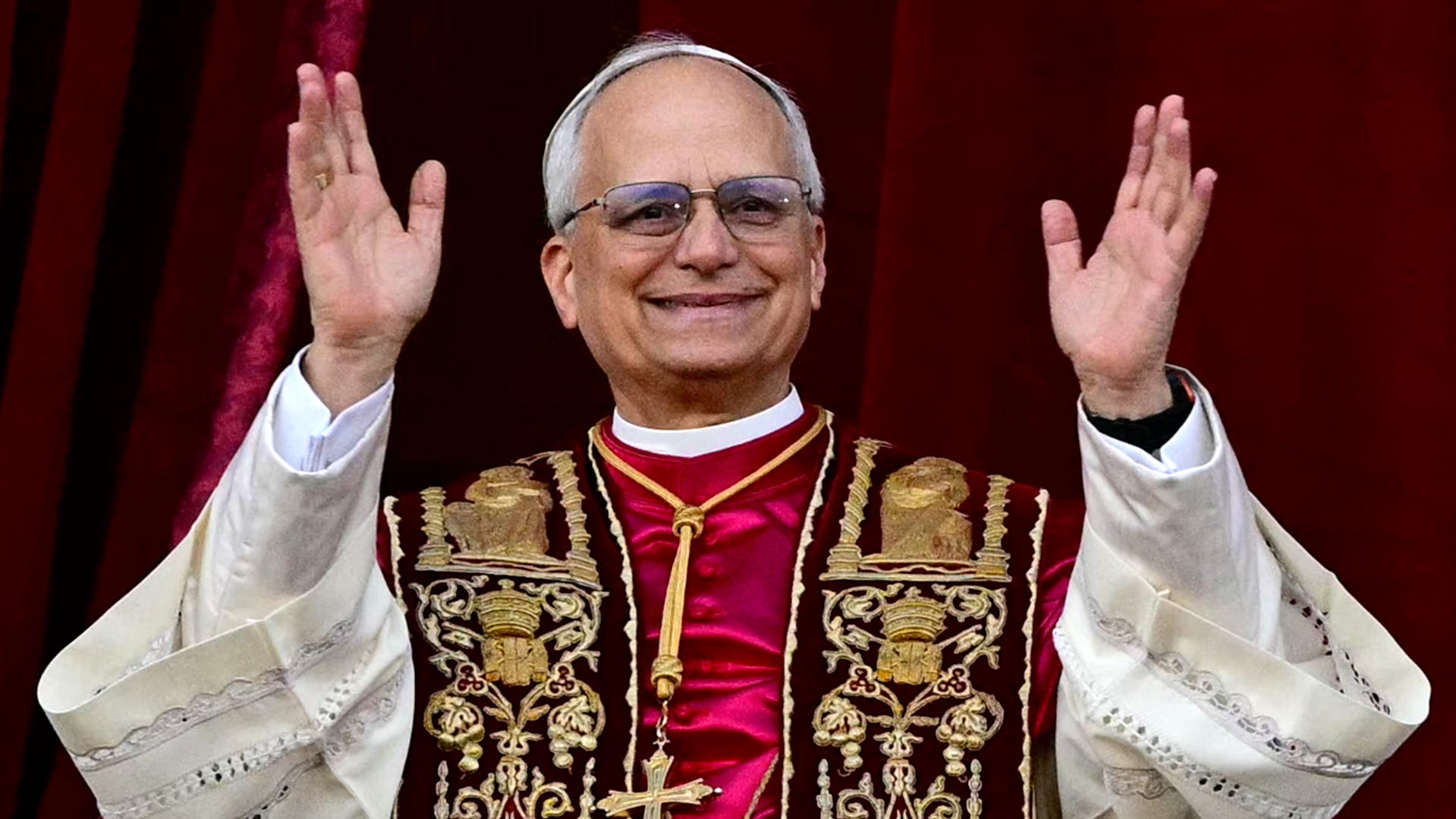

Pope Leo XIV’s stance on important issues such as immigration and race
Robert Prevost was installed as Pope Leo XIV on May 8th. Although he is in line with his progressive predecessor in some respects, he is more conservative in others.
WASHINGTON – Several Catholic bishops have taken the “unusual” step of waiving the requirement to attend Sunday Mass for parishioners who fear they will be subject to immigration detention if they leave their homes.
The entire U.S. bishops’ conference issued an unusual public condemnation of the Trump administration’s tactics against illegal immigration.
The church is now hoping its moral strength will persuade the Supreme Court to rule against the administration in two upcoming immigration cases.
Remarkably, the U.S. Catholic bishops have made not only legal but also ethical arguments in their court filings.
The church said in a brief, backed by Bible verses, that the bishops consider President Donald Trump’s attempt to abolish birthright citizenship for some children born in the United States to be “immoral.”
And allowing the federal government to turn away asylum seekers at the border is “not just a legal error, but a moral disaster,” the church wrote in a separate lawsuit scheduled to be argued March 24.
“Catholic bishops are saying that the current administration’s position is not only anti-Constitutional and anti-American, but also anti-Christian,” said Darrell Miller, a professor at the University of Chicago Law School. “This is a remarkable position that the Bishops’ Conference has expressed regarding the current government.”
Most Supreme Court justices are Catholic
This is also a view that may appeal to a uniquely receptive audience. Six of the nine justices are Catholic, and the seventh, Neil Gorsuch, was raised Catholic. (Ketanji Brown Jackson is Protestant, Elena Kagan is Jewish.)
And while religious faith considerations are not formally part of the judicial process, judges’ backgrounds are often scrutinized as indicators of their likely votes.
“Some have suggested that people of faith may have a particularly difficult time obeying the law rather than their moral views,” Judge Amy Coney Barrett wrote in her 2025 book “Hearing the Law,” noting the scrutiny she faced for her Catholic faith when she was first nominated to the federal bench. “I don’t know why.”
An analysis of cases decided by the Catholic court in the nine years since it became a majority found a clear gap between how often Catholic judges sided with the church in cases important to the church and how often non-Catholic judges sided with the church. But according to a 2015 academic paper by Kevin Walsh, a Catholic University law professor who clerked for Justice Antonin Scalia, the difference is “primarily one of ideology rather than ecclesiastical affiliation.”
Dino Christenson, co-author of a 2025 report on the influence of outside groups on courts, said research consistently highlights that judges’ ideology plays the most powerful role in decisions.
“However, reminding the justices that the court is predominantly Catholic and that the church and some parishioners are on one side may resonate with the justices,” Christenson, a political science professor at Washington University in St. Louis, said in an email to USA TODAY.
Bishops take strong stance on immigration
The judges may have known they were working on this series of cases., It shows the strong stance the Catholic Church has taken against immigrants.
In November, the Catholic bishops of the United States issued a “special message” expressing concern about how immigrants are being treated in the United States.
It was the first time in more than a dozen years that the Church had spoken in such a particularly urgent manner. The last time was in 2013, when bishops criticized a provision in President Barack Obama’s health reform that required some Catholic employers to cover contraception in their insurance plans.
The Supreme Court sided with the church in recent cases
In a series of recent victories for the church, a court ruled in 2020 that employers with religious or moral objections do not have to cooperate in covering contraceptives under the Affordable Care Act.
In that case, after siding with the Little Sisters of the Poor, In 2021, a court ruled in favor of a Catholic social services agency that refused to recognize same-sex couples as foster parents.
Last year, the court unanimously sided with Catholic Charities of Wisconsin in a fight over unemployment tax exemptions for religious groups, but deadlocked on whether to allow the church to establish the nation’s first religious charter school in Oklahoma.
Even if the church is not directly involved in the lawsuit, U.S. Catholic bishops will participate in legal battles that “touch important tenets of Catholic teaching.”
In recent years, the church has most often done so in cases involving religious rights, abortion, marriage and sexuality, and immigration.
Church points out that Jesus Christ was a refugee
The immigration case the court will consider on March 24 concerns the government’s ability to limit the number of people seeking asylum at the border by barring them from entering the United States if their request for protection is recognized by law.
Immigrant rights groups and asylum seekers who challenge the “turnback” policy say the government falsely claims migrants are being denied entry because border crossings lack the capacity to process them.
Although this policy is currently not in use, the Department of Justice would like to keep the option open.
Catholic bishops in the United States have pointed out that Christ was a refugee, as his parents fled to Egypt to escape persecution.
“This policy violates nearly 2,000 years of Catholic faith, international humanitarian agreements, and the obligation to care for refugees, a fundamental legal and moral principle that runs through the history of this country,” the church said in a court filing.
The bishops have made similar arguments in the debate over President Trump’s executive order restricting birthright citizenship, and the justices are scheduled to take up the issue on April 1 in one of the most high-profile debates of the term.
The church said in a filing that the effects of the president’s order are “immoral and contrary to the fundamental beliefs and teachings of the Catholic Church regarding human life and dignity, the treatment of vulnerable people, especially migrants and children, and the unity of the family.”
Moral arguments are “historically grounded”
Miller, the University of Chicago law professor, sees the bishops’ faith-based arguments as a wise move.
“They know that this is a Supreme Court that tends to be sympathetic to appeals that have aspects of religious discrimination,” he said. “And to say that this is a form of anti-religious bigotry … is going to be decided differently in this court than it was 20, 25, or 30 years ago.”
Adam Feldman, a lawyer and political scientist who runs a blog called Empirical SCOTUS, said the church’s emphasis on religious teachings appears to be a “major shift” from the more substantive legal arguments the church has raised in other major cases.
A focus on Judeo-Christian tradition could be persuasive for courts, which increasingly use history and tradition to discern the original meaning of the Constitution and subsequent amendments, he said.
“Moral arguments are actually historically based,” Feldman said.
Can judges be swayed by moral arguments?
Douglas Laycock, a law professor at the University of Virginia and a leading expert on religious law, said moral arguments are most important when the law is unclear.
“This is a court that claims to be textualist and often claims it is not interested in policy issues,” Laycock said in an email. “Moral arguments can help judges choose when a law can easily be interpreted in more than one way, but many judges are reluctant to acknowledge that even then.”
Laycock said he doesn’t think there’s any major ambiguity in the law in either immigration case, but the potential for supportive filings, known as amicus briefs, to make a difference is too important to ignore.
“If you care about the issue, you feel obligated to file it just in case,” Laycock said. “However, most of the court briefs turned out to be inconsequential.”


