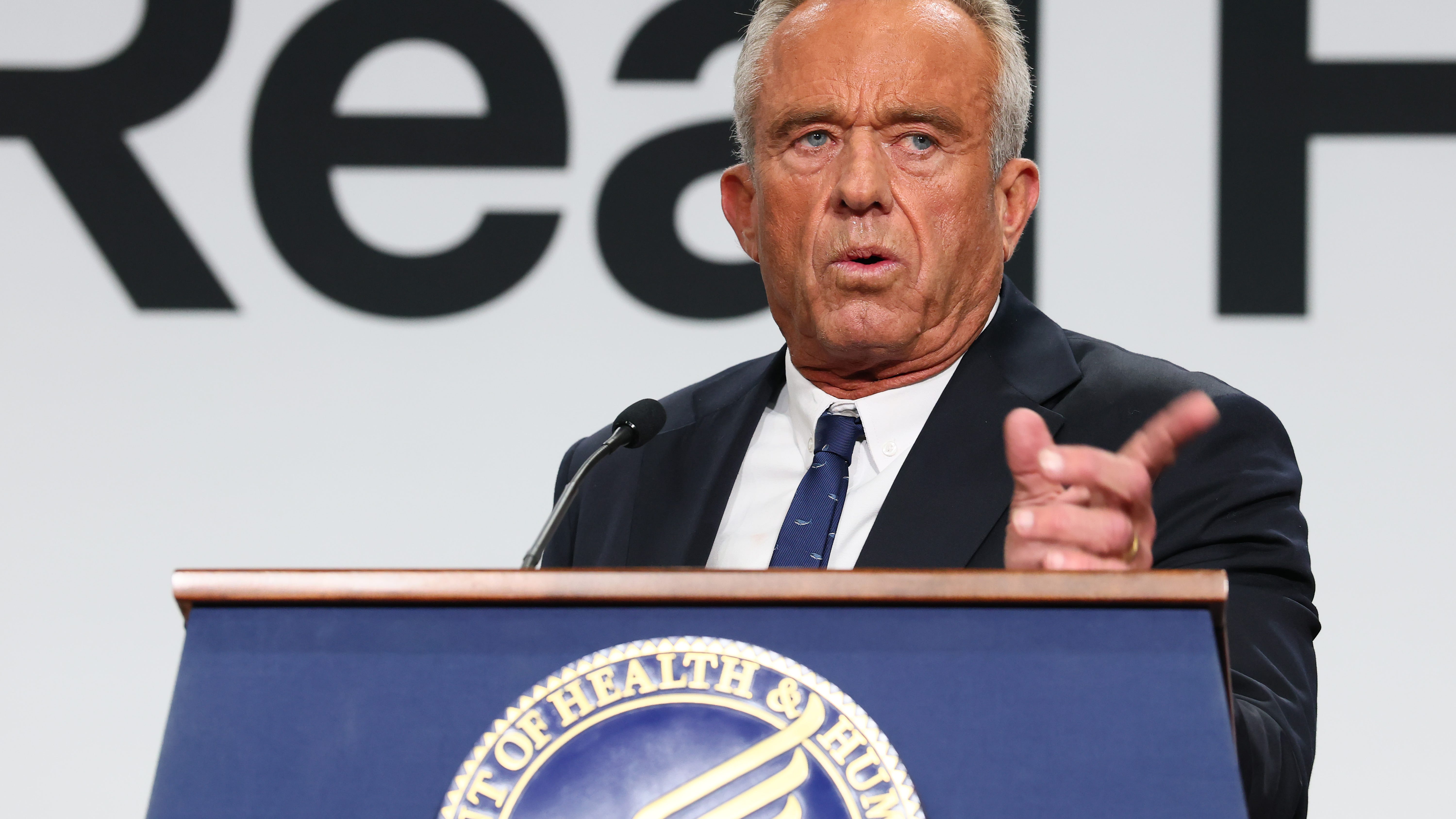

Doctors enter politics over President Trump’s health care policies
Why some doctors say they felt a “moral imperative” to run for office
Tuesday, March 17, 2026, episode of the podcast The Excerpt: Public health policy has been one of the most contentious areas of the Trump administration. From cutting Medicaid to promoting dubious theories about the causes of autism, some doctors say they feel compelled to take the stand. USA TODAY national reporter Sarah D. Wire explains what that means for the midterm elections.
Press play in the player below to listen to the podcast and follow the transcript below. This transcript was automatically generated and edited in its current format for clarity. There may be some differences between audio and text.
Podcast: For true crime stories, in-depth interviews, and more USA TODAY podcasts, click here
Dana Taylor:
Over the past 14 months, the Trump administration’s policies have affected virtually every aspect of American life, from education to the economy. But perhaps the most controversial impact is in public health. Some medical professionals are expressing their dissatisfaction with these policies by entering politics. Will they be able to sway the midterm elections?
Hello. Welcome to this excerpt from USA TODAY. I’m Dana Taylor. Today is Tuesday, March 17, 2026.
USA TODAY national reporter Sarah Wire takes a deep dive into how changes in public health policy are impacting the upcoming midterm elections. Sarah, it’s great to have you back on The Excerpt.
Sarah D. Wire:
Thank you for having me.
Dana Taylor:
As part of your reporting here, you spoke with several doctors who decided to enter politics because of this administration’s health policy. Sarah, what did they tell you?
Sarah D. Wire:
All of these people are still running to be the Democratic nominee, but they all said they want to challenge the government’s misuse of science and data. Now, in Chicago, I spoke with an emergency room doctor named Thomas Fisher, who said that when the Republican tax and spending bill was passed over the summer, he felt a moral call to stand up and do something. He felt like the government was intentionally increasing suffering. I spoke to Dr. Richard Pan, a pediatrician in California. He is already at odds with Kennedy over California’s childhood vaccination rates. He said he realized that if President Kennedy was in Washington, D.C., he needed to be there, too.
Dana Taylor:
And could you give us a general summary of what changes this administration has brought to public health?
Sarah D. Wire:
We’ve seen the Department of Health and Human Services, where Kennedy once again blamed Tylenol use by pregnant mothers for causing autism and changed federal dietary guidelines. But more broadly, we’ve seen it in the Republican tax and spending bill, the so-called Big Beautiful bill, which changed Medicaid and eligibility, added work requirements, and started funding states.
Dana Taylor:
Sarah, we also already have quite a few doctors in Congress. Where do they stand on these controversial health policies?
Sarah D. Wire:
Yes, we already have about 20 doctors and nurses in Congress. In fact, most of them are Republicans. We have seen the majority toe the party line. Some are trying to change the bill behind the scenes to make it better for voters. There are some people who are speaking out against Secretary Kennedy, but we don’t see that much.
RFK Jr.’s medical policy encourages doctors to enter politics
Doctors are running for office over the Trump administration’s health care policies. What does that mean for midterm exams?
Dana Taylor:
You also spoke with officials from the Department of Health and Human Services about this topic. what did they say to you?
Sarah D. Wire:
They said Kennedy was trying to solve long-standing problems within the health care industry and that all of his critics were members of the health care industry. He said the focus is on patient choice and informed consent, all to restore trust in the medical community.
Dana Taylor:
When Secretary of Health RFK Jr. took office, he rolled out the “Make America Healthy Again” plan (the MAHA plan). The plan had significant support among a bipartisan group known as MAHA Moms. Now let’s remember what the main tenet of MAHA was.
Sarah D. Wire:
you’re right. The MAHA movement brought together this unexpected coalition. There were independents, Democrats, and non-voters. And this group did not inherently support President Trump or the Republican Party. They supported Kennedy’s presidential bid. One of the reasons President Trump was really willing to embrace Kennedy was because he knew there was this untapped segment of voters. They are united in their desire to fight childhood diseases by reducing environmental toxins and ultra-processed foods rather than medicalizing them. The anti-vaccination movement was a major part of this group, and they had already supported Kennedy, who had founded his own anti-vaccination group.
Dana Taylor:
USA TODAY recently reported that the MAHA movement’s support base isn’t all that excited about this administration, which could threaten Republican control of Congress. why is that?
Sarah D. Wire:
My colleague Swapna Ramaswamy recently reported on this. They are particularly outraged by an executive order signed in February by President Donald Trump that calls for increased production of glyphosate, a widely used herbicide that has been linked to carcinogens. The agriculture industry depends on this, but MAHA supporters don’t want it touching our food. And MAHA accepted Kennedy in part because he was participating in legal efforts to stop it in the United States. And Kennedy has been unable to do anything concrete about this. I cannot help but support President Trump’s executive order. He said he doesn’t like it, but there’s not much more he can do.
One woman told Swapna that this was a severe slap in the face from WAHA. That was one of the biggest things they wanted to accomplish under the Trump administration. There’s not much Kennedy can do about it.
Dana Taylor:
What legitimacy did President Trump’s executive order provide for increasing production of this chemical?
Sarah D. Wire:
The order stated that domestic production of elemental phosphate and glyphosate is necessary for national security. The order states that the element phosphate is critical to military technology and is a key precursor element in the production of glyphosate-based herbicides, and that phosphate shortages could threaten agricultural productivity.
Dana Taylor:
The order also contained limited immunity. Please tell me about it.
Sarah D. Wire:
The order provides limited immunity to domestic companies that produce glyphosate. It is a popular herbicide among farmers because it is inexpensive and highly effective. This is important because there is only one company in the United States that makes these two drugs. That company is Bayer, which acquired Monsanto in 2018. The company threatened to stop producing Roundup unless it received court protection from lawsuits, alleging that Roundup causes cancer. The Supreme Court is scheduled to hear arguments on April 27 about whether the company could be held liable under state law for failing to disclose cancer risks even though the EPA ruled they did not need to be listed on labels.
Dana Taylor:
Congress’ failure to restore health care subsidies as part of the Affordable Care Act is another factor here. Is the Trump administration prioritizing any solutions here?
Sarah D. Wire:
Millions of Americans are facing rising health care costs as these health subsidies expire at the end of the year. These are premium tax credits approved to help as many people as possible get insurance during the pandemic. Some people had their premiums doubled or tripled, and others stopped paying their premiums because they were paying thousands of dollars in medical bills. There is talk of further increasing access to health savings accounts, but nothing is really moving forward at this point.
Dana Taylor:
Finally, Sarah, what is your biggest takeaway from this report?
Sarah D. Wire:
I think there are some warning signs regarding the power of health care and the impact that voters may consider in November and during the midterm elections. The House of Representatives is controlled by a very narrow majority, and there is a possibility that it will gain seats in the Senate as well. And President Trump said that if Democrats control either chamber of Congress, that would be the end of his ability to do what he wants in his term. And even those who support MAHA say this should be a warning signal to the government heading into the election.
Dana Taylor:
Sarah Wire is a national reporter for USA TODAY. Sarah, I’m always happy to have you with me.
Sarah D. Wire:
Thank you for having me.
Dana Taylor:
We would like to thank Senior Producer Kaely Monahan for her production assistance. Executive producer is Laura Beatty. Let us know what you think about this episode by sending a note to podcasts@usatoday.com. Thank you for your attention. I’m Dana Taylor. Tomorrow morning, we’ll be back with another episode of USA TODAY Excerpts.


