
President Trump ‘demands’ countries protect Strait of Hormuz
President Trump is calling on countries to help secure the Strait of Hormuz as tensions rise in the Middle East and international commitments stall.
- President Trump has called on other countries to help protect the Strait of Hormuz, the world’s vital oil route.
- The strait was largely closed after the US and Israeli attacks on Iran.
- President Trump has warned NATO allies of a “very bad” future if they don’t help reopen the waterway.
President Donald Trump has called on other countries to help secure the Strait of Hormuz and has harsh words for NATO allies if they don’t.
The Strait of Hormuz, a chokepoint for about a fifth of the world’s oil, has been largely closed since the United States and Israel launched attacks on Iran on February 28. Oil prices remained near $100 per barrel over the weekend, with the average gallon of regular gasoline costing $3.718 as of March 16, according to AAA.
President Trump has repeatedly said Iran has been completely defeated, but is now calling on other countries to send aid to reopen waterways to shipping.
“The countries of the world that receive oil through the Strait of Hormuz must be mindful of its passage, and we will be very supportive! The United States will also coordinate with these countries to make sure everything goes quickly, smoothly, and successfully,” he said in a March 14 post on Truth Social.
Here’s what we know about President Trump’s efforts to involve other countries in helping to secure the Strait of Hormuz.
What is the Strait of Hormuz?
The Strait of Hormuz is a 160-mile waterway that connects the Persian Gulf, the Gulf of Oman, and the Arabian Sea.
As USA TODAY previously reported, the strait carries 20% of the world’s oil shipments and about 20% of the world’s seaborne liquefied natural gas. Most of the oil comes from Saudi Arabia and Iraq.
The strait is one of three major waterways that enable the export of natural gas and oil from the Persian Gulf to Europe and North America, the others being the Bab el-Mandeb Canal and the Suez Canal, respectively. Iran’s southern border runs along the length of the Gulf.
More than 3,000 vessels typically use the strait each month. Most of them transport crude oil, refined oil (the equivalent of about 20 million barrels of oil per day), and liquid natural gas from docks in the Persian Gulf to ports in China, India, Japan, and South Korea.
About 4% of those crude oil exports go to the Americas, while some oil shipments go to Europe. Closing this waterway will affect the amount of oil that can be shipped to the United States, resulting in higher prices for both oil and gas.
Two days after the war began, Iran announced the closure of the Strait of Hormuz. “The strait is closed,” an Iranian Revolutionary Guards official said on March 2. “If anyone tries to cross the strait, the heroes of the Revolutionary Guards and the regular navy will set those ships on fire.”
Did Trump threaten NATO?
In an interview with the Financial Times published on March 15, President Trump said failure by NATO allies to help maintain trade routes would lead to a “very bad” future.
“I think we should help China because they get 90 percent of their oil from the Strait,” Trump told the outlet. He said a scheduled summit with Chinese President Xi Jinping may also be postponed.
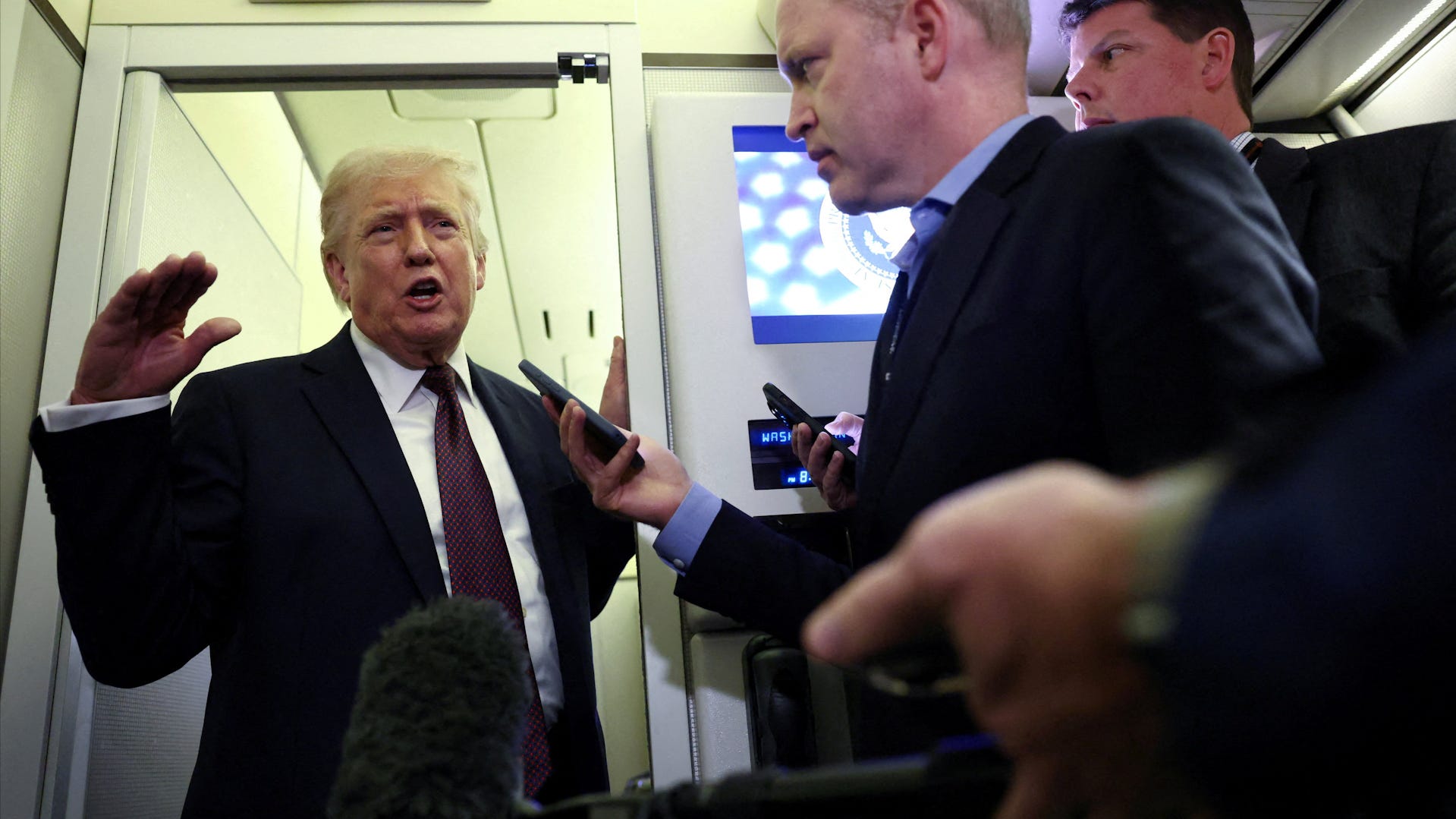
On Air Force One Sunday night, President Trump reiterated his call for assistance from other countries.
“It will be interesting to see which countries won’t help us with the very small effort of just keeping it straight,” he said. He declined to say specifically which countries he was seeking aid from, but mentioned China, France, Japan, South Korea and the United Kingdom in social media posts over the weekend.
“I wish the UK had stepped up sooner, sooner,” spokeswoman Caroline Levitt told reporters on March 16.
“But he continues to have dialogue with our European allies and is asking for their support, just as he did when he called for increased defense spending in the North Atlantic Treaty Organization (NATO). He is calling on them to do more here,” she continued.
However, President Trump condemned allies who did not agree to help by March 16.
“I’m not going to push them hard, because my attitude is, ‘We don’t need anyone,'” Trump told reporters. “We are the most powerful country in the world, and we have by far the most powerful military in the world. We don’t need that.”
What did other world leaders say?
So far, several allies have rejected requests for assistance to the Strait.
“Neither the United States nor Israel consulted us before the war, and…the United States made it clear at the start of the war that European aid was neither necessary nor desirable,” German government spokesman Stefan Cornelius said, according to Reuters.
According to Reuters, Spain and Italy said they would not get involved.
British Prime Minister Keir Starmer said Britain would not become involved in a wider war in Iran, but signaled he was willing to work with the United States to find a plan to continue the war.
“Ultimately we have to reopen the Strait of Hormuz to ensure the stability of the (oil) market. That is not an easy task,” Starmer told reporters, according to Reuters. “That is why we are working with all our allies, including our European partners, to put together a workable joint plan that can restore freedom of navigation in the region as soon as possible and reduce the economic impact.”
“It would be wise to be open-minded about whether Europe can contribute in some way, but there is also a point of view towards easing tensions,” Danish Foreign Minister Lars Lokke Rasmussen said, according to Reuters.
Contributor: Francesca Chambers, USA TODAY. Reuters
Kinsey Crowley is a Trump Connect reporter for the USA TODAY Network. Please contact KCrowley@usatodayco.com. follow her X (Twitter)thread, blue sky and TikTok.


