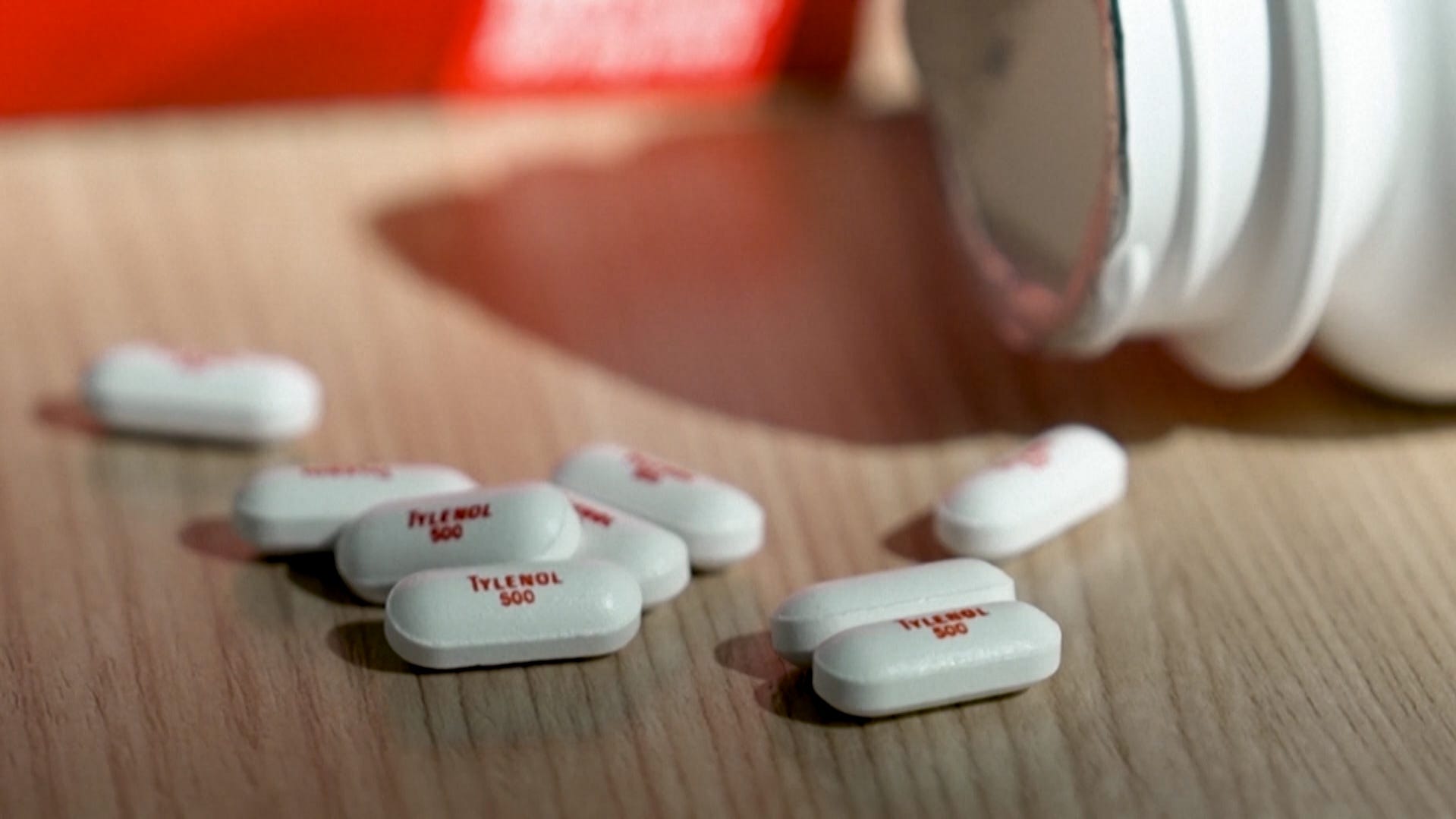

Experts dispute President Trump’s autism claims about Tylenol
Medical experts are defending the safety of Tylenol during pregnancy and disputing President Donald Trump’s autism claims.
The Food and Drug Administration has sharply narrowed the approved use of leucovorin, limiting the drug to rare genetic disorders, a major setback after President Donald Trump and Secretary of Health and Human Services Robert F. Kennedy Jr. touted leucovorin as a promising treatment for autism.
The agency announced on Tuesday, March 10, that leucovorin is currently approved only for patients with cerebral folate deficiency, a rare disease that includes features of autism. The decision marks a major shift from the broader framework laid out by the Trump administration last fall, when officials touted the drug as a potential way to address autism, despite a lack of scientific consensus to support such claims.
At a White House briefing in September, Trump, Kennedy, and other officials outlined plans to find what they called “the answer to autism,” linking the rates to Tylenol use during pregnancy without evidence and touting leucovorin as a way to treat autism symptoms.
The administration has repeatedly touted its plans to uncover the “causes” of autism. Decades of medical and scientific consensus indicate that there is no single cause, including drugs, for autism, but that it is likely the result of multiple factors, including genetics.
President Trump said in September that leucovorin’s label change would give “hope to many parents of children with autism that their lives may be better.” And while the new approval mentions “autistic traits,” it applies to significantly fewer demographics than the one first offered a few months ago.
USA TODAY has reached out to the Food and Drug Administration and the Department of Health and Human Services for comment.
Here’s what you need to know about how leucovorin works and who it’s approved to treat.
What is leucovorin?
Leucovorin, also known as folinic acid, is a type of essential B vitamin called folic acid. According to the Mayo Clinic and Drugs.com, it mimics the effects of folic acid in the body, which helps generate and maintain new cells.
It is primarily prescribed to cancer patients to counter the negative effects of chemotherapy drugs and can also be used in conjunction with other drugs that target specific types of cancer.
What did the FDA approve leucovorin for?
On March 10, the FDA approved a brand of leucovorin tablet, called Welcovorin, for the treatment of receptor 1 gene cerebral folate deficiency (CFD) (FOLR1 deficiency). This rare genetic disorder affects how folate is transported to the brain and can cause neuropsychiatric and developmental symptoms.
CFD is an umbrella term. CFD-FOLR1 is a specific subtype designated by FDA approval. According to the FDA, this condition is thought to affect about 1 in 1 million people.
The FDA says it can cause some symptoms that are also common in people with autism, including language and motor skill difficulties, developmental delays, and seizures. Due to the rarity of the disease, approval was based on a review of published literature rather than clinical trials.
“Today’s approval marks an important milestone for patients with cerebral folate transport deficiency due to mutations in FOLR1, a rare genetic disease for which, to date, there have been no FDA-approved treatment options,” FDA Commissioner Marty McCurry said in a news release.. “This measure may benefit some individuals with FOLR1-related cerebral folate transport defects who have developmental delays with autistic features,” he added, marking the only mention of autism in the statement.
Previously, McCurry told manufacturers in September to ramp up production of the drug as a treatment for some autism patients in anticipation of further FDA approval.
What did Trump and RFK Jr. say about leucovorin and autism?
At a White House briefing on Sept. 22, Trump and his advisers touted leucovorin as a “cure” for autism, and Kennedy was reported to be rushing FDA approval. Kennedy called the drug “a wonderful treatment that has the potential to benefit large numbers of children suffering from autism.”
Experts and medical groups such as the American Academy of Pediatrics and the Society of Child Neurology were quick to counter both unsubstantiated claims. In the months following the briefing, emergency rooms across the country saw a 10 percent drop in Tylenol orders for pregnant patients, and a 71 percent increase in leucovorin prescriptions for children, at one point soaring to more than 90 percent, according to a study published March 5 in the medical journal The Lancet.
What does science say about leucovorin and autism?
Currently, there is no widely accepted evidence to support the therapeutic use of leucovorin in people with autism.
“At this point, we don’t have enough data to say we can establish efficacy in broader autism,” an FDA official told Reuters. “The review team did an excellent job of sifting through the available autism data across the board and demonstrating why there is currently no evidence for widespread approval.”
Small studies have shown that some children with autism may experience cerebral folate deficiency or symptoms similar to it, where folate does not enter the brain correctly and can affect functions such as language and coordination. These findings show some promise and pique interest in leucovorin.
In the largest double-blind, placebo-controlled study of its kind, Indian researchers studied folinic acid in a small group of children. One group of 39 children received folinic acid and a second group of 38 children received a placebo.
A November 2024 study, which has since been retracted, found that children who received the drug had improved scores compared to a placebo group on the Childhood Autism Rating Scale, which is used to assess verbal and nonverbal communication.
This study was retracted due to data errors.
“The evidence is very limited, very narrow and inconclusive,” Dr. Sara Rodriguez, executive director of the Balanced Learning Center, a nonprofit that serves autistic and neurodivergent people, told USA TODAY. “It is important to recognize that treatment is not actually directed at autism itself, but at other underlying needs. Current research does not establish or widely recommend leucovorin as an autism treatment.”
Contributor: Ken Alltucker, USA TODAY. Reuters


