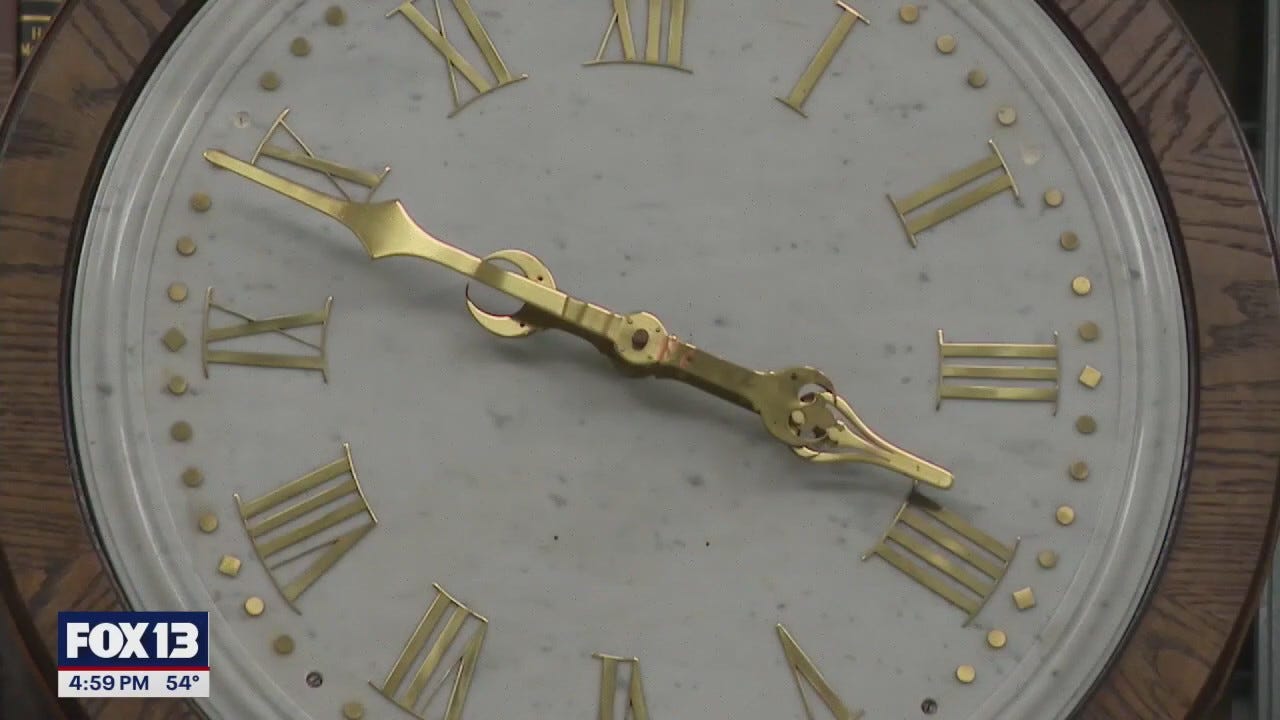

Parliament debates ending daylight saving time
Senators are debating around the clock the question of whether to eliminate twice-yearly daylight savings time changes.
Fox – Seattle
Daylight saving time is here again, and according to some studies, the time change can have negative health effects. Still, the practice of changing clocks twice a year continues.
On Sunday, March 8th, at 2 a.m., clocks will be “advanced” by one hour. This means that most Americans “lose” an hour of sleep.
The idea of daylight saving time goes back more than 100 years and was essentially created to conserve energy by increasing sunlight in the evenings. This adjustment was officially adopted in World War I.
This practice was observed intermittently over the next several years. According to the Department of Transportation, the Uniform Time Act of 1966 established legal requirements for daylight saving time. The current March to November system began in 2007.
Despite attempts by Congress to abolish or adjust daylight saving time, the practice remains in effect throughout the country except for Hawaii, most of Arizona, the Virgin Islands, Puerto Rico, the Northern Mariana Islands, Guam, and American Samoa.
Here’s a look at the health effects of daylight saving time and why it’s still happening.
The negative health effects of daylight saving time
According to John Hopkins University, the transition to changing clocks could lead to an increased risk of heart attack and stroke.
Increased production of inflammatory markers in response to mood disorders, hospitalization, and stress may also be attributable to this change, the university reported.
Additionally, you are more likely to have a car accident. Researchers at the University of Colorado Boulder and the Fred Hutchinson Cancer Research Center in Seattle, Washington, found a 6% increased risk of fatal accidents after making the switch, according to a 2020 study.
Why is transition associated with so many negative health effects? According to Johns Hopkins, sunlight is the most powerful synchronizer of our circadian rhythms, or body clocks.
Adam P. Spira, a mental health professor at the university, told the Bloomberg School of Public Health in 2023 that exposure to light near bedtime can make it harder to fall asleep at your normal bedtime, resulting in less sleep.
“We function best when our sleep-wake cycles follow the sun. When it gets dark, we get sleepy because of the release of melatonin. In the spring, we switch to daylight saving time, which increases the amount of light we are exposed to in the evening,” he said.
How sleep deprivation affects our health
It has long been known that sleep deprivation has negative effects on health. According to Johns Hopkins University, it can lead to decreased cardiovascular health, increased rates of diabetes and obesity, poor mental health, and decreased cognitive ability.
Children and shift workers heading to school in the dark hours of the morning are most at risk, as are people living on the western edge of the time zone, the university reported.
Why do we still observe daylight saving time? Will it change?
In recent years, politicians have attempted to change daylight saving time laws. In 2018, then-Sen. Marco Rubio (R-FL) introduced a bill to amend the Uniform Time Act of 1966. This bill would make daylight saving time the new permanent standard time. The bill has since been reintroduced several times without success.
Another more recent bill, the Daylight Saving Time Act of 2026, aims to “permanently adjust American time,” the bill says. The bill, introduced by Rep. Greg Steube (R-Fla.) in early February, would move the U.S. time zones forward by 30 minutes and leave them there permanently.
President Donald Trump has not made any recent statements about an eventual end to the time exchange. However, in March 2025 he said: “When something is a 50-50 issue, it’s hard to get excited about it.
“I think people want more light later on, but some people want more light earlier on because they don’t want to take their kids to school in the dark…That’s something I can do, too, but a lot of people like it in one way and a lot of people like it in another way.”
A month later, President Trump asked X to “push for a brighter day at the end of the day.”
Tips for adjusting to daylight savings time
For now, most Americans have to change their clocks on Sundays. However, the American Academy of Sleep Medicine offers tips for preparing for daylight saving time on its website. They include:
- Gradually adjust your sleep and wake times by moving your bedtime 15 to 20 minutes earlier each night before making the change.
- On Saturday, March 7th, I will set my clocks forward one hour and go to bed on time.
- Get outside early in the morning and soak up some sunshine on Sunday, March 8th. Exposure to sunlight can help set a new morning routine.
Michelle Del Rey is a trending news reporter for USA TODAY. Please contact mdelrey@usatoday.com.


