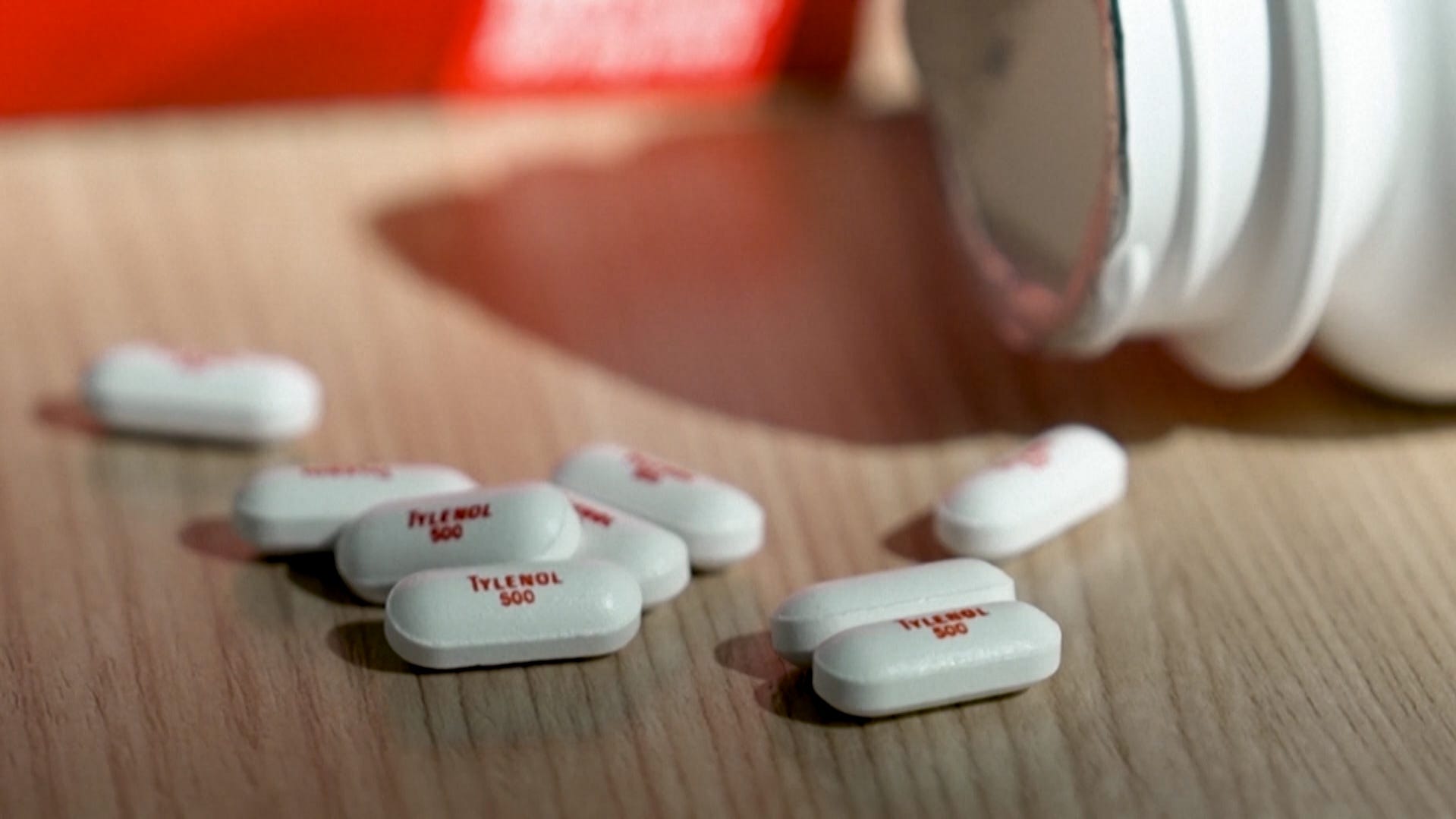

Experts dispute President Trump’s autism claims about Tylenol
Medical experts are defending the safety of Tylenol during pregnancy and disputing President Donald Trump’s autism claims.
President Donald Trump’s comments in September about Tylenol use during pregnancy and autism likely had real-world effects, even though experts and years of evidence deny any link, a new study reveals.
Emergency room orders for Tylenol dropped significantly after a September 22 White House briefing in which President Trump, Health and Human Services Secretary Robert F. Kennedy Jr., and other officials said they had found “the answer to autism” and told pregnant women to avoid taking Tylenol (the brand name for acetaminophen or paracetamol), according to a study published March 5 in the medical journal The Lancet.
The study found that the use of acetaminophen to treat pregnant patients decreased by 10% in the months following the information session, and the increased risk of autism was due to Tylenol use during pregnancy, although evidence was limited. However, for women of the same age who were not pregnant, there was no change in usage.
This significant downward trend in Tylenol orders began as early as the day after the meeting, said study co-author Dr. Michael Barnett, professor of health services, policy, and practice at Brown University School of Public Health.
“We were surprised at the speed of the response,” he told USA TODAY. “The words of public servants were powerful, and both the public and clinicians quickly changed their actions.”
Fewer Tylenol orders mean more prescriptions for unproven treatments: study
Study authors compared emergency room prescriptions before (June 30 to September 21) and after (September 22 to December 7) the White House press conference, using 2025 U.S. data from an electronic database that stores the health records of 294 million patients in more than 1,633 hospitals and 37,000 clinics.
The researchers found that acetaminophen prescriptions for pregnant women ages 15 to 44 not only fell by 10% over the study period from September to December, but also that the decline peaked at 20% in the third week after President Trump’s comments.
Prescriptions tended to return to more normal numbers as the study progressed, which the authors attribute to the disappearance of press conferences from people’s minds and messages of disapproval from groups such as the World Health Organization, the American Academy of Pediatrics, and the Autism Self-Advocacy Network.
“Because acetaminophen is so familiar and known to be safe, concerns may have waned as people returned to their normal daily lives,” Barnett said. “More data will be needed to confirm whether there has been a sustained decline in usage over a long period of time.”
The study could not account for seasonality (cold and flu season, which begins in November, typically causes increased prescribing of acetaminophen), pregnant women using acetaminophen at home, or treatment outside the emergency department. Because patients and health care providers were not interviewed, it is unclear whether more patients were refusing acetaminophen or whether fewer health care providers were prescribing acetaminophen in the first place.
According to the study, the results “demonstrate the clear power of public authorities to drive rapid change in medical practice.” “Here, no new data was presented, but we immediately observed changes in usage.”
At the same press conference, President Trump and his advisers also discussed leucovorin, a potential treatment for autism. President Kennedy is reportedly pushing for FDA approval for the drug. Despite the lack of clinical trials and evidence to support the use of leucovorin in people with autism, new outpatient leucovorin prescriptions for children aged 5 to 17 years increased by 71% during the study period.
Trump administration, Tylenol and autism
The Trump administration has repeatedly touted its plans to uncover the “cause” of autism. However, decades of medical and scientific consensus indicate that there is no single cause, including drugs, that autism is likely to result from, but is likely the result of multiple factors, including genetics.
At a press conference in September, President Trump reiterated to pregnant women that they should avoid taking Tylenol unless they “cannot tolerate it,” in which case they should limit their intake.
“At this time, there is no conclusive evidence of a causal relationship between prenatal acetaminophen/paracetamol exposure and autism,” Dr. Sara Rodriguez, executive director of the Balance Learning Center, a nonprofit that serves autistic and neurodivergent individuals, told USA TODAY. “A recent strong literature synthesis found no evidence that maternal paracetamol use during pregnancy increases the risk of autism, ADHD or intellectual disability.”
Still, she said messages of fear and alarm like those coming from the White House tend to strike a nerve and multiply regardless of strong evidence. These trends could have very real implications, she added.
The most immediate physical risk is that pregnant people are too afraid of typical first-line options to seek treatment for symptoms such as pain and fever that can negatively impact their health. Socially, it can promote “increased guilt, increased confusion, increased mistrust of doctors and public health institutions, and increased interest in unproven interventions,” she said.


