One parent said her middle school daughter was not informed that she was being treated as a man at school. One said her daughter’s teacher lied about what she was called at school.
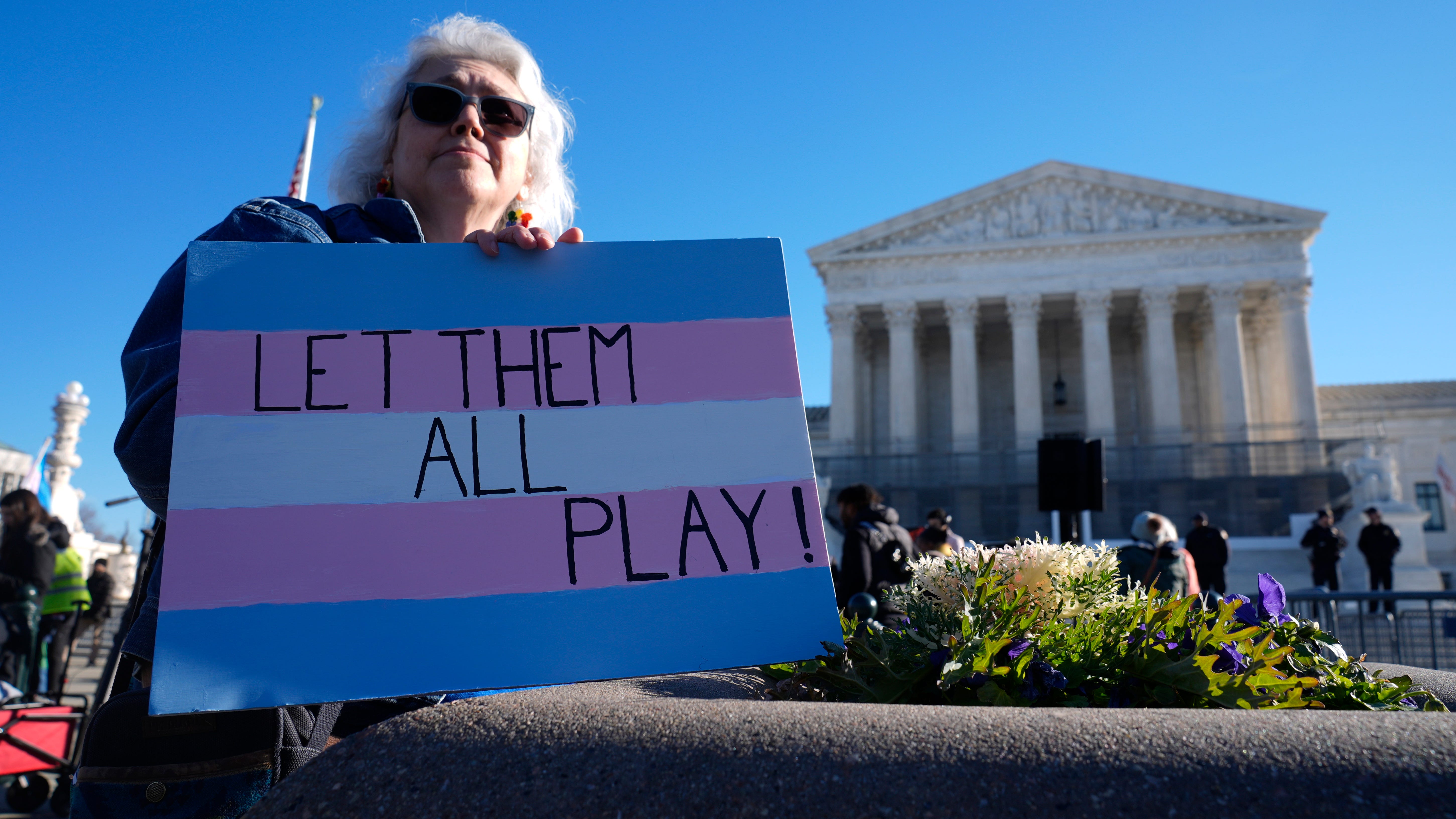

Conservative justices appear to be siding with the state on banning transgender athletes.
The plaintiffs argued that Title IX and the Fourteenth Amendment protect their rights. Government lawyers argued that the ban protects a broader range of women.
WASHINGTON – The Supreme Court on March 2 upheld a federal district court ruling that parents have a right to be informed when their child’s name changes., Or the pronouns used at school.
The decision, which had been on hold, is now back in effect in California and marks the first time the Supreme Court has weighed in on a national lawsuit over how schools handle students’ gender transitions.
In 2024, California became the first state to ban school districts from requiring employees to notify parents of changes in a child’s gender identity.
Four California parents and four teachers represented by a Catholic legal group argued that the state requires schools to hide their children’s transgender status from parents, a violation of the constitutional rights of parents and teachers.
One parent said her middle school daughter was not informed that she was treated as a male at school for most of the year. Other parents said their daughters were lied to by teachers about what they were called at school.
In December, U.S. District Judge Roger Benitez in San Diego said parents have a constitutional right to be notified if their child expresses “gender nonconformity” at school, and barred educators from intentionally withholding gender transition information from parents. The judge also said that teachers cannot “transition children into society over the objections of their parents.”
“California policymakers clearly do not trust parents to do the right thing for their children when it comes to changing students’ gender identities,” Benitez wrote.
The San Francisco-based Ninth Circuit Court of Appeals suspended the order while litigation continues. The appeals court said it would be too broad and likely wrong to conclude that parents’ rights were violated based on the Fourteenth Amendment’s Due Process Clause, which courts have interpreted as guaranteeing parents’ fundamental rights. California “does not categorically prohibit disclosure of information about a student’s gender identity without the student’s consent,” the three-judge circuit panel wrote.
The Thomas More Society, the legal group representing the challengers, asked the Supreme Court for emergency assistance. They argued that the appeals court should have followed the logic of a 2025 high court decision that upheld parents’ right to remove children from classrooms when LGBTQ+-themed picture books were being read.
“California’s policy unequivocally impedes parents’ ability to direct their children’s religious education,” attorneys for California parents said in a filing regarding the state’s policy regarding accommodations for transgender students.
Lawyers for the state said it was the district judges who failed to follow the Supreme Court’s precedent when they issued the overbroad order, even though a 2025 ruling limited the court’s ability to suspend the rule entirely.
California Attorney General Rob Bonta said in a filing that the judge’s order does not allow for exceptions, even in extreme cases where students could be “subjected to physical or emotional abuse” if their parents tell them about their gender identity or expression.
“Efforts to balance the interests of parents and the needs of transgender students pose complex issues that policymakers across the country continue to consider,” Bonta said.
If that is California’s way of weighing the needs of both parties, the challengers responded, “California will ‘balance’ the interests of parents, just as McDonald’s balances the interests of cows.”


