In a lawsuit expected to reach the U.S. Supreme Court, a federal judge said the Department of Homeland Security should stop sending immigrants to countries other than its own.
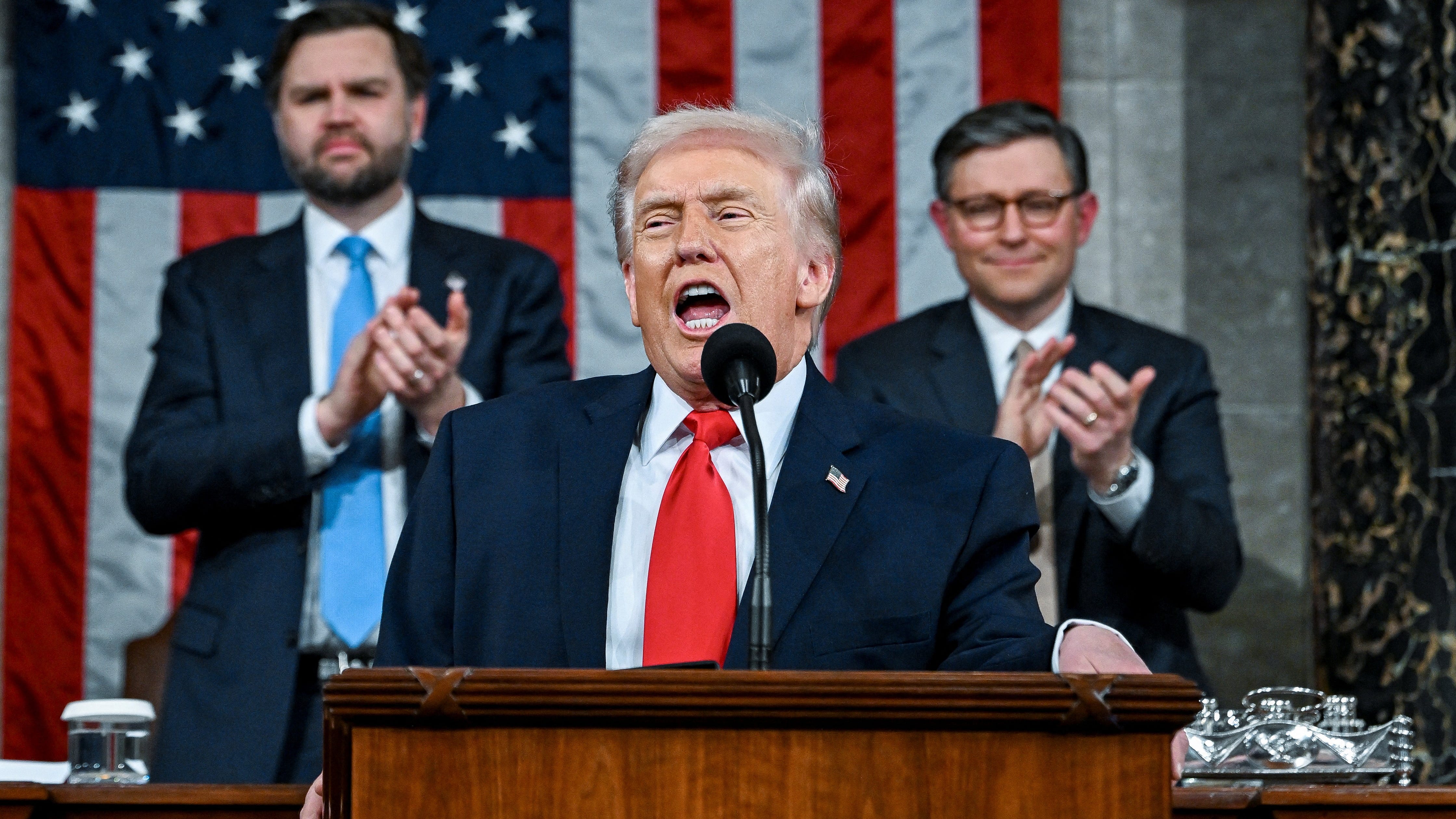

Analysis of President Trump’s 2026 State of the Union Address
USA TODAY’s Washington Bureau Chief Susan Page takes a closer look at President Trump’s 2026 State of the Union address.
A recent Department of Homeland Security policy that allows immigrants to be deported to countries other than their own can endanger immigrants and is illegal, a federal judge has ruled.
U.S. District Judge Brian Murphy said in a ruling Wednesday, Feb. 25, that the department may not remove immigrants to so-called “third countries.” Judge Murphy said the practice amounted to dropping people off at an “unknown location” and that “unless the department is already aware that there are people standing there waiting to be shot…that’s fine.”
In his ruling, Murphy cited a U.S. law that prohibits the government from taking someone to a country where their “life or liberty is threatened” because of their “race, religion, membership in a particular social group, or political opinion,” which he said is “not good and not legal.”
“These are our laws, and it is with great gratitude that we have the incredible good fortune to be born in the United States that this court has affirmed these and our bedrock principles: that no ‘person’ in this country shall be ‘deprived of life, liberty, or property without due process of law,'” Murphy wrote.
Wednesday’s ruling was handed down in a class-action lawsuit brought on behalf of immigrants facing deportation to countries that were not previously named in removal orders or identified in immigration court proceedings. The policy allows immigration authorities to deport migrants to such countries if they have credible diplomatic assurances that they will not be subject to persecution or torture if sent there, or if they provide six hours’ notice to the migrants that they will be sent there.
Murphy also criticized the Department of Homeland Security’s deportation policy, which does not require immigration officials to be given notice or an opportunity to object before deporting a person to an “unfamiliar and potentially dangerous country” as long as the government has “assurances” that the person will not be exposed to torture or persecution.
“This new policy, purporting to be a stand-in for Congress-mandated protections, fails due process for a variety of reasons, not the least of which is that no one actually knows anything about these touted ‘guarantees,'” Murphy wrote. “Who are they covering? What are they covering? Why does the government consider them trustworthy? Who can know for sure that they exist?”
He continued: “These are the fundamental questions that the Constitution allows us to ask individuals before the government takes away their last and only lifeline.”
Department of Homeland Security: ‘We are confident we will be vindicated again’
The Department of Homeland Security issued a statement to USA TODAY saying the department “must be authorized to exercise its lawful authority and remove illegal aliens to host countries.”
“We are confident that he will be proven innocent again,” the ministry said, citing the previous two Supreme Court stays in the case.
“The Biden administration has allowed millions of illegal aliens to flood into our country, and the Trump administration has the constitutional authority to remove these criminal illegal aliens and wipe out this national security nightmare,” the agency added. “If these activist judges have their way, convicted murderers, child rapists, drug traffickers and other aliens too barbaric to be brought home will walk freely on America’s streets.”
Murphy, an appointee of former President Joe Biden, suspended the order for 15 days to give the department time to appeal, but observers believe the case will likely go to the U.S. Supreme Court.
Murphy said in his ruling that there are numerous examples of governments removing or attempting to remove immigrants without criminal records to third countries.
He cited the case of a Guatemalan man, identified only as an OCG, who had no known criminal history and whose deportation was suspended because he had been sexually assaulted there. The government then “threw him on a bus bound for Mexico, where he had just been raped. There he was immediately deported to Guatemala, where an immigration judge determined he was likely to be persecuted.”
An OCG lawyer said he “remains in hiding in Guatemala.”
Lawyer’s “Court’s Compulsory Statement” Judgment
The Murphy decision is based on a class action lawsuit filed on March 23, 2025 by four non-U.S. persons, including OCG. Other immigrants who have filed suit include a Cuban man living in Pittsfield, Massachusetts, a Honduran man living in Fort Worth, Texas, and an Ecuadorian man living in Milford, Massachusetts. At the time the case was filed, all of them were facing imminent deportation to a third country.
USA TODAY is seeking an update on whether they have been removed or remain in the United States.
Trina Realmuto, a plaintiff’s attorney with the National Immigration Litigation Alliance, told Reuters that Murphy’s decision was “a forced statement from the court that the administration’s third-country expulsion policy is unconstitutional.”
“Government policy deports people to countries where U.S. immigration officials determine they will be subject to persecution or torture,” Realmuto told news outlets.
Contributed by: Reuters


