A year after massive layoffs at the National Park Service, changes in staffing, storytelling and land management are reshaping parks in ways that are invisible to visitors.


President Trump urges removal of Pride flags from LGBTQ+ monuments
Correction: This video has been updated to remove an incorrect reference to gender policy. The National Park Service’s decision concerns only the permitted flags and is not tied to a broader campaign on gender ideology.
- The Trump administration has directed the National Park Service to remove or modify interpretive materials that it believes disrespect American history.
- The National Park Service has lost about 25% of its full-time employees over the past year, advocacy groups report.
- A new order from the Interior Department aims to encourage energy exploration on federal lands and expand access to hunting and fishing.
It’s been about a year since the National Park Service’s massive layoffs, which park advocates called the “Valentine’s Day Massacre.”
Around the same time, references to transgender people were removed from the Stonewall National Monument website, and conservation groups began sounding the alarm about other potential changes to public lands.
The park has changed a lot since then. But unlike the recent introduction of new fees for foreign tourists at some of America’s most popular parks and the introduction of new public lands passes featuring Presidents Donald Trump and George Washington, some changes aren’t necessarily obvious to visitors.
“They need to be more aware of what’s happening to their beloved national parks,” Bill Wade, executive director of the nonprofit National Park Ranger Association, told USA TODAY.
Here are three major systemic changes that have occurred over the past year.
1. Expression in the park
In recent years, national parks have made a concerted effort to “find the stories that aren’t often told or haven’t been told and passionately tell them,” the Biden-era National Park Service chief, the first Native American, told USA TODAY shortly before leaving office in January 2025. “So over the past three years, we’ve been able to work across the park system to tell stories so that every American can see a reflection of themselves in our parks.”
On his first day in office, Trump addressed the federal government’s commitment to diversity, equity and inclusion, then issued several executive orders on how the United States would write its own history. The former called the DEI program “illegal and immoral,” and the latter specifically directed the Secretary of the Interior to “ensure that all public monuments, monuments, statues, markers, or similar facilities within the Department’s jurisdiction contain any descriptions, depictions, or other material that inappropriately disparages past or living Americans, and instead focuses on the greatness of the accomplishments and progress of the American people, or, with respect to natural features, the beauty, richness, and greatness of the American people.” landscape. ”
Secretary of the Interior Doug Burgum followed suit with a department-level order aimed at “ending extremism in DEI programs and gender ideology” and “returning truth and sanity to American history.”
As parks take measures, some, like Ohio’s Cuyahoga Valley National Park, have asked visitors to report any signs that could be a negative sign for Americans.
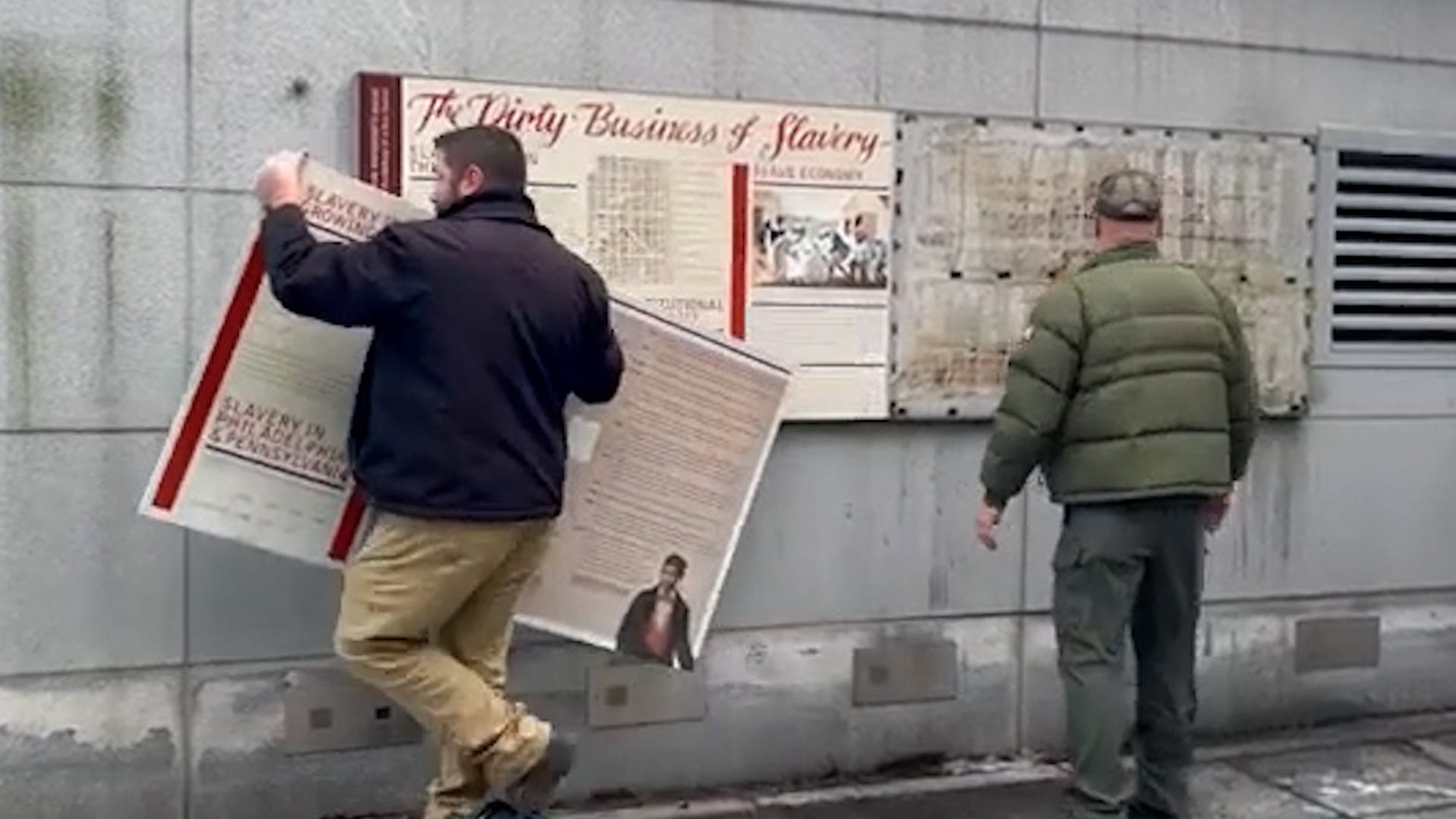
Philadelphia slavery exhibit removed by National Park Service
An exhibit memorializing the enslaved people who lived and worked in George Washington’s home during his presidency has been removed in Philadelphia.
In January, visitors to Independence National Historical Park in Philadelphia recorded a video of a sign saying enslaved people were being removed from President George Washington’s home. Volunteers recently reported that the Pride flag was removed from the Stonewall monument in New York City. The Washington Post also reported on plans to remove signage about Native American history and climate change at parks such as the Grand Canyon, sparking backlash from tribes. Wade said many parks have been asked to remove signage, videos and information on their websites.
The Interior Department told USA TODAY in January: “The President directed federal agencies to review interpretive materials to ensure accuracy, integrity, and consistency with the nation’s shared values. After completing the necessary reviews, the National Park Service is currently taking steps to remove or revise interpretive materials in accordance with the order.”
But Kristen Brengel, senior vice president of government affairs for the nonprofit National Park Conservation Association, told USA TODAY, “This is definitely an effort to cleanse our history, to minimize some of these tragic moments in our history and completely erase them from our parks.” The association says its mission is to protect and preserve parks “on the ground, in the courtroom, or in the Capitol.”
“Some of the things that happened in the history of this country…we may not be very proud of these days, and we shouldn’t be, but they’re part of history,” said Wade, who spent his career working in parks before retiring as superintendent of Shenandoah National Park in Virginia. The National Park Ranger Association is comprised of current and former park staff, volunteers, and supporters.
When asked about the change in interpretation and how the Park Service decides what to remove, the Office of the Secretary of the Interior told USA TODAY: “The National Park Service continues to operate under current law, policy, and direction from the Department of the Interior, and we reject the premise that there was a system-wide effort to erase history, limit science, and politicize park operations.” The agency added that there is no central mandate to remove interpretive content and that the site’s core mission remains unchanged.
2. Reduction in personnel
According to the National Park Service website, the National Park Service’s mission is to preserve the system’s natural and cultural resources for present and future generations.
However, these days there are fewer people taking on this mission. The National Park Service has lost about 25% of its full-time employees over the past year, according to the National Park Conservation Association and the National Park Rangers Association.
“That’s due to both layoffs and people being encouraged to resign or people just trying to get out before they get laid off,” Brengel said, adding that more layoffs are likely.
Wade noted that many of the retirees were senior leaders and professional scientists working on issues that not only affect parks, such as water and air quality. He and Brengel noted that years of research have been paused and other park projects have been shelved.
Brengel also warned of concerns faced by visitors, including the possibility of vandalism and poaching.
“All of these activities that we’ve been preventing for over 100 years are starting to happen again because people know we’re short staffed,” she said.
The Interior Secretary’s Office told USA TODAY that it “does not confirm third-party staffing claims or speculate on hypothetical impacts, and continues to manage staff, research, and visitor services to keep parks open, safe, and accessible.”
Last April, Burkum issued an executive order to “ensure our national parks remain open and accessible” and that the National Park Service “provide the best customer service experience for all visitors.”
Both Brengel and Wade praised the continued dedication of National Park Service employees despite the loss of colleagues and, at times, taking on additional duties. “National Park Service staff remains extremely passionate about doing the best job they can for the American people,” Wade said.
3. Land management
The National Park System has 433 sections and includes 87 national monuments.
National monuments have received particular attention throughout recent administrations. They are unique because, under the Antiquities Act of 1906, the president can establish them on existing federal lands or waters at his discretion.
“We don’t need Congressional approval,” said J.B. Ruhl, the David Daniels Allen Distinguished Chair in Law at Vanderbilt Law School. “Just say, OK, this is a national monument. As long as it’s designed to protect its natural, historical and scientific features.” Ruhl, who specializes in environmental and natural resource law, likened the declaration to an executive order or presidential memorandum.
Once established, a national monument may be managed by one or more Interior agencies, including, but not limited to, the National Park Service, the Bureau of Land Management (BLM), and the U.S. Fish and Wildlife Service.
During his first presidential term, Trump reduced the size of two BLM-managed national monuments in Utah: Bears Ears and Grand Staircase Esculante. At the time, President Trump said local communities know best how to manage their land and accused the previous administration of abusing antiquities laws to lock up resources from local communities and impose “harmful and unnecessary restrictions on hunting, ranching, and responsible economic development.”
Former President Joe Biden subsequently reversed President Trump’s changes in 2021, but the Grand Staircase of Escalante remains a point of contention and concerns about other national monuments have also been raised following executive orders and executive orders encouraging “energy exploration and production on federal lands and waters.”
In May, a Justice Department legal opinion held that the president has the authority to cancel or reduce the size of national monuments established by previous presidents under the Antiquities Act.
The National Park Conservation Association previously shared a list of potential targets, including some within the National Park System.
“I absolutely believe that national monuments remain threatened,” Brengel said. “What we’re hearing is that they’re trying to find monuments that are legally vulnerable…As the administration continues to push for energy development, we’re guessing they’re going to specifically target places where they think they can develop fossil fuels or some type of mining.”
Even if national monuments were spared, many national parks border other types of public lands and could still be affected, she and Wade noted.
“If you have mining activity on the border of a national park area, you are impacting the quality of the water that flows into that national park area. You are also impacting wildlife habitat,” Brengel said.
Protected land may also be opened up to other types of activities. In January, Burgum issued an executive order directing the Interior Department to reduce barriers and expand access to hunting and fishing “where consistent with law, refuge purposes, park establishment laws, land reclamation requirements, safety, and conservation needs.”
Contributors: Phaedra Trethan and Dinah Voyles Pulver


