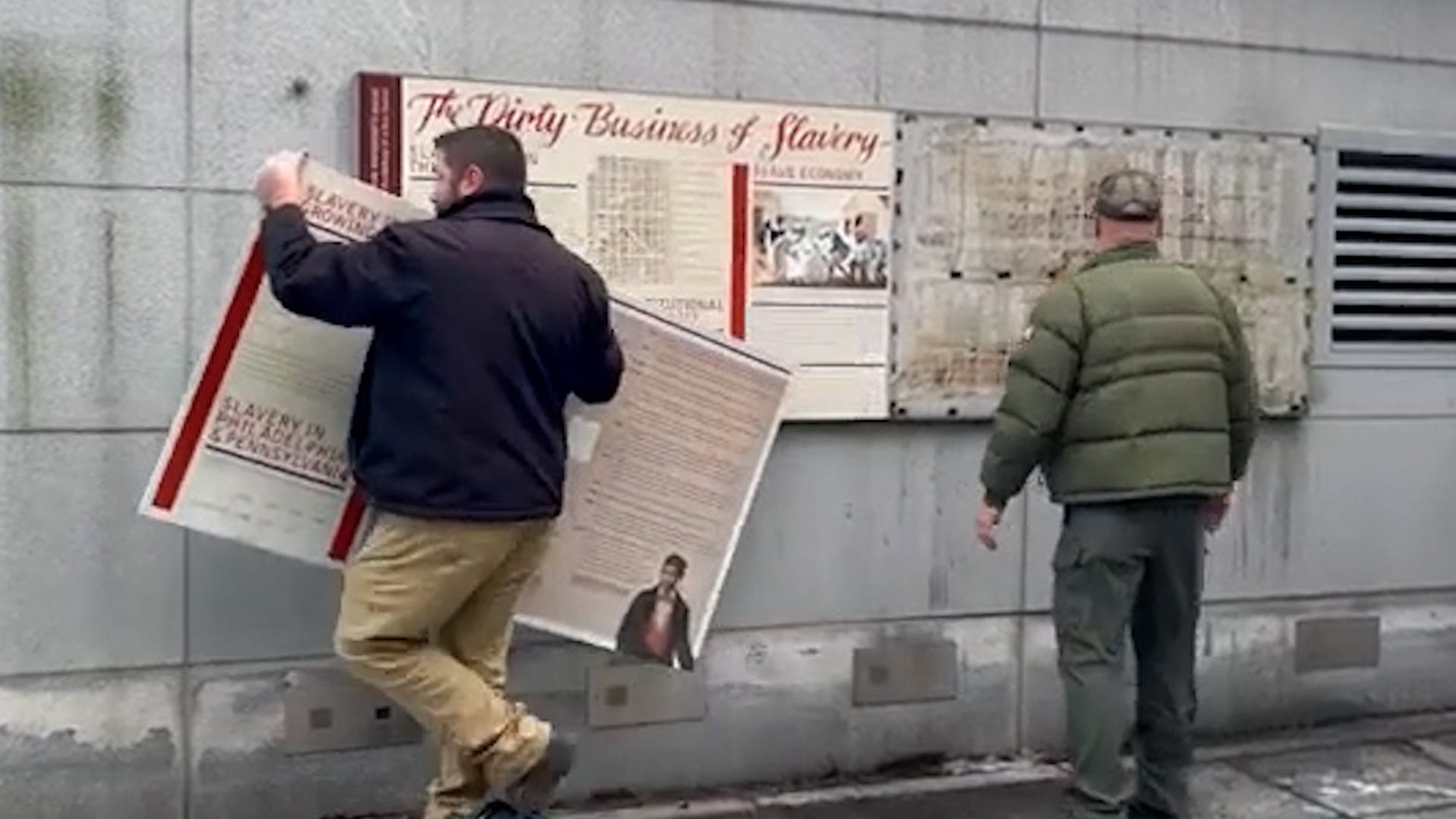

Philadelphia slavery exhibit removed by National Park Service
An exhibit commemorating the enslaved people who lived and worked in George Washington’s home during his presidency has been removed in Philadelphia.
The National Park Service has removed an exhibit commemorating the enslaved people who lived and worked in George Washington’s original home in the city, just steps from the Liberty Bell in Philadelphia.
The sign’s removal on Jan. 22 was confirmed by the National Park Service and the Department of the Interior, which told USA TODAY in a statement that the removal is related to a March 2025 executive order signed by President Donald Trump titled “Restore Truth and Sanity to American History.”
“The President has directed federal agencies to review interpretive materials to ensure accuracy, integrity, and consistency with our nation’s shared values,” the statement said. “After completing the necessary reviews, the National Park Service is currently taking steps to remove or modify the interpretive materials in accordance with the order.”
Philadelphia Mayor Sherrell Parker’s administration filed the lawsuit based on a 2006 agreement between the federal government and the city that requires advance notice of any changes to park grounds, the Philadelphia Inquirer reported.
The lawsuit names Interior Secretary Doug Burgum and Park Service Acting Director Jessica Bowron, calling the exhibit’s removal illegal and “arbitrary and capricious.”
“There is only one federal facility in the country where the history of enslaved Black people is documented,” Michael Cord, a lawyer and activist who fought for recognition for the nine people held at his Washington home, told USA TODAY on January 22.
City Council member calls removal of exhibits an ‘effort to cover up’
In a statement published in X on January 22, Philadelphia City Council President Kenyatta Johnson called the removal unacceptable and said he supports the city of Philadelphia’s lawsuit.
“Removing exhibits is an effort to whitewash American history. You can’t erase history just because it’s offensive. Removing items from the Executive Mansion only changes the landscape, not the historical record,” Johnson said.
USA TODAY’s Phaedra Trethan contributed to this report.
Fernando Cervantes Jr. is a trending news reporter for USA TODAY. Contact us at fernando.cervantes@gannett.com and follow us at X @fern_cerv_.


