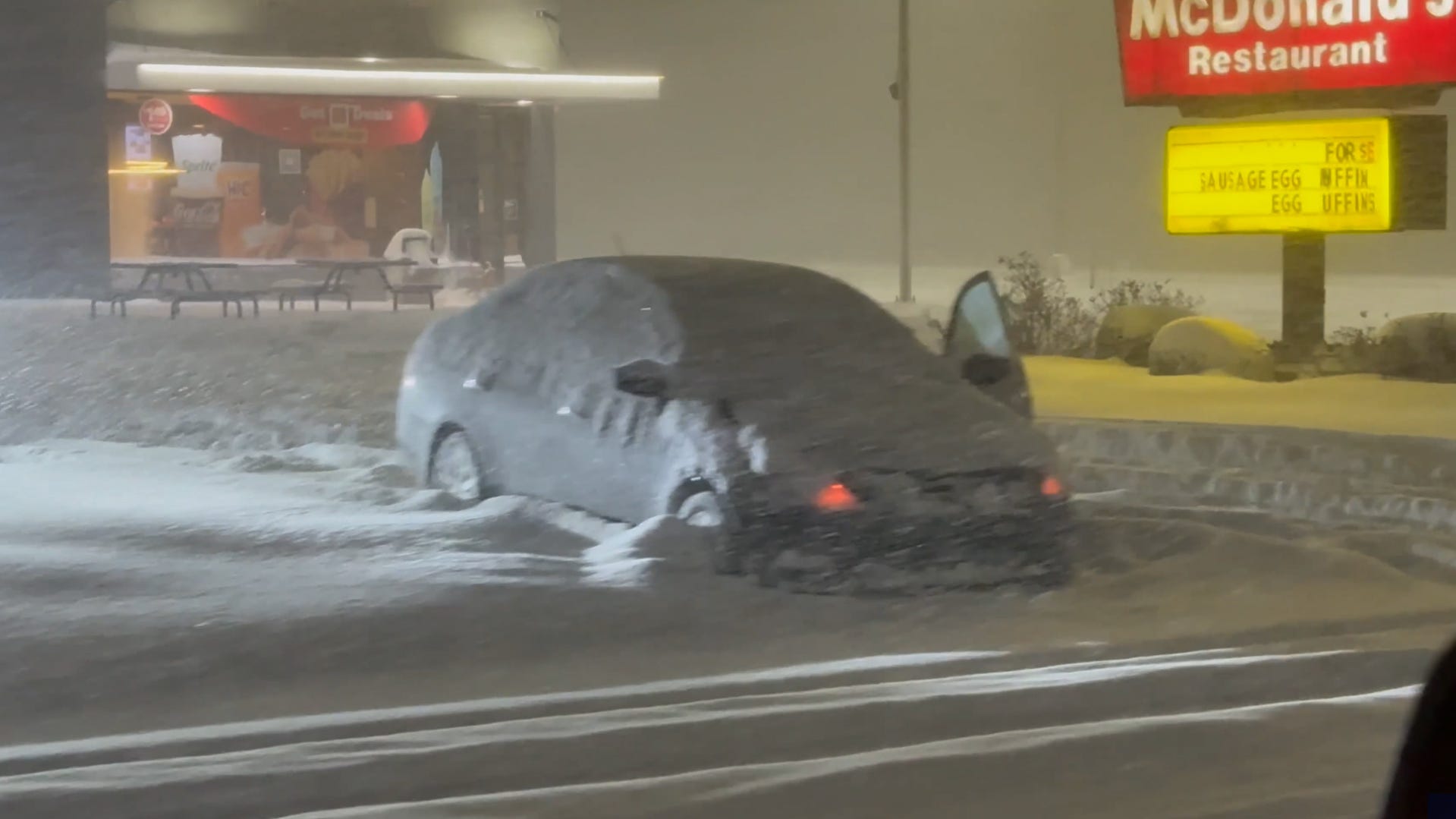

Arctic blast slams U.S. into dangerous snow and bitter cold
A “new surge of arctic air” will bring heavy snow, strong winds, and subzero temperatures to areas across the United States, creating hazardous travel conditions.
Snow squalls, strong winds and frigid temperatures could create dangerous travel conditions for parts of the central and eastern United States on Jan. 17, while Americans as far as Alabama and Florida could see at least a small amount of snow this weekend, forecasters said.
Behind an arctic cold front moving through the Midwest, there is a risk of snow squalls — sudden whiteout conditions and plummeting temperatures that can cause icy roads and reduced visibility — and could bring highs in the 10s to below 0 degrees in parts of the Plains and Midwest on January 17, the National Weather Service said.
“Driving in a snow squall can be dangerous as conditions can change rapidly. If you encounter a snow squall while driving and cannot safely exit the roadway, slow down, turn on your lights and hazards, and avoid slamming on the brakes,” the weather bureau said.
More than 15 million people are under winter weather advisories across the country, including parts of central and northeastern Georgia and southern Georgia. On January 17, much of Florida was also placed under a freeze watch.
According to the local weather bureau, snow is expected to fall in southern Georgia starting the night of January 17th, and there is also a chance of a little to an inch of snow in southeastern Alabama overnight and into the morning of January 18th. According to AccuWeather, the snow is expected to spread through the Carolinas and into Virginia, then move up along the East Coast.
Some areas will only see a little snow, while others will see more, but even small amounts can be dangerous in states where drivers are not used to snow and there isn’t enough infrastructure in place to clear it from roads.
How much snow will it snow?
According to AccuWeather, a few inches of light snow is expected to fall across much of the Midwest and Northeast this weekend. Three to six inches of snow is possible along the northern tier, and more than a foot of lake-effect snow is possible in the lee of the Great Lakes and higher elevation areas, the newspaper reported.
A chance of snow is expected throughout the weekend across parts of Alabama and Georgia, the eastern Carolinas, Virginia, Maryland, Delaware, and the mid-Atlantic coast and southeastern New England, with general accumulations of 1 inch, with local maximums of 3 inches possible, AccuWeather said.
The National Weather Service in Tallahassee, Florida, said parts of southwestern Georgia and southeastern Alabama could see up to an inch of snow. The rain will change to wintry rain or snow overnight. The weather bureau said the accumulation would be short-lived, with snow expected to last until three hours in the morning, and temperatures rising into the 40s on January 18.
“The area with the highest potential for snow extends from Georgia through the central and eastern Carolinas to southeastern Virginia,” said AccuWeather Senior Meteorologist Dan Pydinowski.
See snowfall totals
Does it snow in Florida?
Parts of the Florida Panhandle could see snow starting the night of Jan. 17, Pidinowski said.
However, temperatures may be too high for much material to accumulate on the ground.
“Scattered light accumulations of less than an inch are expected and will be limited to grassy surfaces,” the weather service in Tallahassee said.


