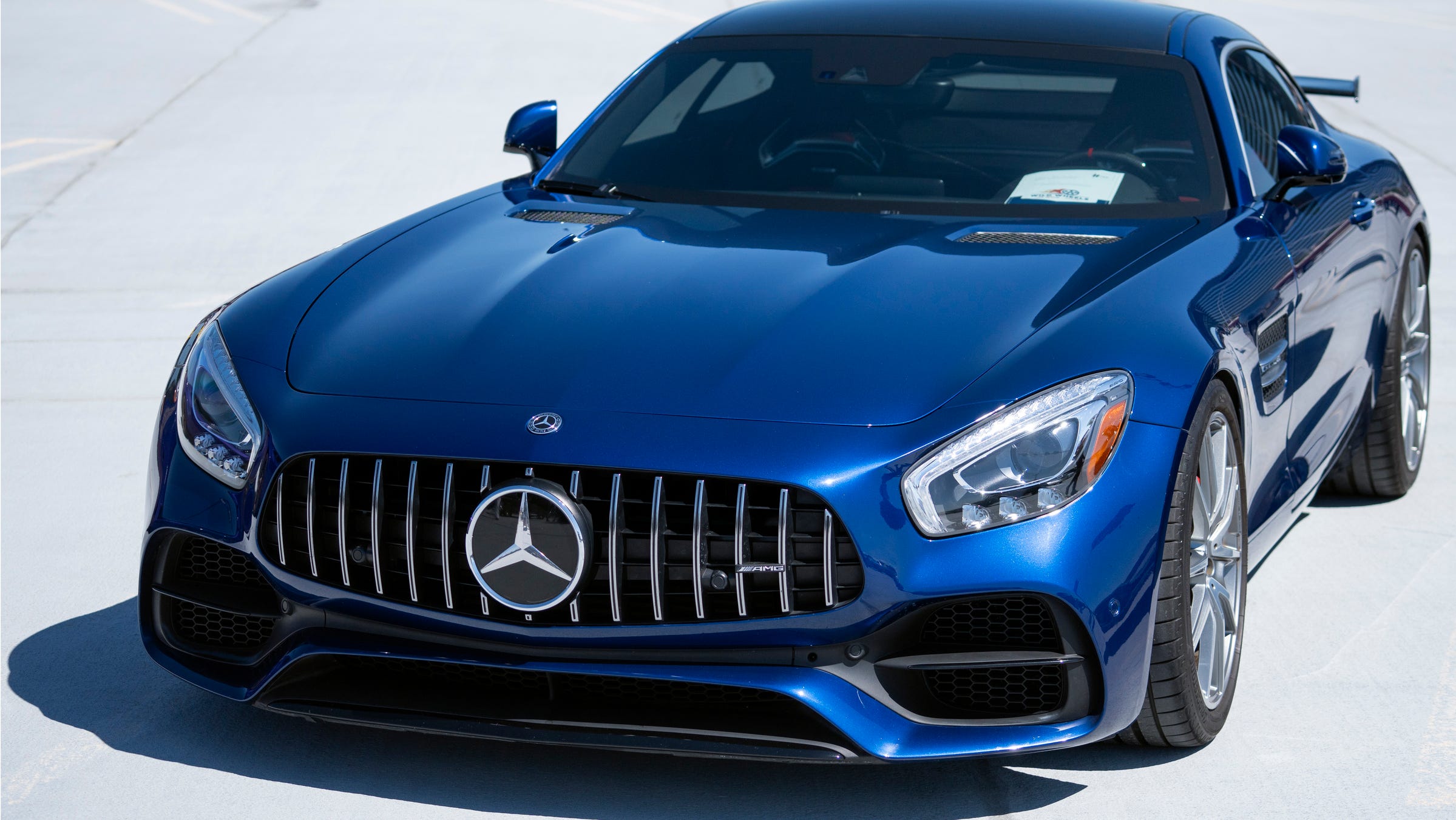

Luxury cars aren’t cheap, but how will tariffs affect the car market?
Tariffs are impacting every market. The answer to your question varies greatly depending on which luxury automaker you ask.
straight arrow news
- Record-high vehicle prices have left low- and middle-income buyers priced out of the new car market.
- The average new car price in the United States exceeded $50,000 for the first time in September.
- Demand for luxury cars remains strong, with luxury dealers reporting record sales years.
- Some buyers are turning to long-term financing, such as 84-month contracts, to purchase more expensive vehicles.
Economists say low- and middle-income buyers are being squeezed out of the new car market. However, top-end demand remains strong. Luxury car dealers like Nelson Andrews in Brentwood, Tenn., say their customers are still spending, a sign of widening disparities in who can afford record-high vehicle prices.
Andrews, the mayor of Brentwood and owner of Andrews Transportation Group, which owns four dealerships in Middle Tennessee, said his business is on track for the milestone year.
“This year is going to be the best year ever,” he said.
His dealership sells luxury brand cars such as Cadillac, Jaguar and Range Rover, and these cars are getting more expensive as new car prices reach historic highs.
“We don’t call out songs, we just do dances,” Andrews said.
According to Kelley Blue Book, the average new car sales price in the U.S. in September was $50,080. This is the first time the average price has exceeded $50,000. Erin Keating, executive analyst at Cox Automotive, said prices remain high and show “no signs of softening” as buyers aggressively opt for higher-end cars.
This strength at the top stands in sharp contrast to broader consumer behavior earlier this year. A year-end report from the University of Tennessee’s Boyd Center for Business and Economic Research found that households were significantly holding back on purchases of durable goods, especially cars, as high financing costs and economic uncertainty made buyers more cautious.
“Consumers were already reluctant to re-enter the auto market after the pandemic-era surge in vehicle prices and loan rates,” the report said. “At the beginning of 2025, there was more hesitation.”
But spending is starting to recover. Gross domestic product (GDP) rose 4.3% in the third quarter, according to the Commerce Department. Consumer sentiment is also recovering, with prices rising 3.7% in December, but still well below last year’s levels.
That pressure is reflected in Andrews’ business. Luxury sales are strong, but middle-market demand is slowing, he said.
“The middle part of the market is probably slowing down a little bit more than the higher end,” he said.
He added that the most expensive cars often sell first because many of his customers are “enthusiastic” buyers. “Cars are expensive because people want to buy them,” he says.
Mr Andrews has also noticed an increase in long-term lending.
“There seems to be a bit of a move by banks to extend the tenure of their employees, so we’ll see 84-month contracts, but I wouldn’t really recommend that,” he said.
“If you have someone with 94 months of dedication and 48 months of focus, they’re going to flip.”
He added that in his market segment, it’s rare for buyers to keep a car for 10 years. Most are bought out after three to four years.
“People like the latest and greatest,” Andrews said.


