Some people are protesting in support of Israel. Some want to support moderate Democrats in the midterm elections.
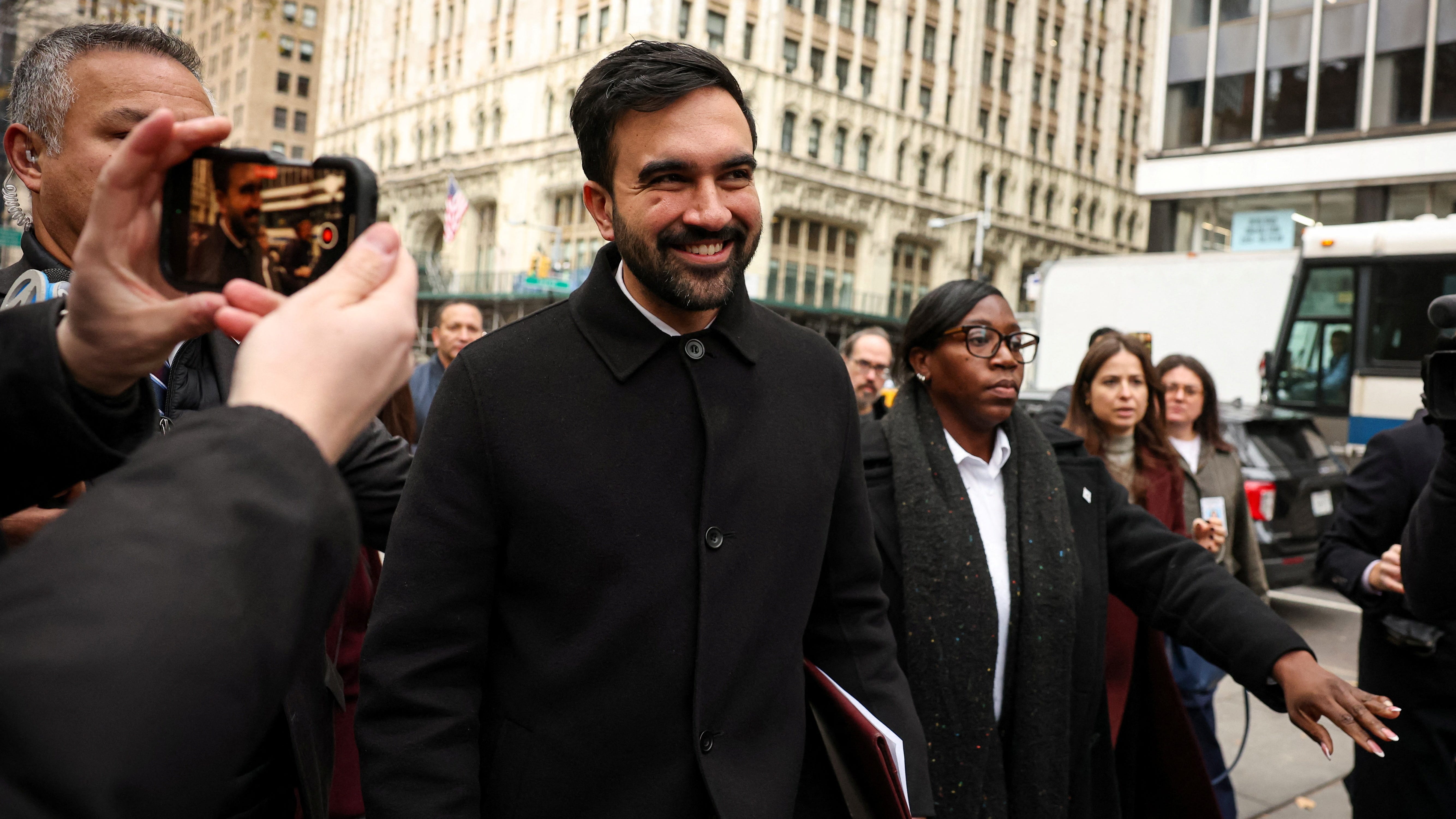

What’s next for New York Mayor Zoran Mamdani?
New York Mayor-elect Zoran Mamdani has won, but what challenges might he face once he takes office?
Zoran Mamdani will be sworn in as mayor of New York on January 1, 2026, even though nearly half of the city’s voters do not support him.
His victory on Nov. 4 was celebrated by progressives and young voters in areas such as Brooklyn and the South Asian Queens community, but was met with negative reactions in many middle-class backwaters on the city’s outskirts.
The 34-year-old Mamdani received nearly 51% of the vote, outpacing the 49% of voters who voted against the next mayor, but former Gov. Andrew Cuomo, who ran as an independent after losing to Mamdani in the Democratic primary, received an overwhelming majority of the votes, while Republican candidate Curtis Sliwa received fewer votes.
And the high turnout (more than 2 million New Yorkers turned out to vote, the most for a City Council election in more than 50 years) shows an extraordinary enthusiasm to not only vote for him, but against him. In other words, he entered office with an intensity of both support and opposition that no other recent mayor has faced.
Even in a city that usually supports Democrats by wide margins, many moderate members of their own party were strongly opposed to Mamdani’s candidacy. Some expressed concerns about his democratic socialist ideology and proposals to expand social programs, such as creating universal child care. Some opposed his past calls to defund the police and boycott Israel.
“They’re going to have to live with him and watch him very closely,” said Hank Sheinkoff, a longtime political consultant who has opposed Mr. Mamdani.
On the eve of his inauguration as New York City’s first Muslim and first South Asian mayor, voters will grapple with how to respond over the next four to eight years.
Some are actively supporting Israel, given Mamdani’s opposition to Israel’s existence as a Jewish state and his promise to arrest Prime Minister Benjamin Netanyahu for war crimes against Palestinians in the Gaza Strip.
Some are considering working to elect moderate Democrats in the 2026 midterm elections. Many of Mamdani’s opponents had vowed to flee the city entirely if he won, but data so far shows there has been no exodus at all.
“Now is not the time to run,” said Rabbi Avi Weiss, who is scheduled to hold a vigil of conscience at President Mamdani’s inauguration. “The more you run, the worse it will get and the more you will be overwhelmed.”
support israel
Weiss is the founding rabbi of Riverdale’s Hebrew Institute. Riverdale is a modern Orthodox synagogue in the Bronx with an Israeli flag flying out front. According to exit polls, Weiss is one of about two-thirds of Jewish New Yorkers who opposed Mamdani, calling his criticism of Zionism anti-Semitic. Jews make up about 1 in 10 New Yorkers, and many have ties to Israel. About a third of Jewish voters supported Mamdani.
New York City Fire Chief Robert Tucker, who is Jewish, submitted his resignation because of Mamdani’s views on Israel. In a further blow, Mamdani’s next appointee resigned the day after her appointment was announced, citing anti-Semitic social media posts she made more than a decade ago.
Weiss cited Mamdani’s response to a November protest held by groups promoting Jewish immigration to Israel and the occupied West Bank outside Manhattan’s Park East Synagogue. Mamdani condemned the slogans used by demonstrators, but also referred to illegal Israeli settlements in the West Bank and said places of worship should not violate international law.
His comments drew immediate backlash from many Jewish organizations, including Weiss, who participated in an early December protest in support of Israel outside Park East. However, he said those present did not condemn Mamdani and appeared to want to negotiate with Mamdani’s government.
But Weiss said, “The more we raise our voices, the more we strengthen our negotiators, not weaken them. We can say, ‘Look at our community. Our community is angry with you.'”
Cuomo voters as opposition
J.C. Polanco, an assistant professor and political analyst at Mount Saint Vincent College, said the opposition is made up primarily of people who supported Mr. Cuomo, who lost to Mr. Mamdani in the Democratic primary and general election.
Cuomo, who won 41% of the vote in the general election, drew support from moderate Democrats, independents and even Republicans to replace Sliwa. Mr. Polanco, a former Republican municipal candidate and self-identified independent, said Mr. Cuomo’s supporters need to support the incumbent Democrat in the midterm elections against a progressive primary challenger aligned with Mr. Mamdani. Democrats far outnumber Republicans in New York City, and Democrats dominate local and federal elections.
The Democratic Socialist Party of America, of which Mamdani is a member, has racked up victories in recent New York elections, starting with Rep. Alexandria Ocasio-Cortez defeating Rep. Joe Crowley in 2018. More moderate politicians are now being targeted in primaries. For example, pro-Israel Rep. Dan Goldman, who refused to endorse Mamdani, will have to defend his seat against New York City Comptroller Brad Lander, who mutually endorsed Mamdani in New York City’s ranked-choice voting primary and supported Mamdani in the general election.
“If they want to see another day, they have to stand firm and support normal Democrats,” Polanco said.
Mandani’s New York “wait and see”
Mr. Mamdani watched as the city’s elite poured millions of dollars into him and Mr. Cuomo. Some said Mr. Mamdani would flee New York if he won.
Billionaire hedge fund manager Bill Ackman criticized Mamdani’s advocacy of Palestinian rights and socialist politics. John Catsimatidis, owner of the Gristedes grocery chain, has vowed to close his supermarkets. Former Mayor Mike Bloomberg, who has a net worth of $109.4 billion, donated nearly $10 million to boost Mr. Cuomo’s unsuccessful campaign.
Stratis Morfogen, owner of Manhattan’s Diner 24 NYC, said he has waited at least a year to sign three additional leases to expand the 24-hour diner’s footprint. Mr. Morfogen was a vocal opponent of Mr. Cuomo’s pandemic-era restrictions. But in the general election, he supported Mr. Cuomo and blocked Mr. Mamdani’s socialist policies, particularly Mr. Morphogen, who opposed Mr. Mamdani’s proposal to raise the minimum wage to $30 by 2030, saying it would hurt small businesses.
“Right now, it’s a wait-and-see situation in New York City,” he said. Morfogen is currently considering moving to South Florida, where she previously lived for five years.
Fernando Mateo, a former Republican mayoral candidate and co-founder of the United Bodega of America association of small deli owners, said Mamdani’s opponents need to wait and see what policies are actually implemented.
Many of Mamdani’s ideas, such as free buses and child care, would require tax increases to pay for them. That means the government would need approval from Gov. Kathy Hochul, a moderate Democrat who is reluctant to raise taxes, Mateo said.
“I’m going to clear him of doubt until he (expletive) himself,” Mateo said.
Eduardo Cuevas is based in New York City. Contact us via email (emcuevas1@usatoday.com) or Signal (emcuevas.01).


