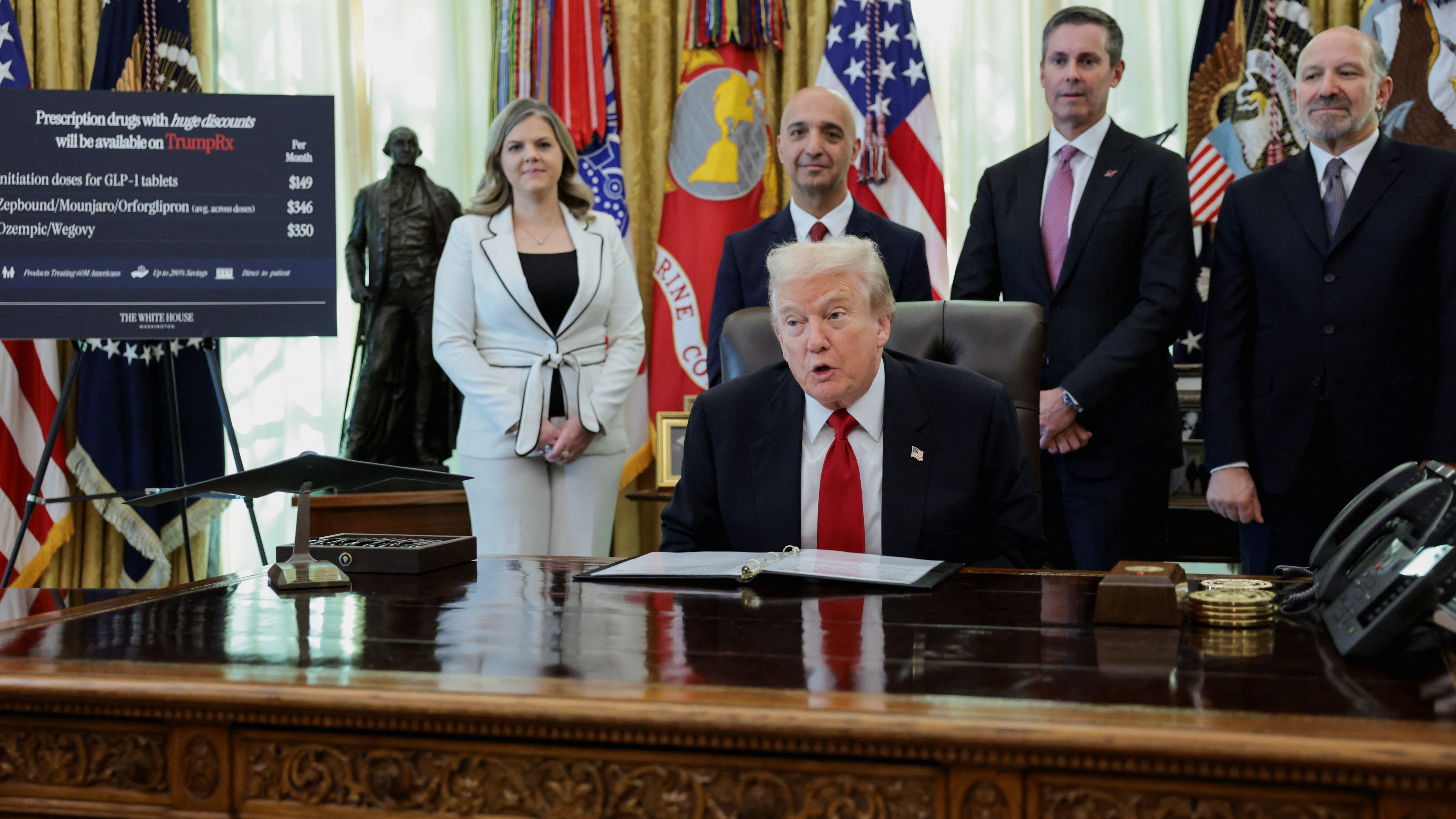

President Trump announces price cuts for GLP-1 drugs Zepbound, Wegovy
President Donald Trump announced discounted pricing for Zepbound and Wegovy and expanded Medicare coverage to give more people access to the drugs.
President Donald Trump announced Friday, Dec. 19, that nine drug companies have agreed to sell drugs at lower prices as part of his administration’s efforts to bring drug prices down to levels that other countries pay.
In an announcement from the Oval Office, President Trump said drug companies Amgen, Boehringer Ingelheim, Bristol-Myers Squibb, Genentech, Gilead, GSK, Merck, Novartis and Sanofi have agreed to a “most-favoured nation” drug pricing agreement.
As part of a price fix and agreement to boost U.S. domestic drug manufacturing, the Trump administration agreed to delay planned tariffs on the pharmaceutical industry for the next three years.
The announcement comes two days after President Trump defended his administration’s efforts to improve affordability in a prime-time address and Congress failed to address rising health care costs for 22 million Americans who face significant price hikes from the Affordable Care Act starting Jan. 1.
“This is the greatest patient affordability victory in the history of American health care, and every American will benefit,” President Trump said.
President Trump previously announced deals with five drug companies to sell drugs at discounted prices to federal health programs and to TrumpRx, the Trump administration’s direct-to-consumer site scheduled to launch in January 2026.
The newly announced deal is built on a similar framework. Nine major pharmaceutical companies have agreed to sell prescription drugs through Medicaid at prices that do not exceed what other countries pay for drugs.
Nine pharmaceutical companies currently sell about 30% to 40% of the drugs to Medicaid, the federal-state health care program for low-income families, at a price higher than what other countries pay. According to government officials, these medicines will be subject to price reductions.
Bristol-Myers Squibb has agreed to make its popular blood thinner Eliquis free to Medicaid patients, company executives said.
The nine companies also plan to sell drugs directly to consumers at discounted prices through TrumpRx.
Similar to previously announced agreements, the nine major pharmaceutical companies agreed to sell all new drugs introduced to the U.S. market at prices no higher than those paid in other comparable wealthy countries, according to a senior administration official.
Companies also agreed to donate key drugs to the National Strategic Stockpile and invest $150 billion in U.S. manufacturing and research and development as part of the administration’s efforts to strengthen domestic drug manufacturing.
Some companies have agreed to donate finished medicines to the country’s Strategic Active Pharmaceutical Ingredient Stockpile, which stocks medicines for use in pandemics and other national emergencies.
Merck will donate a six-month supply of powerful broad-spectrum antibiotics to treat pneumonia, skin and stomach infections. Bristol-Myers Squibb will donate blood thinners used to treat strokes and blood clots. GSK will donate albuterol, a respiratory treatment for asthma and other conditions.
President Trump threatens tariffs to lower prices
President Trump has long argued that the United States, despite leading the world in medical innovation, pays higher drug prices than many countries. He said he is negotiating deals with these drug companies amid threats of tariffs and investigations into their trade practices, which shifts the cost of medicines from other countries to Americans.
“We’ve been laughed at and ridiculed for years,” Trump said.
On September 30, President Trump announced that he had entered into a most-favored-nation agreement with Pfizer to sell medicines at lower prices. President Trump said in October that EMD Serono, the nation’s largest maker of fertility drugs, had agreed to reduce the price of commonly used IVF drugs.
In November, President Trump announced deals with pharmaceutical companies Eli Lilly and Novo Nordisk to reduce the prices of popular weight-loss drugs Wegoby and Zepbound and expand Medicare coverage of these drugs for seniors.
In July, President Trump sent a letter to 17 drug companies asking them to lower U.S. drug prices to the “most-favored-nation” amount paid by other countries.
On December 19, President Trump said that 14 out of 17 companies have “agreed to significantly lower drug prices for American patients.”
President Trump added that Johnson & Johnson, one of the three companies that has not announced a drug price agreement, “will be here next week.”
Biden’s Medicare drug discounts start in 2026
Although there are no restrictions on how pharmaceutical companies set prices for brand-name drugs, the amount consumers pay is typically determined by close negotiations with health insurance companies and pharmacy benefit managers. Insurance plan requirements, such as copays and deductibles (the amount a consumer must pay before coverage begins), also affect the amount you pay.
Former President Joe Biden sought to lower drug prices for older Americans through the Climate Change and Health Care Act of 2022, known as the Control Inflation Act, which gave Medicare the power to negotiate lower prices on a limited number of drugs.
Starting January 1, discounts will begin on 10 commonly prescribed drugs for cancer, heart disease, autoimmune diseases and diabetes. The drugs affected are Eliquis, Giardance, Charelto, Januvia, Fasiga, Entresto, Enbrel, Imbruvica, Stelara, and Novology.
According to an AARP analysis released Thursday, Dec. 18, people with Medicare can save on average more than 50% on out-of-pocket costs for these drugs under their insurance plan. According to AARP, 7 out of 10 drugs cost less than $100 per month.


