Large-scale celebrations are planned for the country’s 250th anniversary in 2026. President Donald Trump is helping form them.
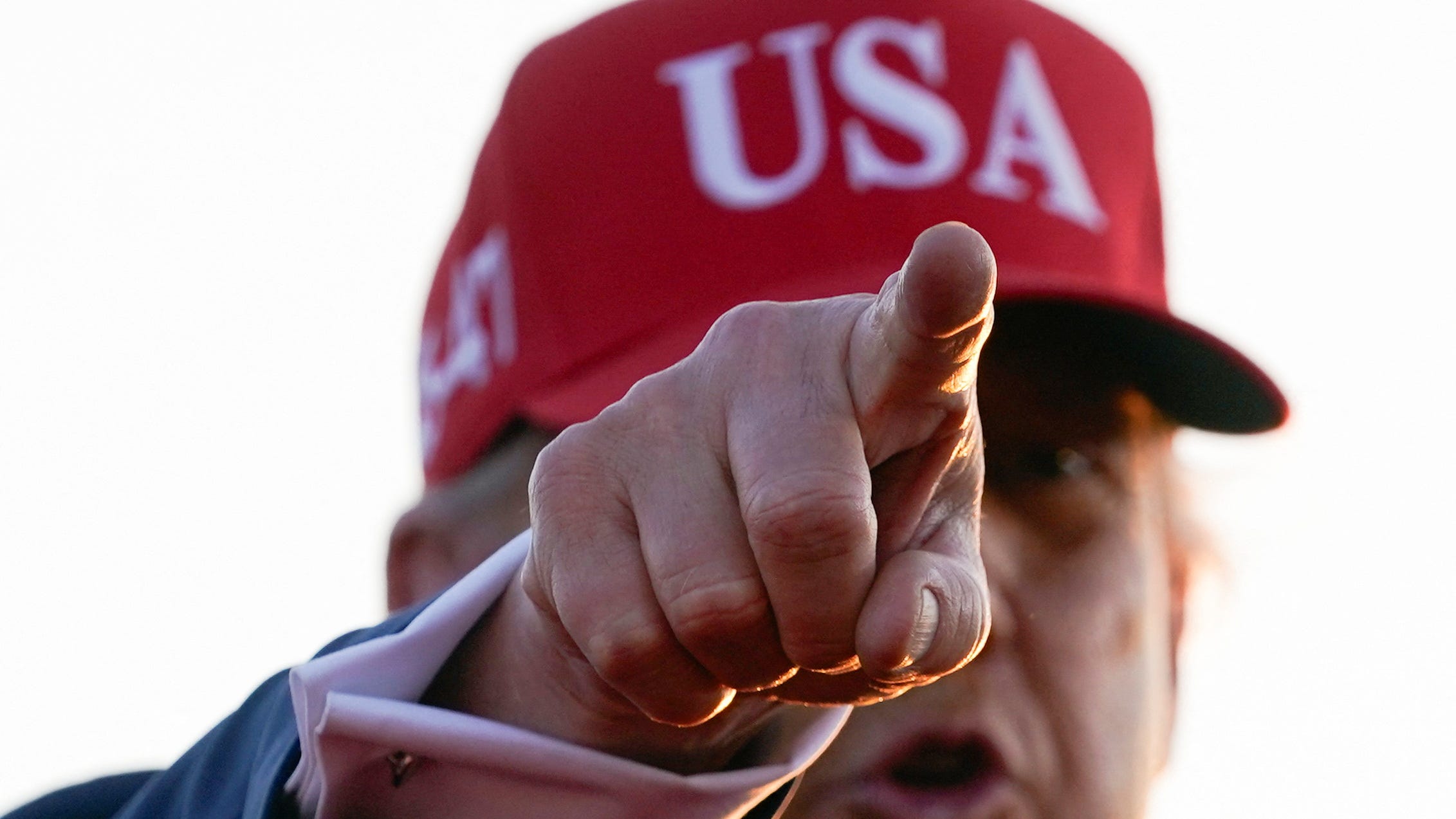

President Trump says he will host a UFC fight at the White House to commemorate America’s 250th anniversary
President Donald Trump has announced plans for the White House to host a UFC fight to commemorate America’s 250th anniversary next year.
WASHINGTON – The celebrations marking the 250th anniversary of the nation’s founding on July 4, 2026 have been in the works for more than a decade.
America 250, a bipartisan organization created by Congress in 2016 to lead the commemoration, is sponsoring field trips and oral history recordings, planning the largest volunteer effort in the nation’s history, and hosting major events such as the burial of a time capsule and a national block party.
But on Thursday, Dec. 18, President Donald Trump announced an overview of various efforts led by another organization called Freedom 250.
The organization, which is described as nonpartisan, plans to hold events previously championed by the president, including a national prayer service, an Ultimate Fighting Championship (UFC) bout on the White House lawn, and a high school athletic competition that some liken to a dangerous fictional Hunger Games.
Conservative author John J. Pitney Jr. said he worries that Trump’s competing events will provide “an opportunity for people to curry favor with President Trump” through donations, rather than forcing people to reflect on the nation’s founding ideals.
“Will it simply be a celebration of patriotism, or will there be an event that reflects the principles of the Declaration of Independence?” asked Pitney, a former Republican National Committee staffer and professor of government at Claremont McKenna College in California. “I think that’s an open question.”
What is Freedom 250?
Freedom 250 is the funding arm of Task Force 250, a White House group created by President Trump in January 2024 to plan events other than those run by the official America 250 Committee.
Since its creation, the task force has been criticized by Democratic lawmakers and some historians as an effort to politicize America’s birthday celebrations. In a July 21 letter, Democratic lawmakers who serve on the bipartisan committee expressed concern about events originating from the White House and questioned the relationship between America 250 and Task Force 250.
Rosie Rios, president of the America 250 board and former U.S. treasurer under President Barack Obama, told USA TODAY that while the two efforts remain distinct, they are working “very closely” to ensure the celebration “represents the interests of the president and all federal agencies.”
“This president is entitled to plan whatever celebration he wants, and we’re very supportive of that,” Rios said in a Dec. 16 interview with USA TODAY.
In a separate statement emailed on Dec. 18, Rios expressed support for the president’s Freedom 250 initiative, saying it would provide the “funding mechanism” needed for the president’s planned event.
The White House did not respond to requests for comment.
“America 250 welcomes Freedom 250 and its efforts to give Americans more ways to celebrate America’s 250th anniversary,” Rios said. “America 250 remains focused on values-based programs approved by bipartisan committees at the local, state, national and international levels.”
Is President Trump influencing America’s birthday celebrations?
Since President Trump took office, questions have swirled about how he will leave his mark on the nation’s 550th anniversary and whether partisanship will take hold during the celebrations.
The president has little power over the America 250 Commission, which Congress created by law in 2016. Under the law, the president only has the power to select which of the 24 members will become the commission’s chair.
Former President Joe Biden appointed Rios chairman in July 2022, and he has continued in the role since President Trump took office.
Still, there are concerns that the president will interfere in the commission’s work.
Earlier this year, the committee appointed former Fox News host and Trump administration alumnus Ari Abergel as the organization’s executive director. Just a few months after taking the job, Abergel was fired. The group said Abergel “initiated a security breach” of its social media accounts.
He paid tribute to conservative activist Charlie Kirk on his Instagram account, writing: “America is in mourning. God bless Charlie Kirk.”
Rios has sought to dispel concerns about politicizing America’s birthday.
“I’m flying one flag, and that’s the Star-Spangled Banner. And continuing to focus on this bipartisan, bipartisan movement is how we’ve had great success as a committee over the last few years,” she told USA TODAY, highlighting the committee’s broad support in Congress.
Bicentennial celebrations clouded by partisanship
Suspicions of political use are not without precedent. Planning for the 1976 Bicentennial celebrations was plagued by party politics.
More than a dozen years before his 200th birthday, a group of businessmen reportedly visited then-President John F. Kennedy to pitch their vision for a Great Exposition in Philadelphia. Kennedy, a former senator from Massachusetts, liked the idea, and his only suggestion was to hold it in Boston instead of Philadelphia.
Congress then established the American Bicentennial Commission to “plan, develop, encourage, and coordinate activities.” 200 goals in 10 years of existenceth The anniversary has changed dramatically.
“If you look at the whole trajectory of the bicentennial, or the planning of the bicentennial, and the different forms it took, it actually looked really, really different depending on who was in office,” said MJ Rymza Pawlowska, a history professor at American University in Washington, D.C.
Former President Lyndon B. Johnson, Rimsza-Pawlowska said former President Richard Nixon, who served as president from November 1963 to January 1969, saw an opportunity to strengthen infrastructure and urban development and “uplift the marginalized.” Richard Nixon, who served as president from January 1969 until his resignation in August 1974, said he wanted to take a “strongly patriotic” approach.
According to a 1973 New York Times article, the Bicentennial Commission ultimately came under “severe criticism from Congress as politically partisan, overly commercial, and inefficient.”
The House Judiciary Committee also investigated allegations of political interference. President Nixon proposed dismantling the organization created by Congress and replacing it with one overseen primarily by the White House.
“National commemorations are always an opportunity to solidify public opinion. It’s an opportunity to send a really focused message,” Rimsza-Pawlowska said. “Of course people will be seriously invested in instrumentalizing it.”
Carissa Waddick, who covers America’s 50th anniversary for USA TODAY, can be reached at kwaddick@usatoday.com.


