
How the Supreme Court could affect the 2026 midterm elections
The Supreme Court has ruled that Texas can use a congressional map drawn to favor Republicans, and other states are now following suit.
President Donald Trump is targeting another state senator. This time it’s a member of his own party from a red state.
During a speech in the Oval Office on Dec. 11, President Trump said he hoped Indiana Sen. Roderick Bray would lose the upcoming primary.
“I hope so, because he did something very, very bad,” Trump told reporters.
Bray, the Hoosier state’s Senate president pro tempore, was one of 21 Republican senators who recently voted 31-19 to reject the redistricting bill in the Republican-controlled Indiana Senate.
Bray, 56, has served in the state senate since 2012, representing the 37th state senate district, which includes parts of Morgan, Johnson, Owen and Putnam counties.
Trump’s words stem from the state’s recent redistricting efforts, a legal process that draws electoral boundaries.
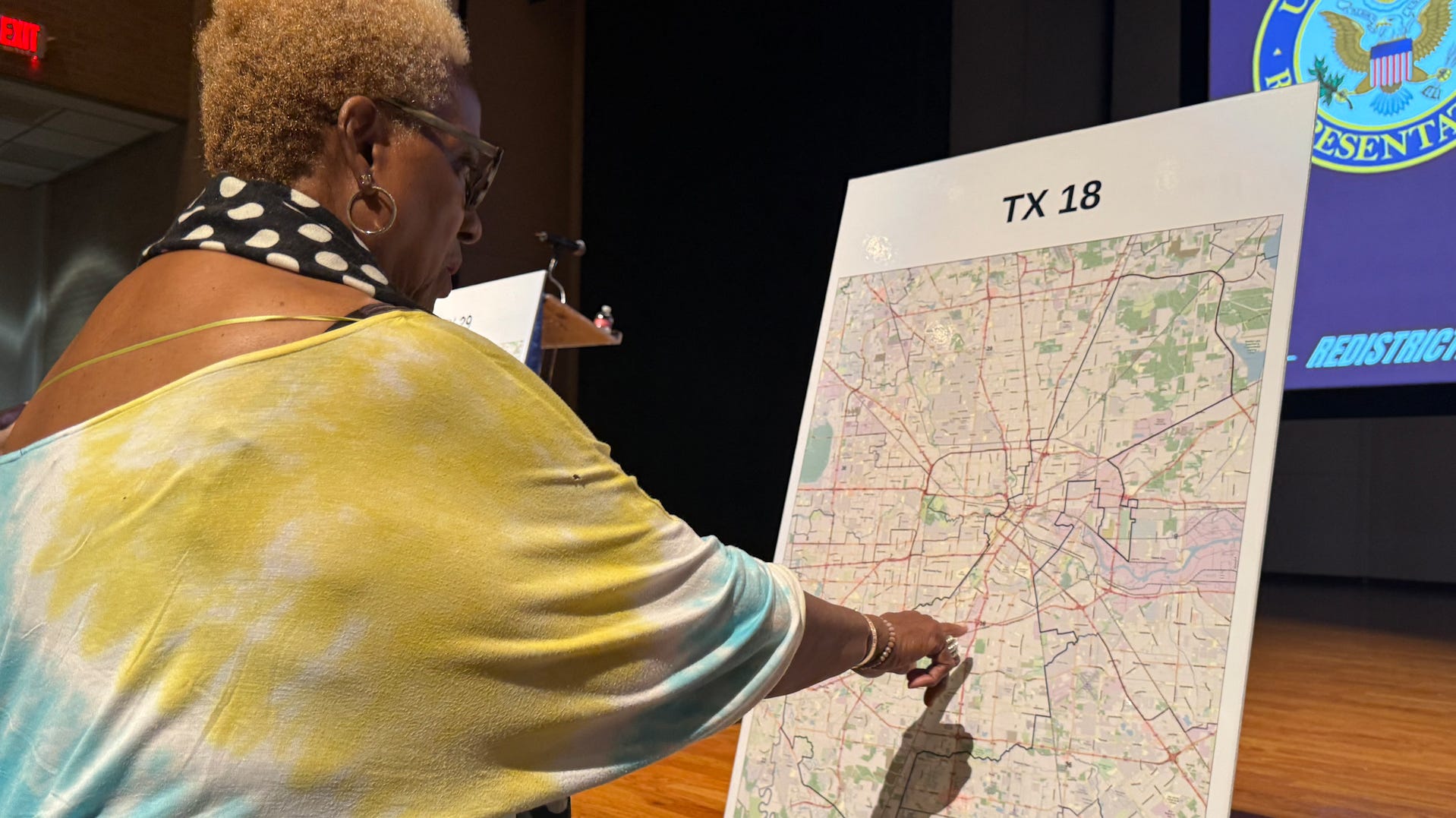
The Supreme Court ruled on Dec. 4 that Texas can use a new congressional map that favors Republicans in the 2026 election. Not since the 1800s have so many states attempted to redraw U.S. House district lines without a new census.
That’s why President Trump wants to elect someone else to fill Bray’s seat next year.
Why is President Trump interested in Indiana?
President Trump said on Thursday, Dec. 11, that he hopes Brey loses the next primary after the Indiana Senate recently rejected a presidential-backed congressional redistricting plan.
The vote comes less than a week after the Indiana House of Representatives approved redistricting House Bill 1032, passing the bill 57-41 on Dec. 5, advancing a controversial plan to redraw Indiana’s congressional maps ahead of the 2026 election, which was backed by President Trump and the National Republican Redistricting Trust.
The bill would create two new Republican districts, giving Republicans control of all nine of Indiana’s congressional districts.
President Trump hopes that Republicans will retain their House majority in the 2026 midterm elections after recently pushing for new congressional district maps in several states.
As of Dec. 7, six states have redrawn the maps that determine who their residents can vote for to represent them in the U.S. House of Representatives. they are:
- California
- ohio
- north carolina
- missouri
- texas
- Utah
Texas and California are each projected to lose five seats to the majority party.
In Ohio, two Democratic-held seats could flip to Republicans.
North Carolina’s map was designed to flip one seat for Republicans.
Missouri dismantled the Kansas City-based Democratic seat.
Utah’s maps are still being contested in court, but one of the state’s four seats could be held by a Democrat.
Natalie Neisa Alland is a senior reporter at USA TODAY. Contact her at nalund@usatoday.com and follow her at X @nataliealund


