A lower court ruled that the map was likely racially biased and blocked the ban.
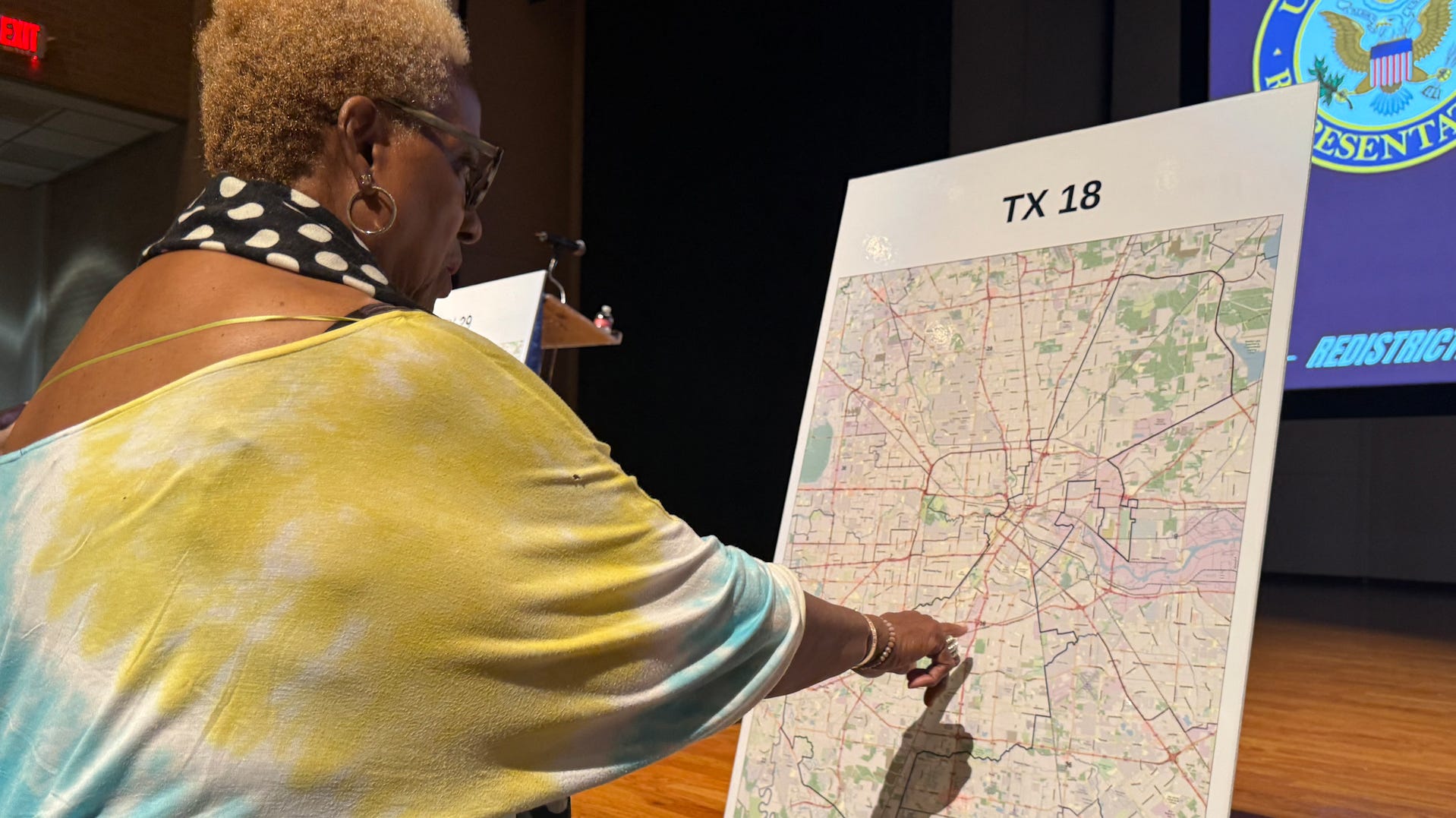

Supreme Court allows Texas Republican map drawing in 2026 election
The Supreme Court has allowed Texas to use a Republican-friendly congressional map in the 2026 midterm elections despite claims of racial bias.
WASHINGTON – Texas can take advantage of a congressional map drawn to favor President Donald Trump and the Republican Party in the 2026 midterm elections, the Supreme Court ruled on Dec. 4, potentially helping Republicans maintain a majority in the U.S. House of Representatives.
The ideologically divided court blocked a lower court’s ruling that the map likely discriminated against racial minorities by diluting the voting power of Hispanic and black Texans.
The opinion replaces a temporary freeze in a Nov. 21 ruling by Justice Samuel Alito that would preserve the map heading into the midterm elections as border litigation continues.
The high court said the lower court’s decision was inappropriate because it was too close to the election.
“The district court improperly interfered with active primary election activity, causing significant disruption and disrupting the delicate federal-state balance in elections,” the majority wrote in a short, unsigned opinion.
The court’s three liberal justices dissented in an opinion written by Justice Elena Kagan.
Kagan wrote that the majority’s decision discounts the district court’s efforts throughout the nine-day hearing, which included testimony from nearly two dozen witnesses and thousands of pieces of evidence.
“We are a higher court than the district court, but we are no better than the district court at making fact-based decisions like this,” she wrote. That’s why judges should uphold district court decisions as long as they are plausible, she said.
Alito said the rule doesn’t apply because the district court erred in not requiring those objecting to the map to create alternatives.
In response to the decision, Texas Attorney General Ken Paxton said Texas is “blazing a path to take back our country, district by district, state by state.”
But Rep. Susan DelBene, the House Democratic campaign director, said Republicans won’t be able to make as much of a leap forward as they would like because “people continue to criticize the Republican Party and its broken promises.”
Other Democrats focused their blame on the court itself. House Minority Leader Hakeem Jeffries of New York said the court’s majority made a partisan decision.
“Tonight’s ruling by far-right Supreme Court justices is further evidence that extremists will do anything to rig the midterm elections,” Jeffries said in a statement.
Texas begins redistricting drive
At the request of the Trump administration, the Republican-controlled Texas Legislature drew new district lines midway through the normal once-a-decade redistricting cycle, setting up a race for states to get in on the game. Some other initiatives are being challenged in court.
Five other states have already adopted the new congressional maps: California, Missouri, North Carolina, Ohio, and Utah.
Additionally, Republican lawmakers in Indiana are debating new boundaries. Virginia Democrats are taking steps to redistrict Richmond, and Republican leaders in the Florida Legislature are also gearing up for action.
Pressure is also mounting on Maryland’s Democratic leaders. Depending on the court’s response, four other states – Alabama, Louisiana, New York and North Dakota – could also take action.
Despite the uncertainty about what the playing field will look like, Democrats remain likely to flip the House next year, according to bipartisan researchers at the University of Virginia Center for Politics.
But that could change if the Supreme Court rules in the pending Louisiana case, potentially opening the door to further redistricting efforts in Southern states. Analyst Kyle Kondik predicts that depending on what the court says and the judge’s ruling, there could be several districts where Republicans can expect to win.
Republicans aim to gain 5 seats in Texas
The new Texas map is designed to help Republicans pick up five more seats, but that’s not a sure thing.
Republicans currently hold 25 of the state’s 38 seats in the U.S. House of Representatives, giving them a slim majority. If Democrats take control, they could block President Trump’s legislative policies and launch investigations into his administration.
Racial gerrymandering?
The Supreme Court said that in redistricting disputes, federal courts can examine whether race was improperly used to draw new boundaries, but not whether partisan politics was a factor.
Civil rights groups and others objecting to Texas’ new maps say it will reduce their voting power by reducing the number of districts in which Hispanic and black voters collectively hold a majority.
“This is about as grim a case of racial gerrymandering as you can imagine,” lawyers for some of the challengers said in a filing.
A lower court ruled against the state of Texas.
A three-judge panel in Texas that reviewed the maps ruled 2-1 that Texas Republican Gov. Greg Abbott had directed the Legislature to use race to redraw the state’s boundaries at the request of the Trump administration, which discussed the racial makeup of some districts.
“The public perception of this case is that it is about politics,” wrote Judge Jeffrey Brown, who was appointed to the federal bench by President Trump in 2019. “Certainly, politics played a role in drawing the map of 2025, but it was much more than just politics.” “There is substantial evidence that Texas racially gerrymandered its 2025 map.”
Judge Jerry Smith, an appointee of former President Ronald Reagan, issued an angry and unusually personal dissent, calling the decision “the most blatant exercise in judicial activism I have ever witnessed.”
Texas says race is not the main factor
Texas lawyers told the Supreme Court that partisanship, not race, drove redistricting. And they argued that the lower court’s ruling caused confusion because candidates had already collected signatures and filed applications to run in new districts.
The Justice Department told the Supreme Court on behalf of Texas that lower courts had “misinterpreted” the administration’s instructions to the state.
“Indeed, the record here affirmatively shows that the 2025 map was drawn with racial disregard,” the Justice Department said in its filing.
Civil rights groups point to witnesses and footage
Civil rights groups and voters who challenged the map said the lower court’s decision was based on an extensive hearing that included hours of footage of lawmakers and Mr. Abbott discussing their motives.
The challengers also said the approaching Dec. 8 filing deadline for Texas candidates running in the spring primary is no reason to allow the new map to be used.
They told the Supreme Court that by unnecessarily choosing to draw new maps, Texas created its own state of emergency and “cannot intentionally shield unconstitutional conduct from judicial review so close to an election.”
Contributor: Bert Jansen


